Moving towards a sustainable food future
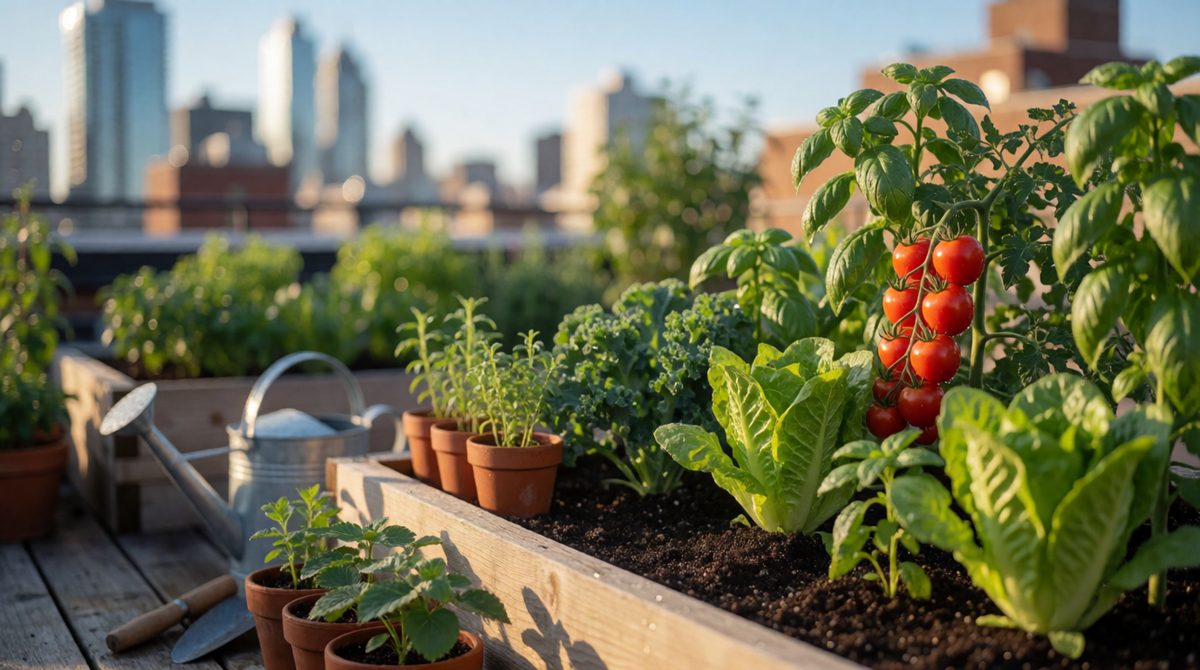
Urban farming is one way to make food supplies more sustainable
In the last lesson you saw how food supply can be increased. Some methods use a lot of water, energy and chemicals, and they can damage the land they rely on. A sustainable food supply is different. It meets the needs of people today without harming the environment or stopping future generations from growing their own food.
The spec lists several ways to move towards this. Some change how food is grown. Others change what we buy and how much we throw away.
Key terms:
- Sustainable food supply: producing food in ways that do not use up resources or damage the environment, so it can carry on for future generations.
- Organic farming: growing food without artificial fertilisers or pesticides.
- Permaculture: designing farms and gardens to work like natural ecosystems, with very little waste.
- Urban farming: growing food inside towns and cities.
- Seasonal food: food eaten at the time of year it is naturally ready to harvest.
Growing food in a more sustainable way
🌿 Organic farming
Organic farmers avoid artificial chemicals, which protects soil, rivers and wildlife. They feed the soil with compost and animal manure. They rotate crops so the soil keeps its nutrients, and they use natural ways to control pests, such as ladybirds eating greenfly.
🌱 Permaculture
The farm is planned like a natural habitat. Many different plants are grown together, including trees and perennial plants that live for years. Waste from one part becomes a resource for another, such as kitchen scraps becoming compost and rainwater being collected for crops.
🏢 Urban farming
Food is grown in allotments, community gardens, school plots and on roofs. Some cities have indoor farms where crops are stacked in layers. The food is grown right next to the people who eat it.
Each method has strengths and weaknesses.
- Organic farming protects wildlife and soil and avoids chemical run-off into rivers. But yields are often lower, so more land may be needed, and the food can cost more.
- Permaculture uses few outside inputs and builds healthy soil. It needs careful planning and a lot of labour, so it is hard to do on a huge scale.
- Urban farming brings fresh food to cities, gives people jobs and uses empty land. But space is limited, so it can only feed a small part of a city.
Remember that hydroponics, from the last lesson, is often used in indoor urban farms.
Worked example
A school turns an unused corner into a vegetable garden. Pupils make compost from lunch scraps, collect rainwater from the roof and grow beans, carrots and herbs. The school kitchen uses the vegetables. This is urban farming that also follows permaculture ideas, because the waste from one part feeds another.
Fish and meat from sustainable sources
Fish and meat are important food, but they can be produced in ways that cannot last.
🎣 Sustainable fish
Overfishing means catching fish faster than they can breed, so stocks fall. Sustainable fishing uses quotas (limits on how much can be caught), nets with larger holes so young fish escape, and protected areas where fish can recover. Shoppers can look for labels such as the Marine Stewardship Council (MSC) blue tick. Fish farming can also reduce the pressure on wild fish if it is well managed.
🍖 Sustainable meat
Animals need a lot of land and feed, and cattle produce methane. More sustainable meat comes from animals reared on grass, in smaller numbers, on farms that care for the land. Eating less meat, and more plant foods, also lowers the amount of land and feed needed.
Seasonal food and reducing waste
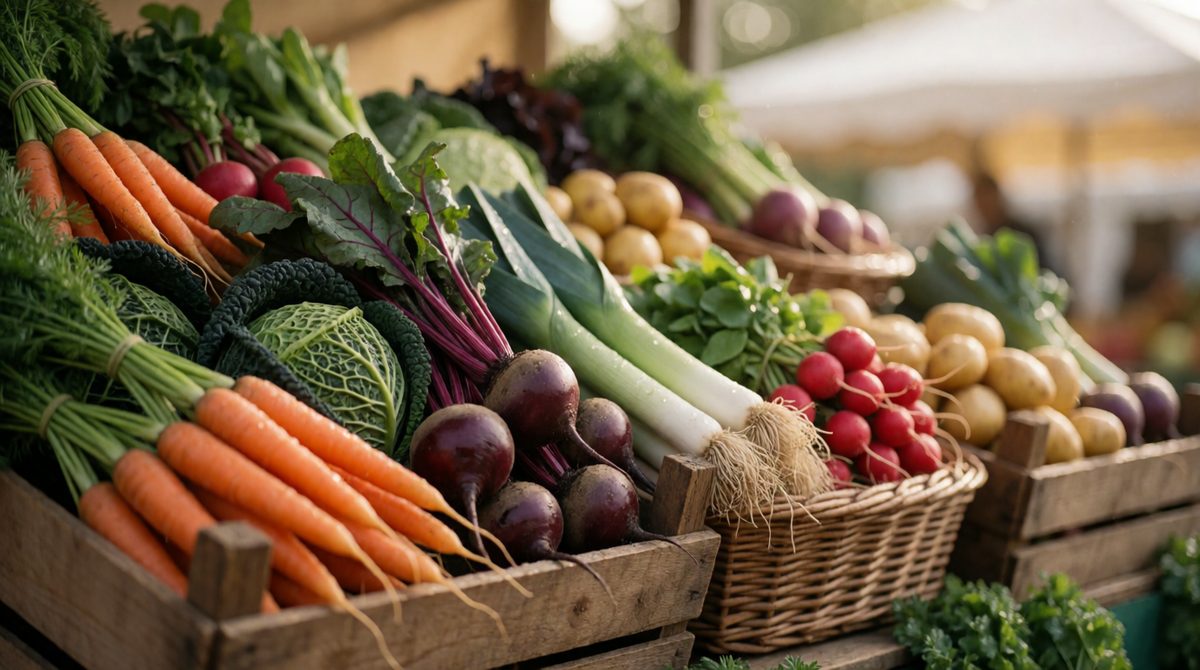
Eating seasonal, local food cuts food miles and waste
Seasonal food consumption means buying fruit and vegetables when they are ready to harvest locally. In the UK that means apples in autumn and root vegetables in winter. Out of season food has to be grown under heat or brought from far away, so seasonal food uses less energy and fits a sustainable food supply.
Reducing waste and losses is just as important. A lot of food is grown and never eaten, but where and why differs.
- In richer countries food is wasted at home and in shops. People buy too much, throw away food that is still safe to eat, or reject fruit that looks odd. Planning meals, using leftovers, freezing food and composting scraps all help.
- In poorer countries much food is lost before it reaches a shop. It rots after harvest because of poor storage, poor roads and no refrigeration. Better stores, cool storage and better transport cut these losses.
Every tonne of food saved is food that did not need extra land, water or energy to grow.
Common mistakes
Writing that organic means no pesticides at all. Organic farmers can use some natural pesticides, but not artificial ones. Another mistake is saying seasonal and local food are the same thing. Local food is grown nearby, while seasonal food is eaten when it is naturally ready. Also, do not write that waste is only a problem in rich countries. In poorer countries it happens earlier, between farm and market.
A local scheme in an LIC: sand dams in Makueni, Kenya
Makueni is a county in south east Kenya, an LIC in East Africa. It is a semi-arid area, so rain is limited and unreliable. Most rain falls in short, heavy bursts. Rivers flow for a few days and then dry up, and farmers often struggle to grow enough food or find water.
The scheme. Local communities build sand dams. These are small walls of stone and concrete built across seasonal rivers. When the river flows, the dam traps sand as well as water. Over time the sand builds up behind the wall and water is stored in the sand.
- Less evaporation. Water stored below the surface, inside the sand, is out of the hot sun, so it does not evaporate quickly like water in an open reservoir.
- Cleaner water. The sand filters the water, which can be reached by wells or pipes.
- Raised water table. Water seeps into the surrounding soil, so crops and trees can grow nearby.
Benefits for food supply. With water close by all year, families can grow vegetables and fruit trees on their land and can keep animals. They can sell spare food, which gives them an income. Women and children spend less time walking long distances to collect water, and children have more time for school. Because the dams are small, built by the community and cheap to maintain, this is an example of appropriate technology and it is sustainable.
Exam-style question
(a) State two ways of making food supply more sustainable. [2 marks]
(b) Explain how sand dams can help to increase food supplies in Makueni, Kenya. [3 marks]
(c) Explain why buying seasonal food is more sustainable than buying out of season food. [2 marks]
Model answer
(a) Any two from: organic farming (1), urban farming (1), permaculture (1), buying fish from sustainable sources (1), reducing food waste (1).
(b) Sand dams trap sand and water in seasonal rivers (1). The water stored in the sand is available all year, because little evaporates (1). Farmers can use it to grow more crops and keep animals, so they have more food and income (1).
(c) Seasonal food is grown outdoors in its natural season, so it does not need heating (1). It also does not have to be brought from far away, so it uses less energy (1).
Exam tip
In part (b), name Makueni and link each fact to food. Say how the water is stored, then say how that leads to more crops, more animals or more income.