Why do we need to increase water supply?
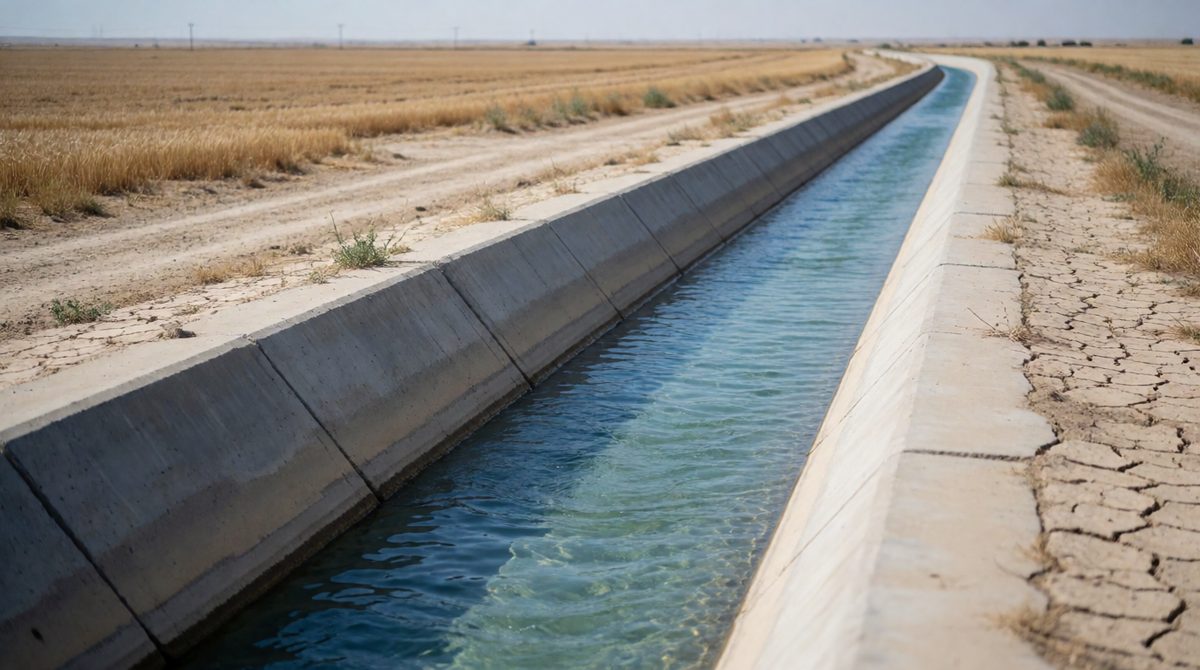
Water transfer schemes move water from areas of surplus to areas of deficit
Demand for water is rising across the world, and in many places supply cannot keep up. Where there is a water deficit, people, farms and factories go short. To fix this, governments and water companies use different strategies to increase water supply. Each one either moves water to where it is needed, stores more of it, or makes fresh water from seawater.
In this lesson you will look at the main strategies, then study one large scheme in detail.
Key terms:
- Diverting supplies: changing the route of a river or stream, often using pipes or canals, so that water flows to a new place.
- Storage: keeping water when there is plenty so that it can be used when it is short.
- Desalination: removing salt from seawater to make fresh water that people can drink.
Strategies to increase water supply
🔄 Diverting supplies
Water is taken from a river and sent along a pipe or canal to a town, a farm or a reservoir. It is a quick way to reach people who live away from a river. The downside is that the river the water was taken from now has less flow.
🏖 Increasing storage
Rainfall is not the same all year. Storing water in wet months means it is there in dry months. A big store means a town can cope with a dry spell without running short.
🌊 Dams and reservoirs
A dam is built across a river valley. Water backs up behind it to form a reservoir. The reservoir holds water for homes, farms and industry, and the dam lets managers release water in a controlled way. The land behind the dam is flooded, so farmland, homes and wildlife habitats can be lost.
🛢 Water transfers
Water is moved from an area of surplus to an area of deficit, using pipes, canals or tunnels. The water can travel a very long way. It works well when a route between the two areas can be built.
🌊 Desalination
Seawater is salty, so we cannot drink it. In a desalination plant, the salt is separated from the water so that fresh water is left behind. This is useful in dry countries on the coast, because the sea is a supply that never runs out. The problem is that the process uses a lot of energy, so it is expensive to build and to run.
A large scale water transfer scheme: South-North Water Transfer Project, China
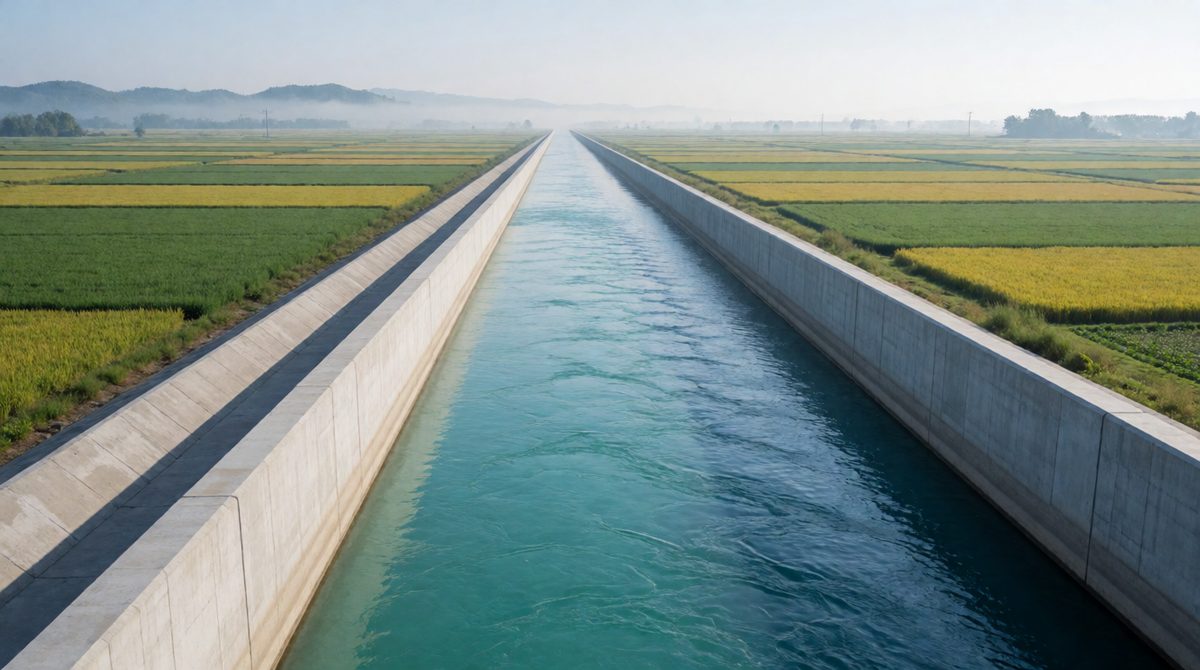
China's South-North Water Transfer Project moves water from the wet south to the dry north
China has a huge water problem. The south of the country is wet, with large rivers such as the Yangtze. The north is much drier, yet it has a large population, big cities such as Beijing and Tianjin, and a great deal of farming and industry. Demand in the north is higher than the supply, so it is an area of water deficit.
The South-North Water Transfer Project is a very large scheme built to move water from the Yangtze river basin in the south to the north. It uses canals, pipes and tunnels, and is made up of different routes.
- The eastern route follows an old canal and uses pumping stations to lift water northwards.
- The middle route takes water from a reservoir on the Han river, a tributary of the Yangtze, and carries it more than 1,000 km to Beijing.
- A western route was also planned to bring water from the upper Yangtze.
A scheme this large brings both benefits and problems.
✅ Advantages
Millions of people in northern cities such as Beijing and Tianjin get a more reliable supply of water for drinking and for use at home.
Farms and factories in the north have more water, which supports food production and industrial output.
It reduces the need to take so much water from the ground in the north, which helps with over-abstraction.
❌ Disadvantages
It is extremely expensive. It cost tens of billions of dollars to build, and pumping the water uses a lot of energy.
Hundreds of thousands of people had to leave their homes and farmland to make way for reservoirs and canals.
The south loses water, and the canals pass through industrial areas, so keeping the water clean is difficult. Building work also damages wildlife habitats.
Worked example
Question: Give one reason why a water transfer scheme might be a good idea and one reason why it might not.
Good idea: it moves water from an area of surplus to an area of deficit, so people in the dry area have a more reliable supply.
Not a good idea: it is very expensive and it can force people from their homes, as happened in China.
Comparing the strategies
- Diverting supplies is quick, but it leaves less water in the original river.
- Dams and reservoirs give a store of water, but flood farmland and wildlife habitats.
- Water transfers reach distant places, but cost a lot and can upset the area that gives up the water.
- Desalination gives a supply that does not depend on rainfall, but uses a lot of energy.
Common mistakes
Students often say that a water transfer creates new water. It does not. It only moves water from one place to another, so the place it came from has less. Another mistake is writing that the project is good or bad with no reasons. For an example, you must give both advantages and disadvantages, and include facts that are specific to the scheme, such as the Yangtze, Beijing and the middle route.
Exam-style question
(a) State what is meant by desalination. [1 mark]
(b) Explain one way in which building a dam and reservoir can increase water supply. [2 marks]
(c) For a named large scale water transfer scheme, explain one advantage and one disadvantage. [4 marks]
Model answer
(a) Removing salt from seawater to make fresh water. (1)
(b) A dam holds back the river so that a reservoir forms (1). Water can be stored in wet months and released in dry months, so supply is more reliable (1).
(c) Advantage: the South-North Water Transfer Project in China moves water from the wet Yangtze basin to the dry north (1), so cities such as Beijing get a more reliable supply for homes and industry (1). Disadvantage: it was very expensive to build and costs a lot of energy to pump (1), and hundreds of thousands of people had to move from their homes (1).
Exam tip
In part (c), name the scheme and use a fact that only fits it, such as the Yangtze or Beijing. Then explain each point with a "so" or "because" to earn the second mark.