Why use a named example?
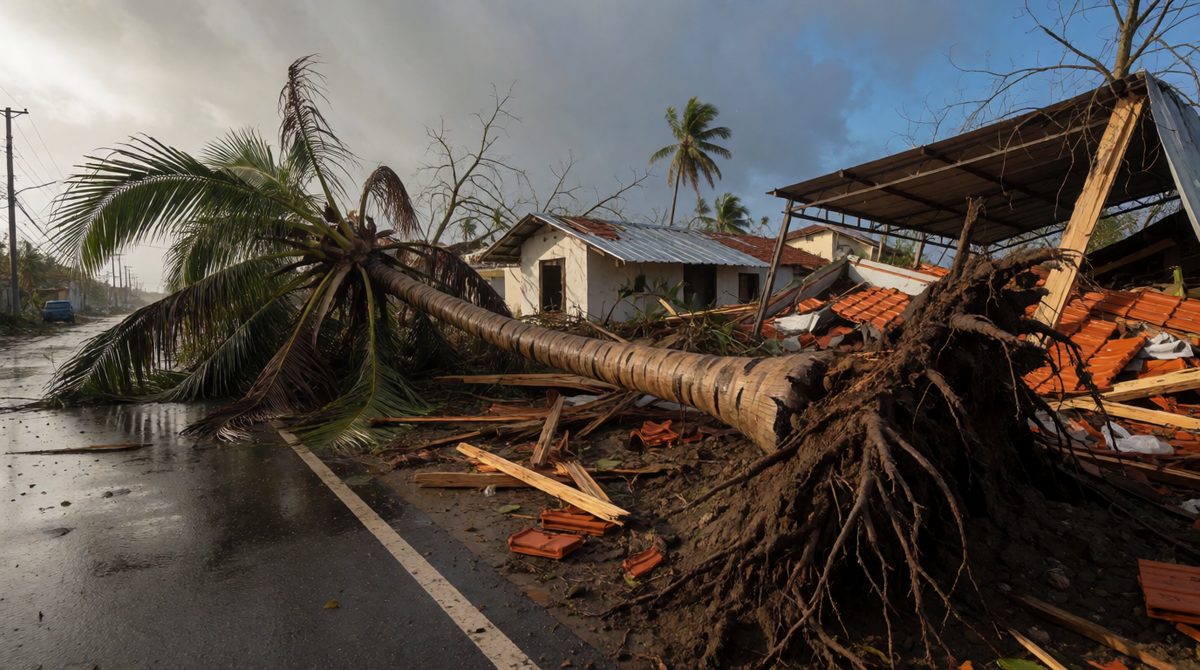
Strong winds and a storm surge caused huge damage when Typhoon Haiyan hit the Philippines in 2013
The spec asks you to use a named example of a tropical storm to show its effects and responses. In the exam, a general answer scores low. An answer with real place names and facts from one storm scores high. Our example is Typhoon Haiyan, which hit the Philippines in November 2013.
Remember, primary effects happen straight away because of the storm itself. Secondary effects happen later, as a result of the primary effects. Responses are what people do about it, in the short term and the long term.
Effects of tropical storms in general
Tropical storms cause damage in three main ways: very strong winds, torrential rain and a rise in sea level at the coast.
🌪 Primary effects
Strong winds flatten homes, tear off roofs and knock down trees and power lines. People are killed or injured by flying debris and falling buildings. Roads, bridges, ports and airports are damaged. Crops are destroyed and boats are wrecked.
⚡ Secondary effects
Floods and landslides follow the heavy rain. Dirty water spreads disease. Food and clean water run short. Jobs and income are lost. Wildlife habitats such as forests and coral reefs are damaged.
Key terms:
- Storm surge: a rise in sea level at the coast, pushed up by the storm's winds and low air pressure, which floods low-lying land.
Case study: Typhoon Haiyan, 2013
Haiyan formed over the warm waters of the western Pacific Ocean. It crossed the central Philippines on 8 November 2013. It was one of the strongest tropical storms ever to hit land, with wind speeds of over 300 km per hour. Remember that a typhoon is the name used in this part of the world for a tropical storm.
The Philippines is a group of more than 7,000 islands, which makes it very exposed to storms coming in from the Pacific. Many people live in low-lying coastal towns in simple homes made from wood and tin. The worst hit area was the island of Leyte, and the city of Tacloban took the full force of the storm surge.
Primary effects of Haiyan
- More than 6,000 people were killed.
- Around 1 million homes were damaged or destroyed, and about 4 million people were made homeless.
- A storm surge of several metres swept through Tacloban and other coastal towns, destroying whole neighbourhoods.
- Roads were blocked by debris, power lines and communication networks were cut, and Tacloban airport was badly damaged.
- Coconut trees, rice fields and fishing boats were destroyed, and hospitals and schools were damaged.
Secondary effects of Haiyan
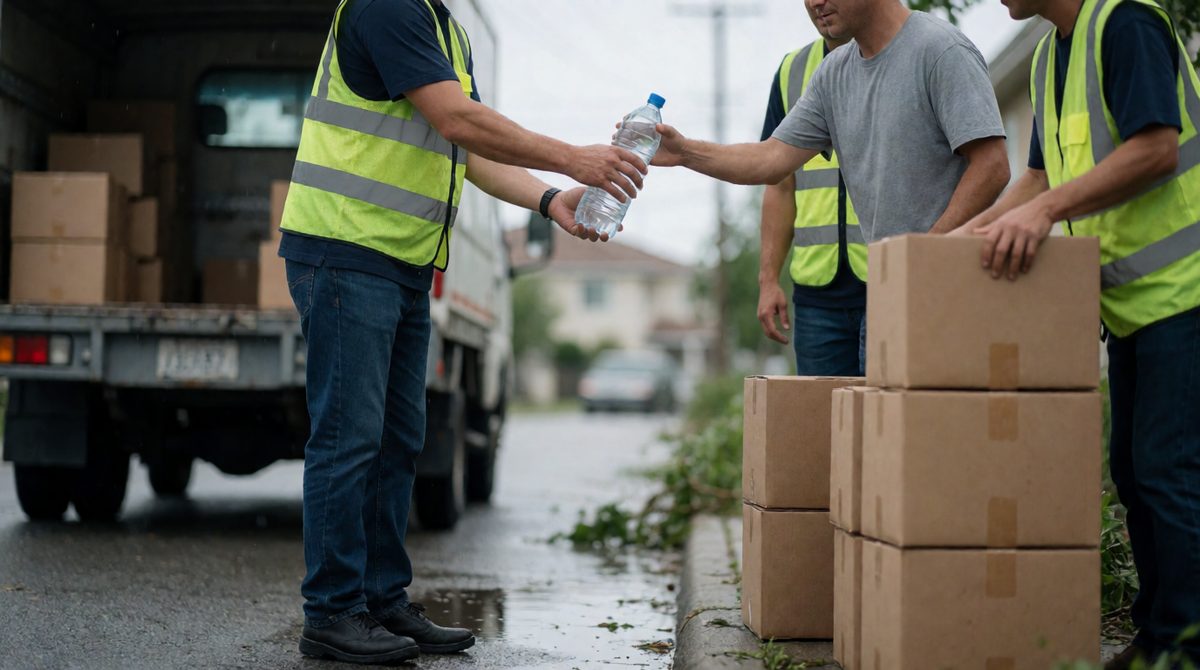
After Haiyan, shortages of food and clean water were serious secondary effects
- With roads blocked and the airport damaged, it was very hard to get help in, so many survivors went without food, clean water and medicine for days.
- Lack of clean water and poor sanitation raised the risk of diseases such as diarrhoea.
- With hospitals damaged, injured people were hard to treat, and with schools damaged, children missed lessons.
- Many people lost their jobs and income, because farms, boats and shops had been destroyed.
- Some people turned to looting to find food and supplies.
- The environment suffered: salt water from the surge and piles of debris damaged coastal habitats such as mangroves.
Why was the damage so bad?
The storm was extremely strong, it hit a densely populated coast, and the Philippines had limited money for strong buildings and emergency services. A tropical storm of the same strength hitting a richer country would usually cause fewer deaths.
Immediate responses
Immediate responses happen in the hours, days and weeks after the storm. They aim to save lives and meet basic needs.
- Before the storm, many people were told to move to evacuation centres and shelters. This saved lives, but not everyone could reach safety.
- Rescue teams searched for survivors and gave first aid.
- Other countries and charities sent aid, including food, drinking water, tents and medical supplies. The UK government and the public both gave money and sent supplies. The UN launched an international appeal for funds.
- Foreign ships and aircraft, including military ones, were used to carry aid and to reach places the roads could not.
- Emergency teams cleared roads and the airport so more help could get through.
- Field hospitals were set up and clean water was supplied to reduce disease.
Long-term responses
Long-term responses happen in the months and years after the storm. They aim to rebuild and to reduce the harm from the next storm.
- Homes, roads, schools and power supplies were rebuilt, often to a stronger standard.
- New and stronger shelters were built where people can go during a storm.
- Rules were introduced to stop building very close to the shore, and some families were moved to safer ground.
- People were given help to restart their livelihoods, for example new fishing boats and seeds for farmers.
- Mangroves were replanted along the coast, because they can help to soak up some of the energy of waves and surges.
- Warning and evacuation plans were improved.
Comparing the two kinds of response
🚑 Immediate
Short term. Rescue, food, water, shelter and medical care. Often led by aid agencies and other countries.
🏗 Long-term
Years. Rebuilding, new jobs, stronger defences and better planning. Needs money and local government.
Common mistakes
Students mix up primary and secondary effects. A flattened house is primary. The disease that follows because of dirty water is secondary. Another mistake is writing about a storm in general and not using Haiyan's name, place or facts. Finally, do not describe how the storm formed. That is a different question.
Exam-style question
Using a named example of a tropical storm, explain its primary effects and its immediate and long-term responses. [6 marks]
Model answer
Typhoon Haiyan hit the Philippines in November 2013. Its primary effects included more than 6,000 deaths and about 1 million homes damaged or destroyed, as a storm surge flooded Tacloban (1). Roads, power lines and the airport were also damaged (1). A secondary effect was that aid was slow to arrive because roads were blocked, so survivors lacked food and clean water, and disease risk went up (1). Immediate responses included other countries and charities sending food, water, tents and medical supplies, and rescue teams searching for survivors (1). Long-term responses included rebuilding homes and roads to a stronger standard and building new shelters (1). Mangroves were replanted and rules were introduced to stop building close to the coast, so that damage from future storms would be lower (1).
Exam tip
For a 6 mark question, aim for six clear points. Give at least one named place or figure from Haiyan, and separate your effects from your responses so the examiner can see each mark point.