🍃 Biomass
Wood, crop waste and animal waste are burned to heat water and make steam. New plants can be grown to replace what is burned. It is often cheap and uses waste, but burning it gives off carbon dioxide and crops take up farmland.
Sign up to access the complete lesson and track your progress!
Unlock This Course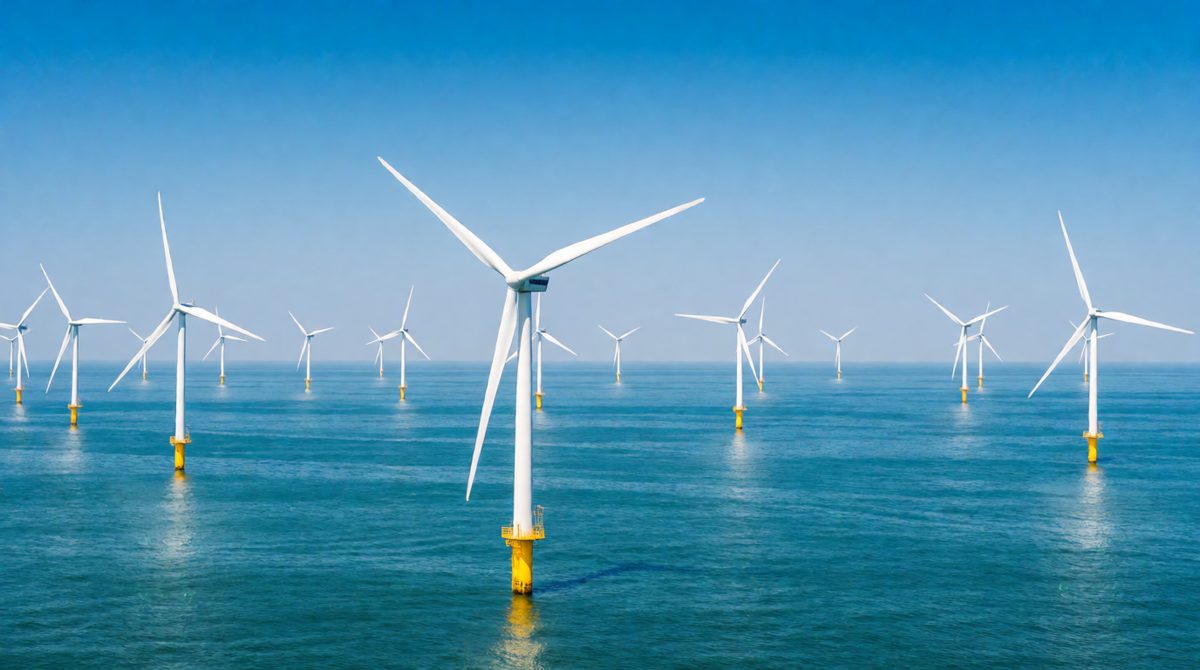
Wind farms are one way to increase energy supply
Demand for energy keeps rising, so countries look for ways to produce more. There is no single answer. Each energy source has its own strengths and its own problems, and different strategies suit different places.
The sources fall into two groups. Remember, renewable sources will not run out, while non-renewable sources are used up and cannot be replaced in a human lifetime. This lesson gives an overview of both groups.
Key terms:
There are seven renewable sources to know. Most make electricity by turning a turbine, but they get their energy from different places.
Wood, crop waste and animal waste are burned to heat water and make steam. New plants can be grown to replace what is burned. It is often cheap and uses waste, but burning it gives off carbon dioxide and crops take up farmland.
Moving air spins the blades of a turbine. Wind is free and makes no pollution while working. But wind turbines make no power on calm days, and some people dislike how they look and sound.
A dam holds back a river and the water is released through turbines. HEP is reliable and the stored water can be used when needed. But dams are expensive, flood valleys and can force people to move.
The rise and fall of the tide turns turbines, often in a barrage built across an estuary. Tides are very predictable. But barrages are costly and can harm wildlife such as birds on mud flats.
The up-and-down movement of waves drives generators at the coast. The sea never stops moving, but wave machines are hard to build, can be damaged by storms and the technology is still being developed.
Heat from deep underground makes steam that turns turbines. It works day and night and is reliable. But it only suits places with hot rocks near the surface, such as volcanic areas.
Solar panels turn sunlight into electricity. They are quiet, clean and can sit on a roof. But they make less power in cloudy weather and none at night, and the panels cost money to buy.
Most renewables make very little carbon dioxide while they work (biomass is the exception because it is burned). Their main problems are cost and the fact that some depend on the weather.
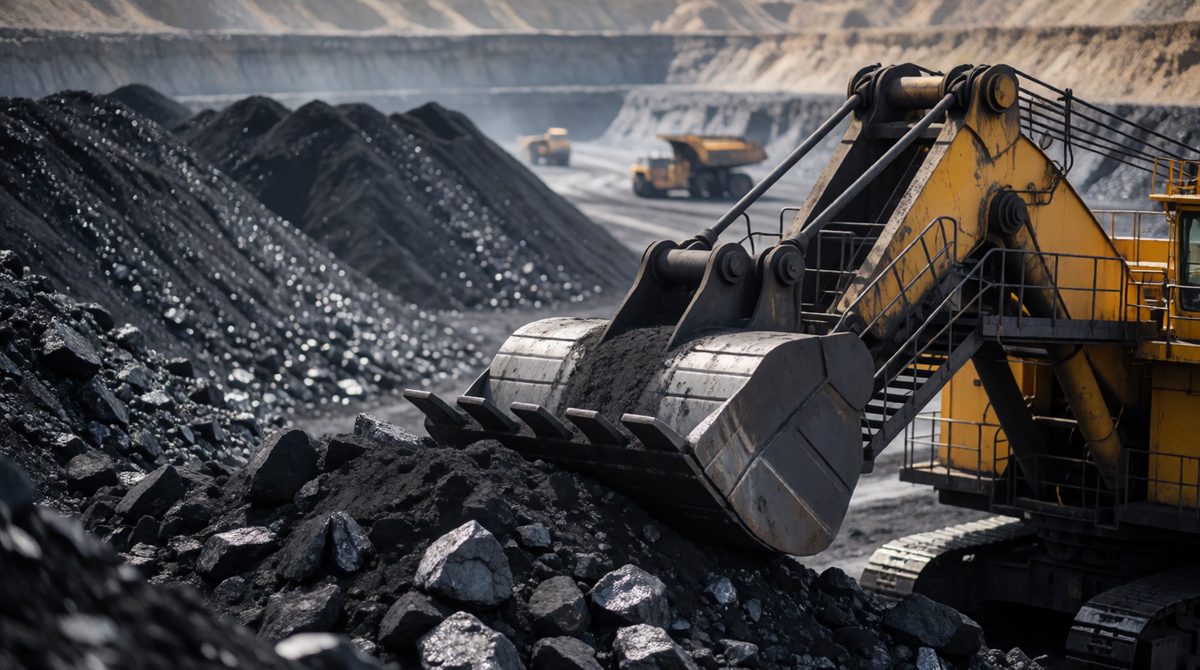
Coal is a non-renewable energy source that will run out
Coal, oil and natural gas are fossil fuels. Burning them heats water into steam to turn turbines, and oil is also used as fuel for vehicles. They are popular because they make a lot of energy, are easy to move and burn on demand, and power stations can run day and night. The problems are that they will run out and burning them releases carbon dioxide, which adds to climate change.
Nuclear power stations use the heat from splitting uranium atoms to make steam. A very small amount of uranium makes a huge amount of energy, and no carbon dioxide is made while the power station runs. The problems are that nuclear power stations are very expensive to build, and the waste stays dangerously radioactive for thousands of years and must be stored safely. If there is an accident, as at Chernobyl in 1986 and Fukushima in 2011, the effects can be serious and long lasting. Uranium is also a limited resource.
You need one example to show that taking a fossil fuel out of the ground has both advantages and disadvantages. Fracking for shale gas in the UK is a good one.
Shale is a rock that traps natural gas in tiny pockets. To get the gas out, a well is drilled down and then sideways through the shale. A mixture of water, sand and chemicals is pumped in at very high pressure. This cracks the rock, the sand keeps the cracks open, and the gas flows up the well. The UK has shale rock in places such as the Bowland Shale in northern England, and the main test sites were in Lancashire.
Because of the tremors and strong local protests, fracking in England was paused in 2019. This shows that a source with clear benefits can still be turned down because of its costs to people and the environment.
Do not say that nuclear power is renewable. It uses uranium, which is a limited resource, so it is non-renewable. Do not say that renewable sources cause no problems: dams flood land, turbines can harm birds and panels cost a lot. Do not say that fracking is a renewable source. Gas is a fossil fuel.
(a) Name two renewable sources of energy. [2 marks]
(b) Explain one disadvantage of nuclear power. [2 marks]
(c) Using an example you have studied, give one advantage and one disadvantage of extracting a fossil fuel. [4 marks]
(a) Wind (1) and solar (1). Any two from biomass, hydro, tidal, geothermal or wave.
(b) The waste is radioactive (1) and it stays dangerous for thousands of years, so it must be stored safely (1). Accept: accidents can have very serious effects (1) because radiation can spread over a large area (1).
(c) Fracking for shale gas in the UK. Advantage: it gives a home-produced supply of gas (1) so less gas has to be imported, which improves energy security (1). Disadvantage: it can set off small earth tremors (1), for example a magnitude 2.9 tremor at Preston New Road, Lancashire, in 2019 (1).
In part (c), name the example and give a fact from it. A general answer about gas or oil will not reach full marks.