🍲 Needs
You need food, water, clothing and somewhere to live. Without them you cannot survive. The number of needs is fairly small.

Lunch or save? Every choice like this teen's is economics, because you can't have everything you want
Every day you make choices about money, time and things. Should you buy lunch or save your pocket money? Should you play a game or revise? Economics is the study of how people, businesses and governments make choices when they cannot have everything they want.
This topic is examined on Paper 1: Microeconomics and Business Economics. It is the starting point for the whole course, so it is worth getting really clear.
Key terms:
You need food, water, clothing and somewhere to live. Without them you cannot survive. The number of needs is fairly small.
You may want a games console, a holiday or the newest phone. You can live without them, but you would like them. Once one want is met, another one appears.
Wants are different for each person. One person wants a guitar, another wants a bike. Economists say wants are unlimited: however much people have, they can always think of something else they would like.
What we want is produced as either goods or services.
Businesses produce both. Governments also provide both, such as roads (a good) and policing (a service). You will see how this works later in the course.
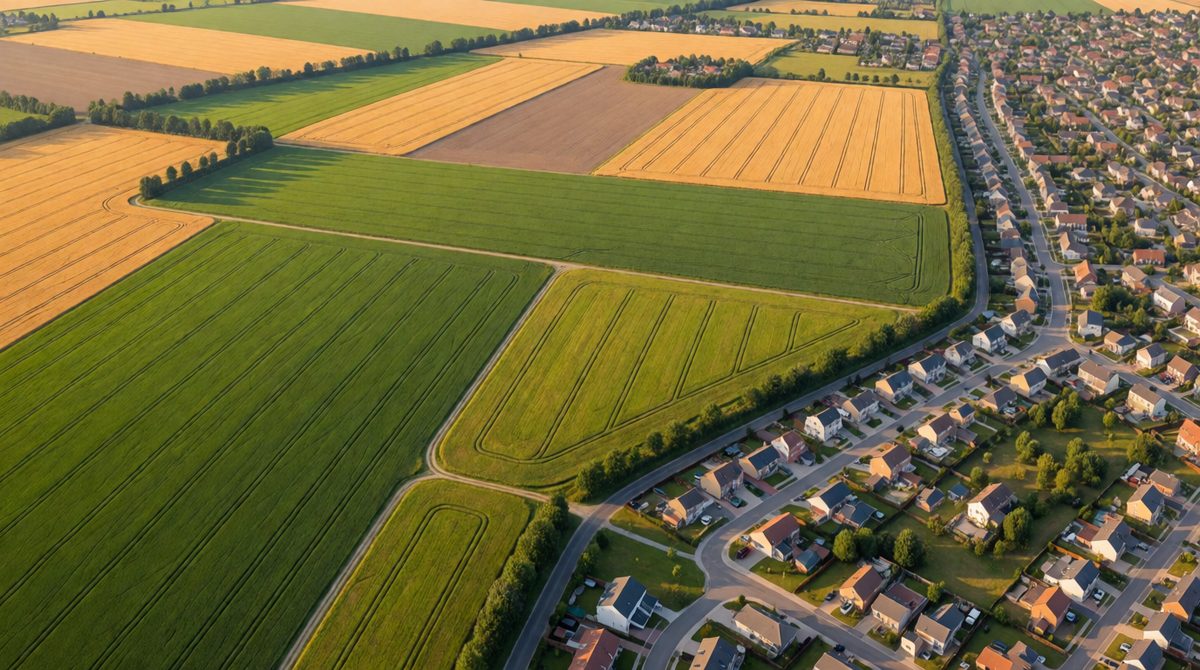
Farmland is finite: there is only so much of it, but our wants keep growing, which is the problem of scarcity
Here is the heart of economics. Our wants are unlimited, but the resources used to meet them are finite. Finite means there is only a limited amount. There is only so much oil, so many workers, so much farmland and so much time.
So there are never enough resources to produce everything everyone wants. This is called scarcity, and it is the basic economic problem.
Scarcity = unlimited wants + finite resources.
Scarcity does not only mean something is rare. Even something common, like water in a dry year, is scarce if there is not enough to meet everyone's wants. Scarcity affects rich and poor countries alike. A very rich country still cannot produce everything its people want.
Because we cannot have everything, we must choose. Choosing one thing means we cannot have something else with the same resources. Every economic decision-maker faces this.
A consumer has limited money. Buying a new phone might mean no money left for a concert ticket. They must choose how to spend.
A producer has limited workers, machines and materials. A bakery with one oven must choose whether to bake bread or cakes first.
A government has limited tax money. It must choose how much to spend on hospitals, schools, roads or defence. More on one means less on another.
All three face the same issue: more they would like to do than the resources to do it. The next lesson looks at what is given up when a choice is made.
A town council has a budget for one big project this year. Residents want a new swimming pool, a bigger library and better bus services. The budget only covers one of them.
Step 1: The wants (three projects) are greater than the resources (one budget). That is scarcity.
Step 2: The council cannot do everything, so it must make a choice.
Step 3: Whichever it picks, the other two have to wait.
Read the information, then answer the questions. This is the style of question you might see on Paper 1.
A school has a budget of £5,000. Students would like new sports equipment, a new set of computers and a trip for the whole year group. The budget does not cover all three.
(a) Define the term 'scarcity'. [2 marks]
(b) Identify one example of a service from this list: sports equipment, a school trip, computers, a football. [1 mark]
(c) Explain why the school has to make a choice. [3 marks]
(a) Scarcity is where wants are unlimited (1) but resources are finite or limited (1).
(b) A school trip. (1)
(c) The school wants all three things (1) but its budget is only £5,000, which is not enough to pay for all of them (1). This is scarcity, so it must choose which to buy and which to go without (1).
In 'explain' questions, link the situation to the idea: say what is wanted, say what is limited, then say the result is a choice.
Access the full course and all the resources like custom timetables and progress tracking.
Join Today