🛍 Spending money
A teenager with £40 buys a pair of football boots. The opportunity cost is the next best use of the £40, such as a cinema trip with friends.

Swim or meet friends? The one you didn't pick, your next best alternative, is your opportunity cost
Remember, resources are finite, so choices have to be made. This lesson is about what you lose when you make a choice. It is examined on Paper 1: Microeconomics and Business Economics.
Imagine you have a free Saturday afternoon. You could go swimming, meet friends or catch up on revision. You can only do one. If you choose to go swimming, you do not get the other two. The best of the things you did not pick is what you gave up.
Key terms:
Opportunity cost is the next best alternative given up. Look at the key words:
Back to the Saturday afternoon. You rank your options: swimming first, meeting friends second, revising third. You pick swimming. Your opportunity cost is meeting friends, because that was the next best option. It is not revising, and it is not all the things you could have done.
Opportunity cost is not always measured in money. It can be time, jobs, land or anything else that is limited. Often it is simply a different thing you wanted.
Step 1: List the options. Mia has £30 and can buy a pair of headphones, a book bundle or a day pass at a climbing wall.
Step 2: Rank them. Headphones first, climbing wall second, books third.
Step 3: She buys the headphones. Her opportunity cost is the climbing wall day pass, the next best alternative. The books are not part of the opportunity cost.
A consumer is a person who buys goods and services to use. Consumers have limited money and limited time, so every purchase means going without something else.
A teenager with £40 buys a pair of football boots. The opportunity cost is the next best use of the £40, such as a cinema trip with friends.
A student works a Saturday job instead of going to the beach. The opportunity cost is the beach day that was given up.
Knowing the opportunity cost helps consumers choose the option that gives them the most benefit. A consumer who would give up something very valuable might decide the purchase is not worth it.
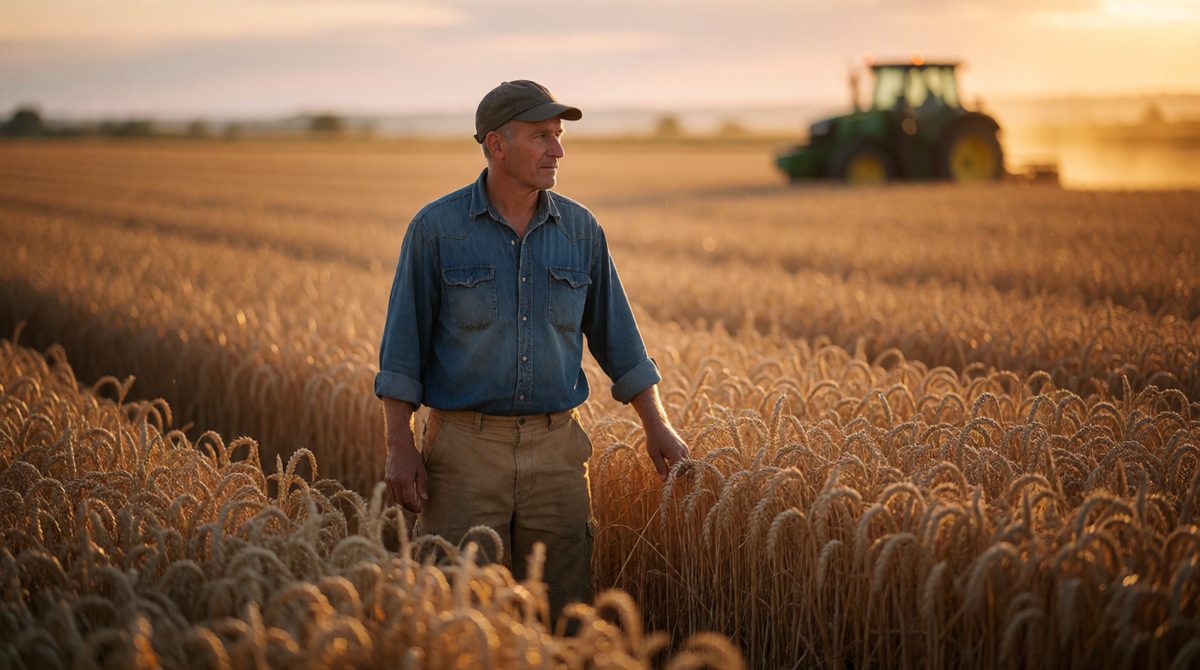
If this field grows wheat, it can't grow anything else that year, so the farmer gives up the next best crop
A producer is a business that makes goods or provides services. Producers have limited land, workers, machines and money, so using them for one product means they cannot be used for another.
A farmer has one field. Growing wheat means the field cannot be used for grazing sheep. If sheep were the next best use, sheep farming is the opportunity cost.
A furniture maker has a team of workers for one week. They can make tables or chairs. Making tables means the chairs they could have made are given up.
Producers also face opportunity cost when they spend money. A cafe owner who spends profits on a new coffee machine cannot spend that money on advertising. The producer has to decide which choice is likely to bring in more profit.
The government decides how to spend money raised from taxes. It has many demands on its money and it cannot meet them all.
A government has enough money to build a new railway line or to build new homes. If it builds the railway line, the opportunity cost is the homes that could have been built.
A government can spend money on a new national park or cut income tax. Choosing the park means giving up the tax cut.
Government choices affect many people, so opportunity cost matters a great deal. Voters may disagree on which alternative should be given up.
Opportunity cost shows that nothing is truly free. Even if someone gives you a free ticket, you give up your time. Thinking about opportunity cost helps every economic agent make better decisions, because it makes them compare what they gain with what they lose.
The same idea shows up later in the course. In the next lesson you will see how it can be shown on a diagram.
Read the information, then answer the questions. This is the style of question you might see on Paper 1.
A farmer has one field and can grow potatoes or keep goats. The farmer thinks potatoes will bring in the most money, keeping goats the second most, and leaving the field empty the least. The farmer chooses potatoes.
(a) Define the term 'opportunity cost'. [2 marks]
(b) Identify the opportunity cost of the farmer's choice. [1 mark]
(c) Explain one way opportunity cost could affect the government when it decides how to spend its tax money. [3 marks]
(a) Opportunity cost is the next best alternative (1) that is given up when a choice is made (1).
(b) Keeping goats. (1)
(c) The government has limited tax money (1). If it spends it on one thing, such as a railway line, it cannot spend it on another, such as new homes (1). The homes are the opportunity cost, so the government must decide which is more important to voters (1).
In part (b), give only the next best choice. Do not list the potatoes (what was chosen) or the empty field (a worse option).
Access the full course and all the resources like custom timetables and progress tracking.
Join Today