⚠️ The problem
The market leaves some things unproduced, or produced in the wrong amounts. People go without things that would help society, or resources are wasted.
Sign up to access the complete lesson and track your progress!
Unlock This Course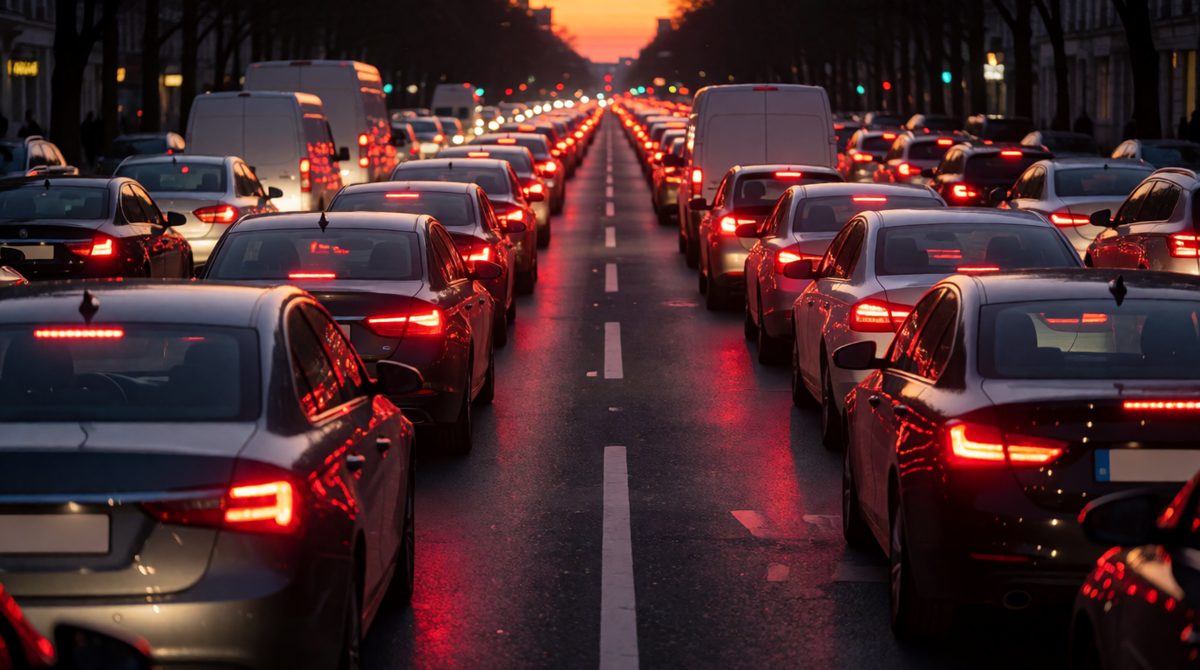
Traffic jams show resources being wasted when markets alone allocate them inefficiently
Usually, prices guide a market. If people want more of something, the price rises and firms supply more. Resources move to where they are wanted. When this works well, resources are used efficiently. This means scarce resources are shared out in the best way, so that the right goods and services are made in the right amounts.
But markets do not always work well. Sometimes the market produces too much of something, too little of something, or nothing at all. This topic is examined on Paper 1 (Microeconomics and Business Economics).
Key terms:
If a market fails, resources are wasted. Society could be better off if they were used differently. Because the market will not fix the problem by itself, the government may decide to intervene.
The market leaves some things unproduced, or produced in the wrong amounts. People go without things that would help society, or resources are wasted.
The government can make decisions for the whole country. It can raise money through taxes and use it to provide goods and services that the market will not.
So the main reason for intervention is to correct a misallocation of resources and improve the outcome for society. The exact policies governments use are covered in later lessons, and one major cause of market failure is covered in Externalities: Social Costs and Benefits. This lesson looks at one clear cause: public goods.
Think about a bar of chocolate. If you do not pay, you do not get it (it is excludable). And if you eat it, nobody else can eat it (it is rival). This is a normal private good, and the market is good at providing it.
Now think about a street light. Public goods have two features:
Once a street light is switched on, everyone walking past gets light. The owner cannot stop people who have not paid from using it.
You walking under the light does not make it any dimmer for the next person. Many people can use it at once and it is not used up.
| Good | Can people be stopped from using it? | Does one person's use reduce it for others? | Type |
|---|---|---|---|
| Bar of chocolate | Yes | Yes | Private good |
| Street lighting | No | No | Public good |
| National defence | No | No | Public good |
National defence protects everyone in a country, whether or not they pay taxes. Protecting one more person does not mean there is less protection for anyone else.

Everyone benefits from street lights whether they pay or not, so a free market would underprovide them
Imagine a private company wants to put up street lights in a town and charge for them. Nobody can be stopped from using the lights, so many people think, "Why should I pay? I can use them anyway." These people are free riders.
This is a clear market failure. The good would benefit everyone, but the free market does not supply it. Resources are not allocated efficiently, because society goes without something it wants.
That is why public goods are usually provided by the government. It pays for them with money raised from taxes, so everyone helps to pay, and everyone can use them. Examples include street lighting and national defence.
Question: Explain why a private firm is unlikely to provide street lighting. [3 marks]
Answer: Street lighting is non-excludable, so the firm cannot stop people who have not paid from using the light (1). This means people can be free riders and choose not to pay (1). The firm would not earn enough revenue to cover its costs, so it would not provide the lighting (1).
1. Saying a public good is any good the government provides. The test is non-excludable and non-rival, not who provides it. 2. Mixing up the two features. Non-excludable is about stopping people using it. Non-rival is about it being used up. 3. Saying market failure means a business has failed or gone bankrupt. It means the market has not allocated resources efficiently. 4. Forgetting to link the free rider problem to firms not being able to earn revenue.
The town of Harlow Bay has no street lighting on its coast road. A private company says it will not build lights there because it could not charge drivers or walkers to use them.
(a) Define the term 'market failure'. [2 marks]
(b) Identify two features of a public good. [2 marks]
(c) Explain why the free rider problem means the market may not provide street lighting. [4 marks]
(a) Market failure is when the free market fails to allocate resources efficiently (1), so the best outcome for society is not reached (1).
(b) It is non-excludable, so people cannot be stopped from using it (1). It is non-rival, so one person using it does not reduce what is left for others (1).
(c) Street lighting is non-excludable, so the company cannot stop people who have not paid from using it (1). Many people will become free riders, because they can enjoy the light without paying (1). This means the company would not earn enough revenue to cover its costs (1). So it will not provide the lighting, which is a market failure, and the government may need to provide it from taxes (1).
For a 'why will the market not provide it' question, write the chain: non-excludable, so free riders, so no revenue, so no provision.