🛒 Example
A supermarket chain orders millions of tins of beans. The supplier charges it far less per tin than the small corner shop pays. The chain's average cost per tin is lower.
Sign up to access the complete lesson and track your progress!
Unlock This CourseWhen a business grows, it makes more goods or services. You might expect its costs per item to stay the same. Often they do not. Big businesses can usually make each item more cheaply than small ones. This lesson is examined on Paper 1 (Microeconomics and Business Economics).
Key terms:
Remember from the last lesson that average (total) costs = total costs / quantity. Economies of scale mean this number gets smaller as quantity goes up.
Fenwick Prints makes posters. The figures are made up for practice.
| Posters made | Total costs (£) |
|---|---|
| 500 | 1,500 |
| 5,000 | 10,000 |
Average costs at 500 posters = 1,500 / 500 = £3 per poster.
Average costs at 5,000 posters = 10,000 / 5,000 = £2 per poster.
Output went up by ten times, but total costs went up by less than ten times. So average costs fell from £3 to £2. Fenwick Prints has enjoyed economies of scale.
The word internal matters. The saving is the result of the business's own growth, not of something happening in the area around it. There are six types you need to know. Here is the quick list, then each one in detail.
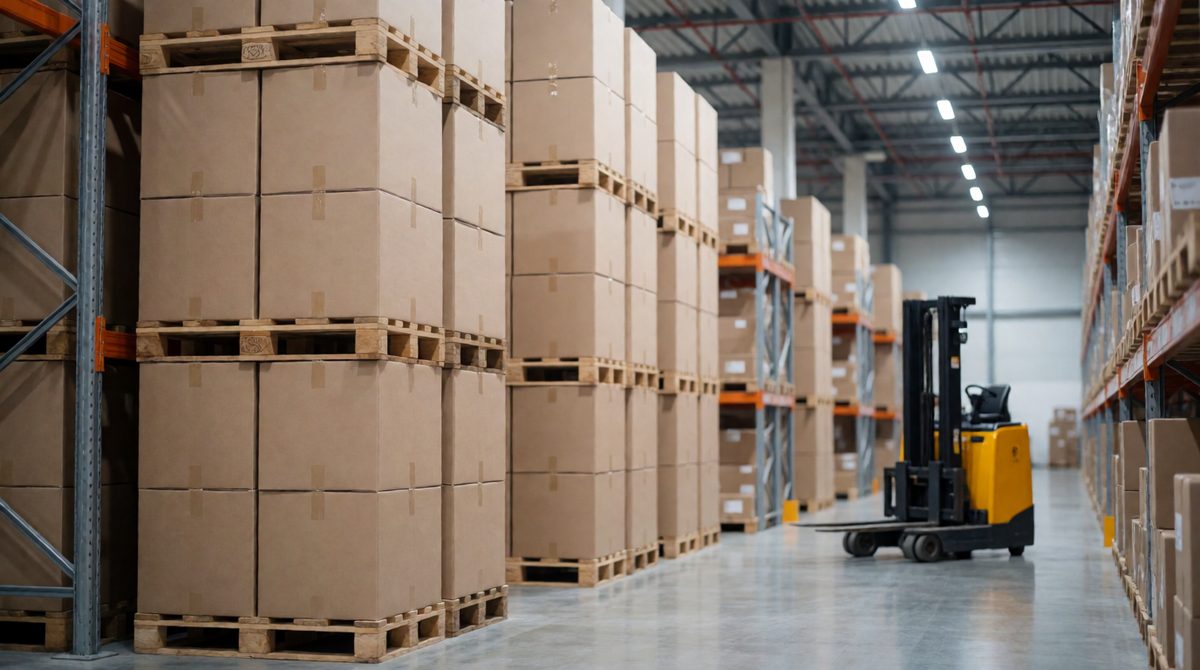
Buying in bulk gets a lower price per unit, a purchasing economy of scale for big firms
A big business buys large amounts of materials and stock. Suppliers are happy to give a lower price per unit for a big order, because it saves them time and gives them a reliable customer. This is called a bulk buying discount.
A supermarket chain orders millions of tins of beans. The supplier charges it far less per tin than the small corner shop pays. The chain's average cost per tin is lower.
A lower price per unit of materials means lower variable costs per unit. So average costs fall.
Advertising and promotion cost money, but the cost does not rise in step with output. One advert can reach a very large audience. A big business spreads the cost of its marketing over many more units, so the marketing cost per item is small.
A trainer company pays for one national television advert. If it sells 2 million pairs, the advert adds only a few pence to each pair. A small firm selling 2,000 pairs would pay far more per pair.
A large firm can also use one brand name across many products, rather than paying to promote each product from scratch.
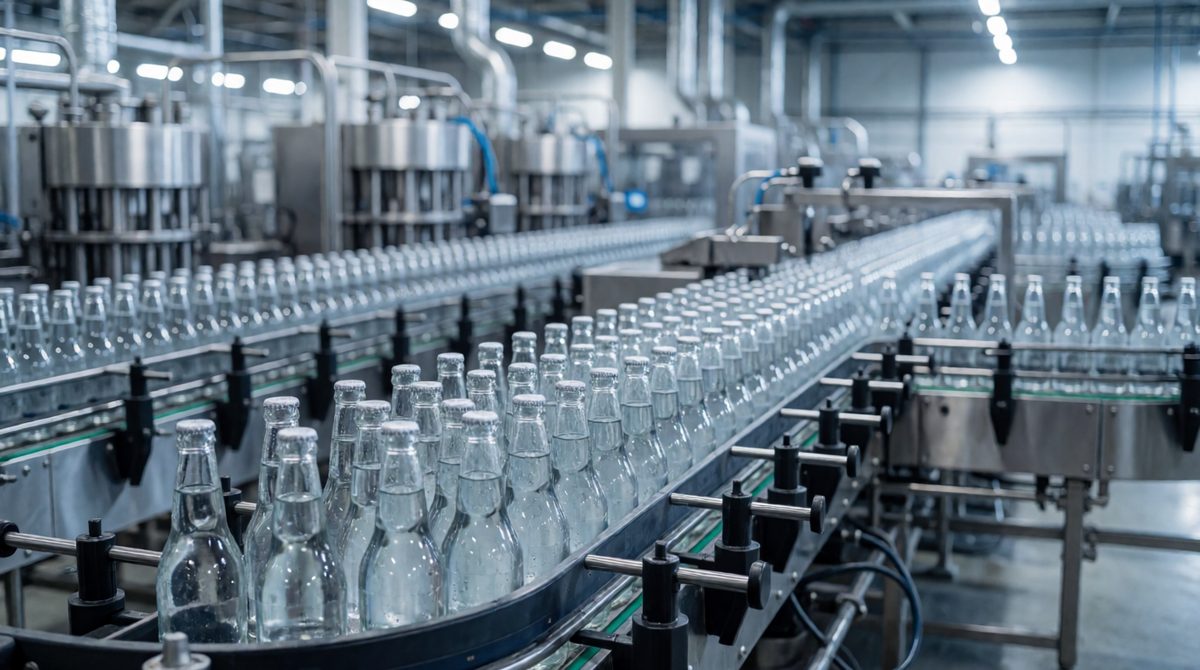
Only big firms can afford giant machines like these, which cut the average cost of each unit: technical economies
Large businesses can afford bigger and more advanced machinery, such as automated production lines. They can also use this machinery all day and every day, because there is enough demand to keep it busy. Specialised equipment makes more output with fewer workers, so cost per unit falls.
A large car factory can buy robots that weld thousands of car bodies a week. A small garage building a few cars by hand cannot afford robots and could not keep them busy.
A big delivery company can run very large lorries on busy routes. A large lorry carries many more parcels per trip, so each parcel costs less to move.
Banks see large businesses as less risky to lend to, because they usually own more assets and have steadier sales. So large businesses can often borrow money at lower interest rates than small ones. They may also find it easier to raise money in other ways, such as selling shares. Lower interest payments mean lower costs per unit.
A well-established national company borrows £5 million at a low interest rate. A new small firm asking for a loan is seen as a bigger risk, so the bank charges it a higher rate for its borrowing.
A small business often has one owner who does everything: buying, selling, hiring and keeping the accounts. A large business can afford to employ specialist managers, such as a finance manager, a marketing manager and a human resources manager. Each expert does one job well. This improves decision making and efficiency, and the cost of the managers is spread over a lot of output.
A large hotel group employs a specialist manager just for buying food and drink. The manager gets better prices and wastes less, which lowers the group's average costs.
All businesses face risk. A product might not sell, or a market might shrink. A large business can spread this risk by selling many different products or by selling in many different areas. If one product does badly, the others can still bring in money. This makes the business more stable, and it is easier to keep costs down.
A big food company sells biscuits, soup, cereal and drinks in many countries. If biscuit sales drop in one country, sales of its other products can cover the loss. A small firm that makes only one kind of biscuit has no such back-up.
Name the type of internal economy of scale in each case.
(a) A bakery chain gets a lower price per kilo of flour because it orders 50 tonnes at a time. This is a purchasing (bulk buying) economy.
(b) A company hires a full-time specialist accountant because it is now big enough to need one. This is a managerial economy.
(c) A bank lends a large firm money at a lower interest rate than a small firm pays. This is a financial economy.
(d) A firm buys an automated packing machine that it uses all day. This is a technical economy.
Dalby Drinks makes bottled fruit juice. It has grown a lot over the last five years. The figures are made up for practice.
| Bottles made per week | Total costs (£) |
|---|---|
| 20,000 | 30,000 |
| 100,000 | 110,000 |
(a) Define economies of scale. [2 marks]
(b) Calculate Dalby Drinks' average costs at 20,000 bottles and at 100,000 bottles. [4 marks]
(c) Dalby Drinks now buys fruit in much larger amounts and pays a lower price per kilo. State the type of internal economy of scale this shows. [1 mark]
(d) Explain one other way in which Dalby Drinks' growth could lower its average costs. [3 marks]
(a) Economies of scale are a fall in average costs (1) as the business increases its output (1).
(b) At 20,000 bottles: 30,000 / 20,000 (1) = £1.50 (1). At 100,000 bottles: 110,000 / 100,000 (1) = £1.10 (1).
(c) Purchasing (bulk buying) economy (1).
(d) Any one other type, for example marketing. Dalby Drinks can pay for a large advertising campaign (1). The cost is spread over many more bottles (1), so the advertising cost per bottle is lower and average costs fall (1). Technical, financial, managerial or risk bearing economies with a correct explanation also score.
In part (d), do not stop at naming the type. Follow this chain: what the business does, why that cuts the cost of each unit, and so average costs fall.