What is a monopoly?
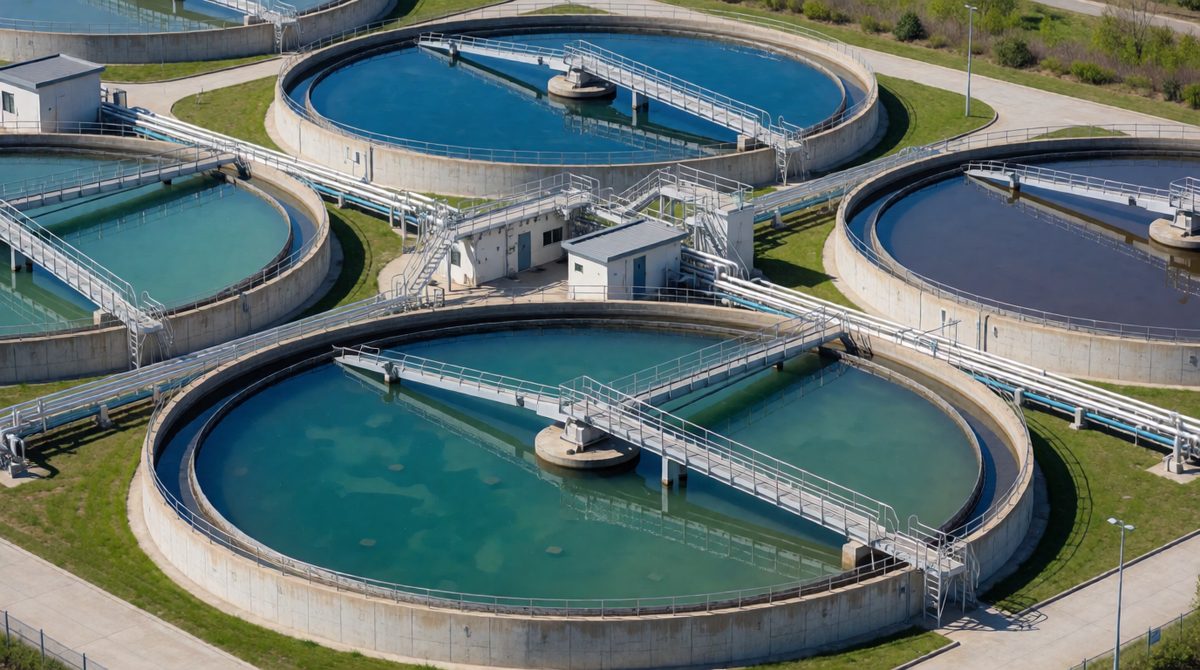
When one firm supplies the whole market, like a single water company, it is a monopoly
In some markets there is no real competition at all. One business supplies nearly everything that customers buy. This is called a monopoly. It is examined on Paper 1 (Microeconomics and Business Economics).
Key terms:
- Monopoly: a market where one business dominates and has most or all of the sales.
- Pure monopoly: a market with only one business, so it has 100% of the sales.
- Dominance: when one business has a very large share of the market, even though a few small rivals still exist.
- Price-maker: a business with enough power to set its own price.
- Barriers to entry: things that make it hard or impossible for new firms to start selling in a market.
- Patent: a legal right that stops other firms copying a new invention for a fixed number of years.
A pure monopoly is very rare. Many exam questions describe a firm that dominates its market, which still counts as a monopoly in this course. Water companies in England are a real example: each one supplies the homes in its own region, and customers cannot switch to a different one.
The main features of monopoly
👑 One business dominates
The monopolist has all, or nearly all, of the market. Customers have little or no choice of supplier.
🎁 Unique product
The product is different from anything else, or has no close substitute. Customers who want it must buy from the monopolist.
💰 Price-maker
A small firm in a busy market must accept the going price. A monopolist has no close rivals, so it can choose its price. It cannot choose any price, though, because if the price is too high, people buy less or go without.
🔒 Barriers to entry
New firms find it very hard to join the market. This is how a monopoly keeps its position. See the five barriers below.
Barriers to entry

Huge start-up costs like building a railway network are a barrier that keeps rivals out
If it were easy to start up, new firms would arrive and share the profits. Barriers to entry stop this. The spec lists five.
- Legal barriers: the law gives one firm the sole right to sell, or a licence is needed that few firms can get.
- Patents: a firm that invents a new medicine can stop others copying it for a set number of years.
- Marketing budgets: a big firm spends millions on advertising, so a new firm with a small budget struggles to get noticed.
- Technology: the firm has special machines, software or methods that rivals cannot easily copy or afford.
- High start-up costs: setting up needs huge spending, for example on pipes, power stations or factories, so few firms can afford to try.
Worked example
Zorlo Ltd invents a new type of battery and holds a patent. It is the only firm allowed to sell it. Zorlo is a monopoly because it has the whole market (one business dominates). The battery is a unique product. Zorlo is a price-maker because no rival can sell the same battery. The patent is the barrier to entry.
Advantages of monopoly
- Economies of scale: with a very large output, average costs can fall a long way. Remember, economies of scale are falling average costs as output rises.
- Price: lower costs can be passed on to customers as lower prices, but the monopolist does not have to do this.
- Innovation: high profits can pay for research and new products. Patents reward a firm for inventing, which gives it a reason to try.
- Efficiency: there is no wasted duplication. For example, one set of water pipes to each home is cheaper than three competing sets.
- Quality: a large firm with lots of money can invest in good equipment and skilled staff, so quality can be high.
- Choice: one standard product can be simple for customers and may be the only way a product exists at all.
Disadvantages of monopoly
- Price: as a price-maker, the firm can charge high prices and make large profits. Customers have nowhere else to go.
- Efficiency: with no rivals to beat, the firm may become lazy and let its costs rise.
- Choice: customers have only one supplier and often only one version of the product.
- Quality: if customers cannot leave, the firm has less reason to improve its quality or service.
- Innovation: without competition, the firm may feel no pressure to develop new ideas.
- Economies of scale: the firm may get them, but it may keep the savings as extra profit. Very large firms can also suffer from diseconomies of scale.
✅ Good for...
Lower costs from large-scale production, money for research and no wasteful duplication.
❌ Bad for...
Customers, who may face high prices, little choice and weaker service.
Common mistakes
- Saying a monopoly always has 100% of the market. A dominant firm with a very large share also counts.
- Saying a monopoly can charge any price it likes. Customers can still choose to buy less or not buy at all.
- Writing only the disadvantages. Exam answers that weigh up both sides score better.
- Mixing up a monopoly with an oligopoly. Oligopoly (a few big firms) is the next lesson, so here think of one firm.
Exam-style question
Read the information, then answer the questions.
Velta Ltd is the only company in Country P that makes a special kind of paint for ships. It holds a patent, spends a lot on advertising and owns very expensive machines. Velta sells at a high price and makes large profits. It uses some of its profits to develop new paints.
(a) Identify two barriers to entry that protect Velta Ltd. [2 marks]
(b) Explain one reason why Velta Ltd is a price-maker. [2 marks]
(c) Analyse one advantage and one disadvantage of this monopoly for customers. [4 marks]
Model answer
(a) A patent (1) and a high marketing budget (1). Expensive machines (technology or start-up costs) would also be accepted.
(b) Velta is the only company making this paint (1), so ships' owners have no rival to buy from and Velta can choose its own price (1).
(c) Advantage: Velta spends profits on developing new paints (1), so customers may get better products that they would not have had otherwise (1). Disadvantage: Velta has no rivals (1), so it can charge a high price and customers have no other supplier to turn to (1).
Exam tip
In part (c), use the facts in the case. Mention the patent, the high price or the new paints, not just general points about monopoly.
Recap
- A monopoly is a market where one business dominates. A pure monopoly has 100% of the sales.
- Features: one business dominates, a unique product, a price-maker and barriers to entry.
- Barriers: legal barriers, patents, marketing budgets, technology and high start-up costs.
- Advantages: economies of scale, possible lower prices, innovation, efficiency and quality.
- Disadvantages: high prices, possible inefficiency, little choice, weaker quality and less pressure to innovate.