💰 Causes from households
Higher incomes or tax cuts: people have more to spend.
Higher confidence: people feel safe about their jobs, so they spend more and save less.
Lower interest rates: borrowing is cheaper, so people take loans and buy more.
This topic is examined on Paper 2 (Macroeconomics and the Global Economy). Last lesson you learned how inflation is measured. Now the question is: why do prices rise across the whole economy? Economists give two main answers, called demand-pull and cost-push inflation. Then we look at the tool governments use to slow inflation down: interest rates.
Sign up to access the complete lesson and track your progress!
Unlock This Course
Demand-pull inflation: when shoppers want to buy more than firms can make, prices get pulled up
Think of an auction. If lots of people want the same painting, the price goes up. In the same way, if people in a country want to buy more than firms can produce, prices across the economy are pulled upwards.
Key terms:
Demand-pull inflation is most likely when firms are already busy and cannot easily make more. This is common in a boom (see The Economic Cycle). Total demand is made up of spending by households, firms, the government and overseas buyers. Anything that raises this spending can start demand-pull inflation.
Higher incomes or tax cuts: people have more to spend.
Higher confidence: people feel safe about their jobs, so they spend more and save less.
Lower interest rates: borrowing is cheaper, so people take loans and buy more.
Higher government spending: more building and more public services.
Firms investing more: they buy machines and buildings.
Rising export orders: overseas customers want more of our goods.
Example: a country has a fast-growing economy and low unemployment. The government cuts income tax. Households have more money and rush to buy cars, furniture and holidays. Firms cannot produce enough, so they raise prices. Many prices rising together is demand-pull inflation.
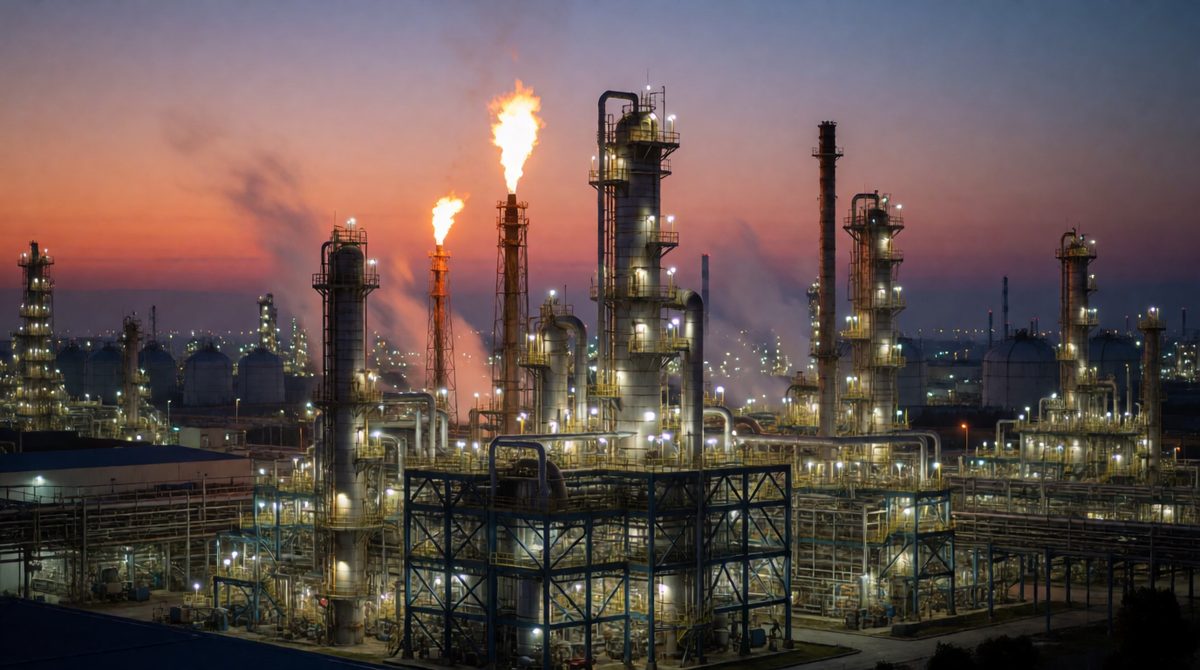
When oil and energy get pricier, firms' costs rise and they push up prices: cost-push inflation
This type comes from the other side. Here the problem is not shoppers spending too much. It is firms paying more to make their goods, so they push their prices up to protect their profits.
Key terms:
If workers win big pay rises, labour costs go up. Firms may raise prices to cover them.
Oil, gas, metals and food ingredients can become more expensive. Almost every firm uses energy, so many prices rise at once.
Higher indirect taxes raise costs. So do dearer imported parts and materials.
A well-known example is 2022. After Russia invaded Ukraine, the prices of gas and oil rose sharply around the world. Firms and households in many countries, including the UK, paid much more for energy. Businesses passed their higher costs on in their prices, and inflation rose in many economies.
| Demand-pull | Cost-push | |
|---|---|---|
| Starting point | Spending rises | Costs of production rise |
| Typical cause | Tax cuts, low interest rates, confidence | Dearer energy, wages, materials |
| Output and jobs | Firms usually produce more | Firms may produce less |
| Time of the cycle | Often a boom | Can happen at any time |
Inflation that is too high is a problem, so governments want it low and stable. The main tool to slow demand-pull inflation is a higher interest rate. In most countries a central bank, such as the Bank of England, sets the main interest rate. The full story of monetary policy comes later in Monetary Policy and Interest Rates. Here is the outline.
Lower interest rates do the opposite. They make borrowing cheaper and encourage spending, which can raise inflation. So low interest rates are a possible cause of demand-pull inflation, and high interest rates are a cure.
Country Brenmoor has inflation of 6%. Its central bank wants it nearer 2%. It raises the interest rate from 3% to 5%.
Explain how this could reduce inflation. Answer: a higher rate makes loans dearer, so households borrow and spend less. Saving also pays more, so people save instead of spending. Lower spending reduces demand, so firms find it harder to raise prices, and inflation falls.
A warning for evaluation: higher interest rates work best against demand-pull inflation. They do less to stop cost-push inflation, because dearer oil is not fixed by people borrowing less. Higher rates can also make firms cut back and may increase unemployment. Good evaluation answers say this.
Country Dalmere has had fast growth for three years. Unemployment is low. Last year the government cut income tax and the central bank cut the interest rate. Inflation has risen from 2% to 7%.
(a) Define demand-pull inflation. [2 marks]
(b) Explain two reasons why inflation in Dalmere has risen. [4 marks]
(c) Explain how raising the interest rate could help to reduce inflation in Dalmere. [3 marks]
(a) Demand-pull inflation is a rise in the general level of prices (1) caused by total demand growing faster than the economy can supply (1).
(b) The income tax cut means households keep more of their pay, so they spend more and demand rises (1). Fast growth and low unemployment mean firms struggle to supply more, so they raise prices (1). The lower interest rate makes borrowing cheaper, so people and firms borrow and spend more (1), which adds to demand and pulls prices up (1).
(c) A higher interest rate makes borrowing more expensive, so households and firms borrow less (1). Saving becomes more rewarding, so people spend less (1). Total demand falls, so there is less pressure on prices and inflation falls (1).
In an "explain" answer, write a chain: cause, then what households or firms do, then what happens to demand and prices. For part (b), do not stop at "demand rises". Show why that makes prices go up.