🔢 Poor at calculating
Consumers are not always good at working out the benefit of a choice. They may not know all the facts or may find the sums hard.
Sign up to access the complete lesson and track your progress!
Unlock This CourseReal life is messy. To make sense of it, economists begin with simple assumptions about how people and businesses behave. Then they check where real life is different. This topic is part of Paper 1 (Microeconomics and Business Economics).
Key terms:
The two assumptions are:
These assumptions are useful because they let us predict behaviour. A shopper who wants the most for their money will choose the better deal. A business that wants the most profit will look for the best way to earn it. But they are only assumptions. People and businesses do not always behave this way.

Grabbing the same snack every day is a habit, one reason consumers don't always maximise their benefit
Imagine you have £20 to spend. A perfect, calculating shopper would pick the exact choice that gives the most benefit. Real shoppers often do not. There are three reasons to learn.
Consumers are not always good at working out the benefit of a choice. They may not know all the facts or may find the sums hard.
Some habits are hard to give up. People keep buying the same thing out of routine, even when something better is available.
Consumers sometimes copy other people's behaviour, buying what friends or crowds buy instead of what suits them best.
Examples. A student chooses a phone contract with a low monthly fee but does not add up the extra charges, so they pay more than a different deal would cost. That is poor calculating. A man buys the same brand of cereal every week without looking at the shelf. That is a habit. A group of friends all buy a trainer because everyone at school wears it, even though a cheaper pair would do the same job. That is copying others.
In each case the consumer did not get the most benefit they could have. So the assumption that consumers always maximise benefit does not always hold.
Businesses are also not always focused on the biggest possible profit. The spec gives three reasons.
In a large business, the people who run it (the managers) are often not the owners. Managers may care more about the size of the business than its profit. Bigger businesses can mean higher pay, more status and more power for them.
To sell more, a business may cut its prices or spend heavily on advertising. This can push profit down even while sales go up.
Some businesses put customers first. A firm may keep prices fair, offer free repairs or spend extra on friendly service. These choices raise costs or lower prices, so profit is lower. The owners may feel that happy, loyal customers matter more than the last pound of profit.
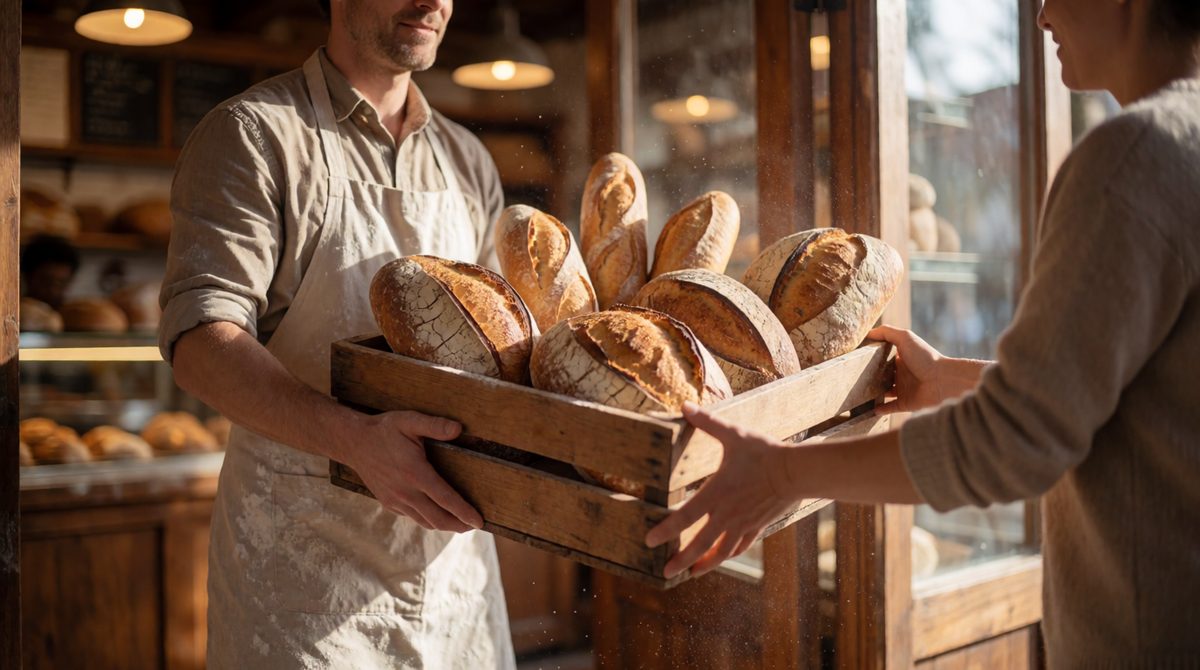
A bakery giving bread to a food bank earns less profit, but it chooses charitable work over maximising profit
Some producers give part of their income to good causes or run for a social purpose. A bakery might give a share of its takings to a local food bank, or a shop might donate a share of takings to a children's hospital. The money given away could have been profit.
| The assumption | Why it may not be true | |
|---|---|---|
| Consumers | Maximise benefit | Poor at calculating; habits; copying others |
| Producers | Maximise profit | Revenue or sales maximising managers; caring for customers; charitable work |
A shop is run by a manager whose pay rises with the number of items sold. She halves the price of a jacket. Sales double, so revenue stays about the same, but the shop must buy twice as many jackets, so profit falls. Her aim was sales maximisation, not profit maximisation. This shows a producer who may not maximise profit. (How to work out profit is covered in the lesson Costs, Revenue and Profit.)
Read this and answer the questions. Marcus runs a small cafe. He gives a free coffee to local nurses every Friday and always keeps the price of tea low. His customers mostly order the same drink every visit.
(a) State one assumption economists make about businesses. [1 mark]
(b) Explain one reason why Marcus may not be maximising his profit. [3 marks]
(c) Explain one reason why the cafe's customers may not be maximising their benefit. [3 marks]
(a) Businesses aim to maximise their profit. (1)
(b) Marcus gives away free coffee to nurses, which is charitable work. (1) The free coffees are not paid for, so they cost him money and bring in no revenue. (1) This lowers his profit below the most he could earn. (1)
(c) The customers order the same drink every visit, which is a habit. (1) They may not have tried other drinks that could give them more benefit. (1) So they may not be getting the most satisfaction from their money. (1)
For an "explain" question, use a chain: give the reason, show how it works in the context given, then say what it means for profit or benefit. Use the names from the question, such as Marcus and the nurses.