Environment and Equality » Protecting the Environment and Government Controls
What you'll learn this session
Study time: 30 minutes
Edexcel spec: 2.1.1 (e) and 2.1.2 (d)
- Why protecting the environment is a government aim for the whole economy
- Four ways business activity damages the environment
- How a government protects the environment, including laws and public parks
- The advantages and disadvantages of regulation, legislation, fines and pollution permits
This topic is examined on Paper 2 (Macroeconomics and the Global Economy). Earlier, in Government Policies for Externalities, you saw how each policy works in one market. Here we step back and ask how they protect the environment across the whole economy, and what they cost.
🔒 Unlock Full Course Content
Sign up to access the complete lesson and track your progress!
Unlock This CourseProtection of the environment as an aim
Governments have several macroeconomic aims, such as growth, low inflation and low unemployment. Protection of the environment is another one. Business activity makes goods and jobs, but it can also damage the natural world around us. If nobody steps in, the damage can build up across the whole country, and the cost lands on people who did not choose it.
Key terms:
- Protection of the environment: a government aim to limit the damage that business activity does to land, air, water and wildlife.
- Pollution: harm to the environment caused by waste, noise or other unwanted waste products of business activity.
- Legislation: laws passed by a country's law-making body that people and firms must obey.
How business activity damages the environment
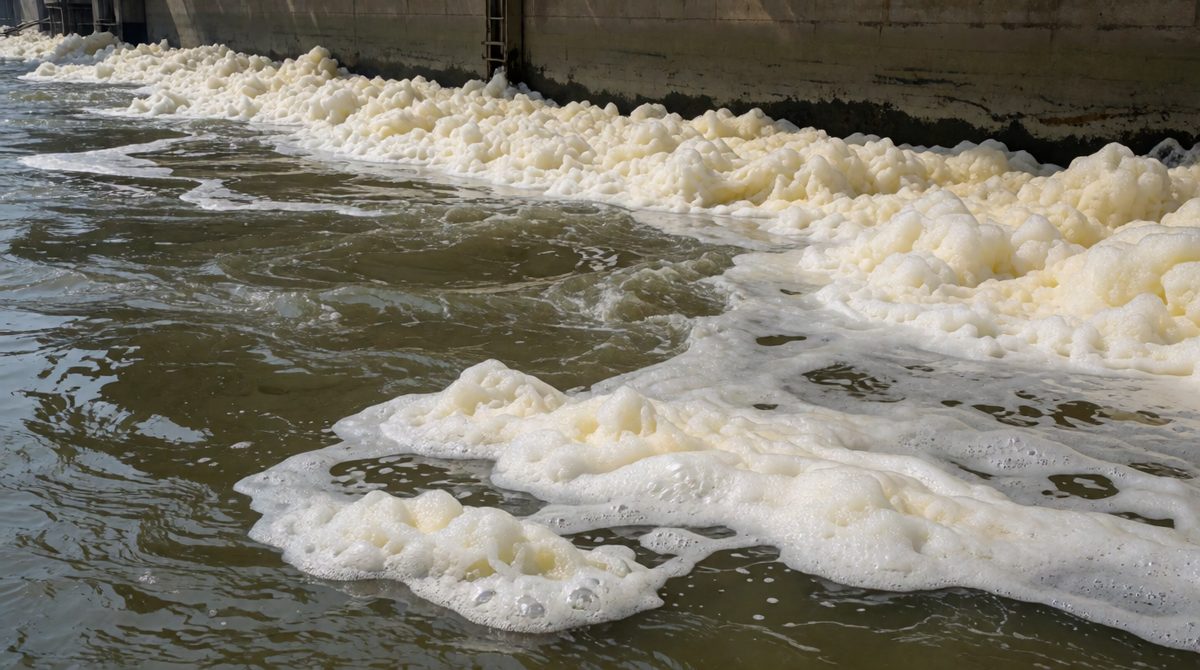
Factory waste in rivers is water pollution, one way business activity harms the environment
The spec names four kinds of pollution. Each one has a different cause and harms different people.
| Type | What it is | Example |
|---|---|---|
| Visual pollution | Things that spoil how a place looks, including litter | Takeaway wrappers dropped near a fast-food shop; rubbish dumped beside a factory |
| Noise pollution | Unwanted loud sound | Aeroplanes taking off at night; a building site starting at dawn |
| Air pollution | Harmful gases and particles released into the air | Smoke from a coal-burning power station; fumes from lorries |
| Water pollution | Harmful substances put into rivers, lakes or seas | A fertiliser factory letting chemicals run into a stream |
These are all external costs, which you met in Externalities: Social Costs and Benefits. The firm makes a profit, but nearby families, walkers, farmers and wildlife pay some of the cost. Remember, they took no part in the sale.
What the government can do
The spec lists six kinds of government action. You already know taxation, subsidy, regulation, fines and pollution permits from the lesson on externalities, so here is a short reminder of how they protect the environment across the economy.
💰 Money tools
Taxes make polluting more expensive. Subsidies help firms pay for cleaner machines. Fines punish firms that break the rules.
📝 Rule tools
Regulation sets standards and limits. Pollution permits cap the total amount of pollution allowed.
🌳 Direct provision
The government itself provides something, such as public parks.
Two ideas are new in this lesson: legislation and parks.
Legislation and parks
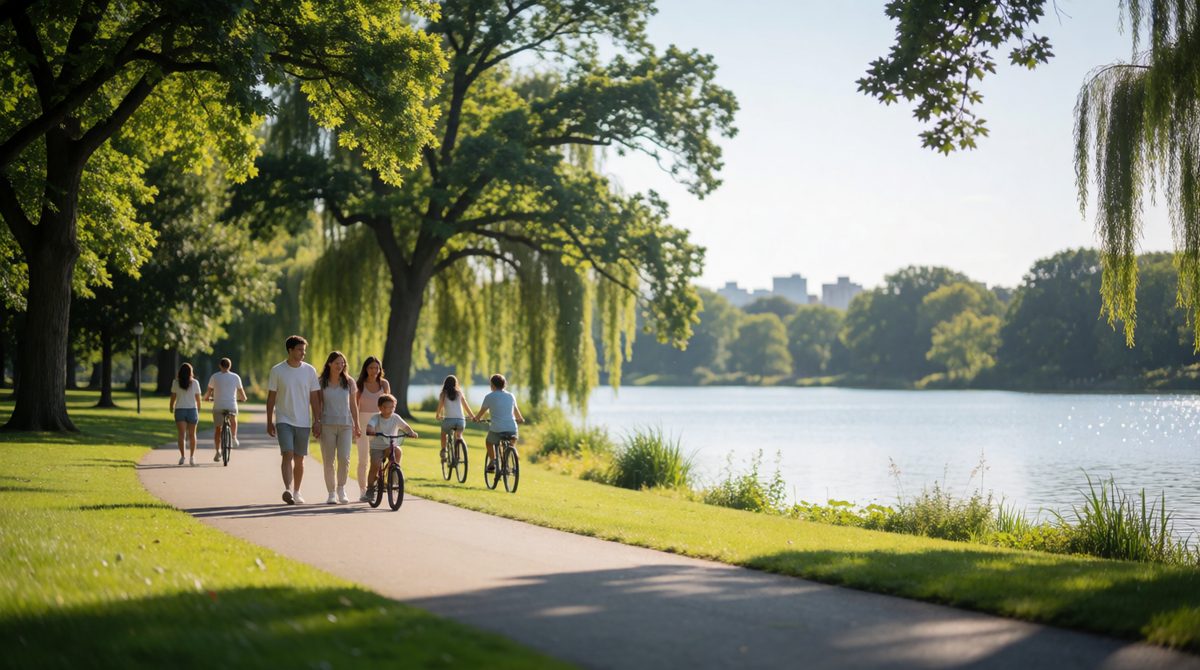
Governments protect the environment by providing parks that everyone can enjoy
Legislation means laws. A government can pass a law that bans a harmful activity or sets a legal duty for every firm. A well-known true example is the UK Clean Air Act of 1956. It was passed after thick, harmful smog hung over London, and it controlled the smoke from homes and factories. Regulation is the detailed standards and checks that carry out the law. For example, a law may say factories must not pollute the air, and regulation then sets a limit on the fumes a factory can release and inspects the factory to see that it keeps to the limit.
Government provision of parks. The government can also protect the environment by providing public parks and green spaces, paid for out of taxes. Parks give people places to relax and exercise. Trees and plants take in carbon dioxide and help clean the air a little. Parks also give wildlife a home and keep land from being built on. The opportunity cost is that the same land could have been used for homes, shops or factories, and the government must pay to look after the park. Hyde Park in London is a well-known public park.
Controls across the whole economy: pros and cons
The spec asks you to weigh up four government controls: regulation, legislation, fines and pollution permits. The single-market effects of regulation, fines and permits were covered in Government Policies for Externalities, so this table is a short recap. Here the focus is the whole economy, which means the effect on the country, not on one market.
| Control | Advantages | Disadvantages |
|---|---|---|
| Regulation | Clear limits that apply to all firms; can stop serious harm quickly | Costs money to inspect; firms may pass on costs as higher prices; no reason to do better than the limit |
| Legislation | Backed by the force of law; can ban the worst practices for everyone; makes the rules fair and certain | Slow to pass and to change; needs courts and police to enforce; a ban can close firms and cost jobs |
| Fines | Punish rule-breakers; warn other firms; bring in money | Only work if firms are caught; a small fine may be ignored by a large firm; the damage is already done |
| Pollution permits | Cap the national total of pollution; firms can trade permits and so have a reason to cut pollution | Hard to choose the right number of permits; too many means little change; needs monitoring |
Across the whole economy, tough rules and bans can close firms, which raises unemployment and cuts national output. Permits and regulation raise costs in many industries at once, which can push prices up across the economy. Enforcing laws and checking firms in every industry also costs the government a lot, so there is less to spend elsewhere. On the other side, cleaner air and water mean fewer sick workers and a lower health bill.
One real scheme is the European Union Emissions Trading System, in which firms need permits for the carbon dioxide they release. It shows how permits can be used across many firms at once.
The wider trade-off
Controls usually make production more expensive. Firms must buy cleaner equipment, pay fines or buy permits. This can raise prices, reduce profits and, in the short run, slow economic growth or cost jobs. But a cleaner environment improves health, protects farmland and fishing, and can raise the standard of living. A strong answer weighs these two sides and gives a judgement. Trade-offs between aims are covered further in Trade-Offs Between Objectives.
Worked example
Country Marlen passes a law that limits the smoke every factory may release. Factory owners say it will cost them 5 million Marlen dollars a year in new filters. To enforce it, the government employs inspectors. What are the benefits and costs? Benefits: cleaner air, fewer breathing problems, and fairness, because all factories must follow the same rule. Costs: higher costs for firms, perhaps higher prices, and the money spent on inspectors, which has an opportunity cost. A balanced judgement says the law is worth it if the health gains are greater than the extra costs.
Common mistakes
- Writing only "pollution is bad". Say which type it is and who is harmed.
- Giving only advantages. Many questions ask for both sides and a judgement.
- Forgetting the cost of enforcement. Laws and fines only work if firms are checked.
- Saying a fine stops pollution before it happens. A fine comes after the rule has been broken.
Exam-style question
Country Heldan has many factories near its main river. They release chemicals into the water and smoke into the air. The government is thinking about passing a law to limit the smoke. Factory owners say this will force some factories to close.
(a) State two types of pollution shown in the information. [2 marks]
(b) Explain one disadvantage of using legislation to protect the environment. [3 marks]
(c) Evaluate whether the government of Country Heldan should pass the law, taking into account the effect on the whole economy. [6 marks]
Model answer
(a) Water pollution (1) and air pollution (1).
(b) A law has to be enforced (1), which needs inspectors, courts and police that cost the government money (1), and a ban or strict limit could close factories and cost jobs (1).
(c) The law would cut smoke in every factory, so there would be cleaner air, fewer illnesses and a lower health bill (1), and the same rule applies to all firms, which is fair (1). However, factories may have to pay for filters or close, which could raise unemployment and reduce the country's output (1), and enforcing the law across all industries costs money (1). Costs may also be passed on in higher prices (1). Overall, the law is probably worth passing if the health gains are large and firms are given time to adapt, because that limits the job losses (1).
Exam tip
In part (c), use Country Heldan's factories and river, give points for and against, link to jobs, output or prices, and finish with a clear judgement.
Recap
- Protection of the environment is a macroeconomic aim for governments.
- Business activity causes visual (including litter), noise, air and water pollution.
- Governments use taxation, subsidy, regulation, legislation, fines, pollution permits and public parks.
- Each control has advantages and disadvantages, so give both sides and a judgement.