Fiscal deficits and surpluses
Each year the government compares the money it collects with the money it spends. The result is a deficit, a surplus, or a perfect balance. This content is examined on Paper 2: Macroeconomics and the Global Economy.
Key terms:
- Fiscal deficit: when government expenditure is greater than government revenue in a year.
- Fiscal surplus: when government revenue is greater than government expenditure in a year.
- Government borrowing: money the government borrows to pay for a deficit.
- Expansionary fiscal policy: cutting taxes or increasing government spending to increase spending in the economy.
- Contractionary fiscal policy: raising taxes or cutting government spending to reduce spending in the economy.
The sums are simple:
- Deficit = government expenditure − government revenue (when expenditure is bigger).
- Surplus = government revenue − government expenditure (when revenue is bigger).
Worked example
Country Verna's government collects 240 billion verns in revenue and spends 270 billion verns.
Expenditure is bigger than revenue, so there is a deficit: 270 − 240 = 30 billion verns.
Next year it collects 300 billion verns and spends 280 billion verns. Revenue is bigger, so there is a surplus: 300 − 280 = 20 billion verns.
The impact of a deficit and a surplus
📉 Impact of a deficit
The government has to borrow to cover the gap. Borrowing adds to the debt it owes. Over time more of its revenue goes on paying interest on that debt, leaving less for health or schools.
A deficit can also be useful. The extra spending can create jobs and growth, especially in a downturn.
📈 Impact of a surplus
The government has money left over. It can pay off some of its debt, which lowers future interest payments, or save it for later.
But a surplus means the government is taking more out of the economy than it puts in. This can slow down spending and growth.
Expansionary and contractionary fiscal policy
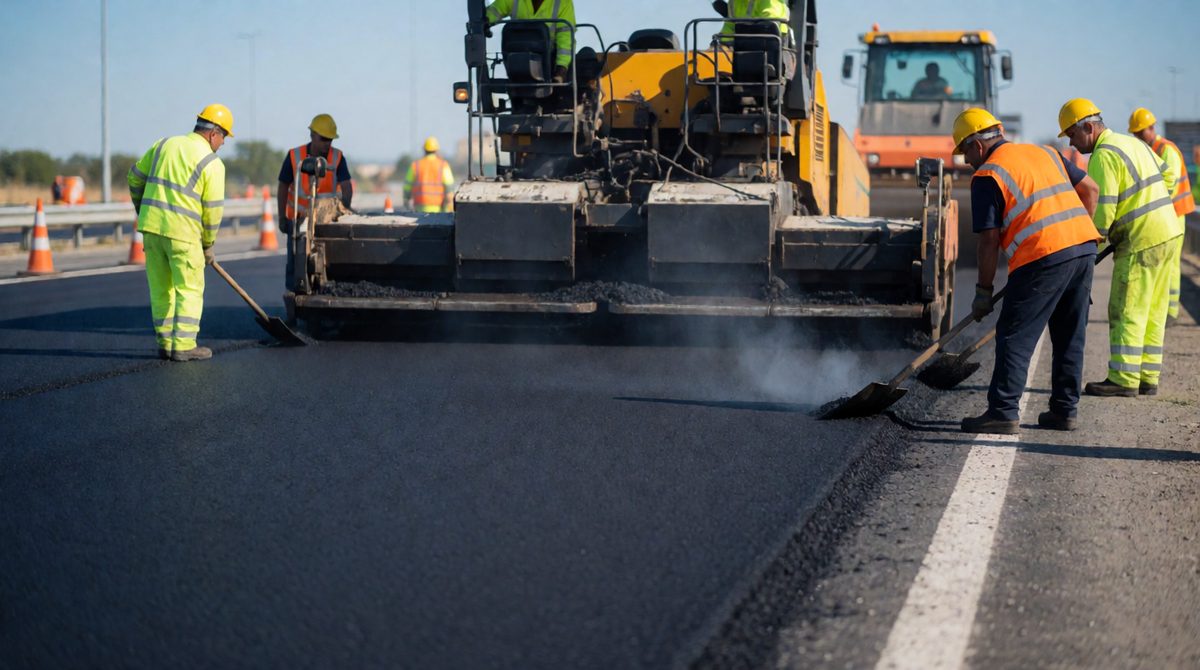
Spending on new roads is expansionary fiscal policy: it creates jobs and boosts demand
Governments can use taxes and spending on purpose to speed up or slow down the economy.
- Expansionary: lower taxes leave households and firms with more money to spend, and higher government spending adds demand directly. This tends to increase a deficit or reduce a surplus.
- Contractionary: higher taxes leave less money to spend, and lower government spending removes demand. This tends to reduce a deficit or create a surplus.
The impact on macroeconomic objectives

Higher taxes leave households less to spend, which can cool down inflation
You should be able to say what each type of policy is likely to do to each objective. Read the table, then learn it by following the chain of cause and effect.
| Objective | Expansionary fiscal policy | Contractionary fiscal policy |
|---|
| Economic growth | Higher spending in the economy, so output and GDP tend to rise | Lower spending, so growth tends to slow |
| Inflation | Higher demand can pull prices up | Lower demand eases price rises |
| Unemployment | Firms produce more and need more workers, so unemployment tends to fall | Firms produce less, so unemployment may rise |
| Current account | Richer households buy more imports, so a deficit tends to widen | Lower incomes mean fewer imports, so a deficit tends to narrow |
| Environment | More production can mean more pollution, unless spending is on green projects | Less production can mean less pollution, but cuts may reduce spending on protection |
| Income distribution | Depends on the policy: more benefits narrow the gap, but tax cuts for the rich widen it | Depends on the policy: higher taxes on high earners narrow the gap, but cuts to benefits widen it |
Why is the last row different? Because the gap between rich and poor depends on who gets the tax cut or spending, and not only on whether the policy is expansionary or contractionary.
👷 Expansionary example
Country Verna is in a downturn. It cuts income tax and builds new hospitals. People keep more of their pay and spend it, builders are hired, and unemployment falls. The risks are rising prices and more imports.
⚠️ Contractionary example
Prices in Country Verna are rising fast. The government raises taxes and cuts spending on new projects. Demand falls and inflation eases. The risk is slower growth and higher unemployment.
Common mistakes
- Mixing up the deficit and the debt. A deficit is about one year (spending is bigger than revenue). The debt is the total owed.
- Saying a deficit is always bad or a surplus is always good. Each has benefits and costs.
- Writing that expansionary policy "always" cuts unemployment. Say it "tends to" or "may", and give the chain of reasons.
- Forgetting the effect on imports when judging the current account.
Exam-style question
Country Verna's government collected 150 billion verns in revenue last year and spent 165 billion verns. This year it plans to cut income tax and increase spending on schools and roads.
(a) Calculate Country Verna's fiscal deficit last year. [2 marks]
(b) Explain one impact of a fiscal deficit. [3 marks]
(c) Analyse how the planned policy may affect unemployment and the current account. [4 marks]
Model answer
(a) Deficit = expenditure − revenue (1) = 165 − 150 = 15 billion verns (1).
(b) The government has to borrow to cover the gap (1), which adds to its debt (1), so more of its future revenue must go on interest payments, leaving less for other spending (1).
(c) Unemployment: lower income tax leaves households with more to spend (1) and spending on schools and roads creates jobs and demand, so firms produce more and need more workers, so unemployment may fall (1). Current account: higher incomes may lead people to buy more imports (1), so the current account deficit may widen (1).
Exam tip
In an "analyse" answer such as part (c), deal with each part of the question in turn and show a chain: the policy, what it does to spending, then the effect. Use words like "may" or "tends to".
Recap
- A fiscal deficit is expenditure greater than revenue. A fiscal surplus is revenue greater than expenditure. Subtract the smaller from the larger to calculate it.
- A deficit means borrowing and more debt, but can support jobs and growth. A surplus can pay off debt, but may slow spending.
- Expansionary policy cuts taxes or raises spending. Contractionary policy raises taxes or cuts spending.
- Expansionary policy tends to raise growth and inflation, reduce unemployment, widen a current account deficit and may increase pollution. Contractionary policy tends to do the opposite. The effect on income distribution depends on who gains or loses.