💻 Easier to organise
A firm can manage factories in several countries from one head office, sharing designs and orders instantly.
This topic is examined on Paper 2: Macroeconomics and the Global Economy.
Sign up to access the complete lesson and track your progress!
Unlock This CourseLook at the phone in your pocket. It may be designed in one country, built from parts made in several others, put together in a different country again and then sold all over the world. No single country makes it alone. That is globalisation in action.
Key terms:
Be careful with the two big words. Integration is about economies joining up. Interdependence is about what happens next: they need each other. If a factory in one country closes, firms in other countries that buy its parts can be hit too. Globalisation is also a process that has grown over time, not something that is either on or off.
Governments can limit trade with other countries. A tariff is a tax on imports. A quota is a limit on how many of a good can be imported. Both make imports dearer or scarcer, so they hold trade back. You will study them in detail in a later lesson, Tariffs, Quotas and Subsidies.
Over recent decades many countries have agreed to cut their tariffs and quotas. With fewer barriers, imported goods are cheaper and easier to sell. Firms can sell to customers in more countries, and consumers can buy goods from more countries. Trade grows, and economies become more linked.
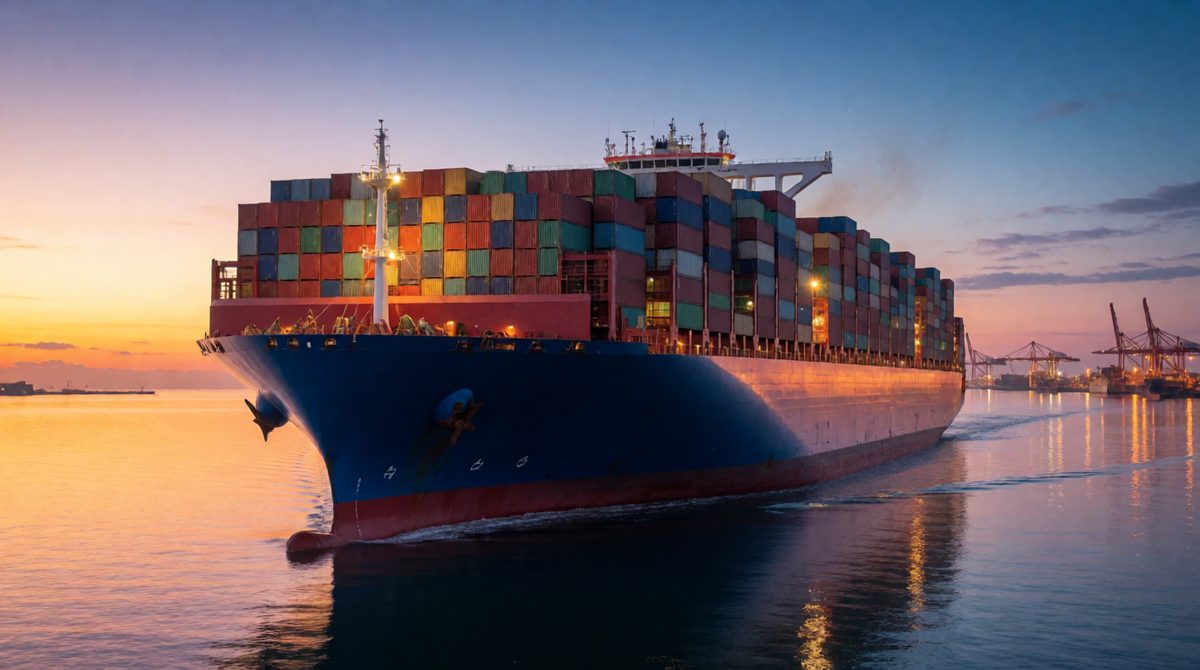
Huge container ships have cut the cost of transport, one big reason for globalisation
Trade is only worth it if the goods can be moved at a sensible price. Transport has become cheaper and faster. Goods are packed into standard metal containers that are lifted straight from ship to lorry or train. Bigger ships and aeroplanes carry more goods at a time, so the cost for each item is smaller.
Lower transport costs mean a firm can make something on the other side of the world and still sell it at a low price. Fresh fruit, clothes and electronics can now travel thousands of miles and stay affordable. This makes it worth trading over longer distances.

Cheap video calls let teams in different countries work together, cutting communication costs
Firms need to talk to suppliers, customers and staff in other countries. Years ago, a letter could take days or weeks and international phone calls were expensive. Today the internet, email and video calls allow instant contact at very low cost.
A firm can manage factories in several countries from one head office, sharing designs and orders instantly.
Customers can order from firms in other countries online, so even small firms can reach buyers abroad.
Cheap communication also lets firms move money, share information and trade services such as customer support across borders.
A multinational corporation (MNC) is a business that operates in more than one country. Many MNCs have grown very large. They make and sell in many countries, buy parts from suppliers around the world and move goods between their own sites abroad. Because they work across borders, they link economies together.
As MNCs have become more important, more of the world's trade and production happens through them. This pushes globalisation further. How MNCs work, and the investment they make, is covered in the lesson Multinationals and Foreign Direct Investment.
The four reasons support each other. Lower tariffs let firms sell abroad, cheaper transport and communication make it practical, and MNCs take advantage by spreading across the world. Their activity then creates more trade and more reliance on other countries, which is globalisation growing.
Country Veltane agrees with its trading partners to remove most of its tariffs and quotas. At the same time, a new port lets large container ships dock, and fast internet reaches every business district. A clothing firm in Veltane can now sell to ten new countries, order cloth from abroad cheaply and discuss designs with buyers by video call. Trade grows, Veltane becomes more integrated with its partners and relies on them more: globalisation has increased.
Saying globalisation is just "trade". It is also about economies being closely linked and relying on each other. Another mistake is listing a reason without explaining it: do not write "cheaper transport"; write that cheaper transport lowers the cost of moving goods, so trading over long distances is worth it. Do not mix up reasons (why it happened) with impacts (what it does). Impacts come in the next lesson, The Impact of Globalisation.
Country Marlow has cut its tariffs on imports and ended most quotas over the last 20 years. During this time, shipping costs have fallen and most firms now use the internet to deal with overseas customers. Several multinational firms have set up in Marlow.
(a) Define globalisation. [2 marks]
(b) Which of the following is a reason for globalisation? A: Higher tariffs. B: Cheaper transport. C: Stricter quotas. D: Dearer communication. [1 mark]
(c) Explain two reasons why Marlow has become more involved in globalisation. [4 marks]
(a) Globalisation is the increased integration (1) and interdependence of economies (1).
(b) B, cheaper transport (1).
(c) Reason 1: Marlow has cut tariffs and ended quotas (1), so imports are cheaper and easier to sell and its firms can trade with more countries, increasing trade and links with other economies (1). Reason 2: Shipping costs have fallen (1), so goods can be moved long distances at a low cost per item, making it worth trading with faraway countries (1).
For an "explain" part, name the reason, then add "which means" or "so" to show what it leads to. Use the information in the question, as with the tariffs and shipping costs here.