This topic is examined on Paper 2: Macroeconomics and the Global Economy.
Trading blocs
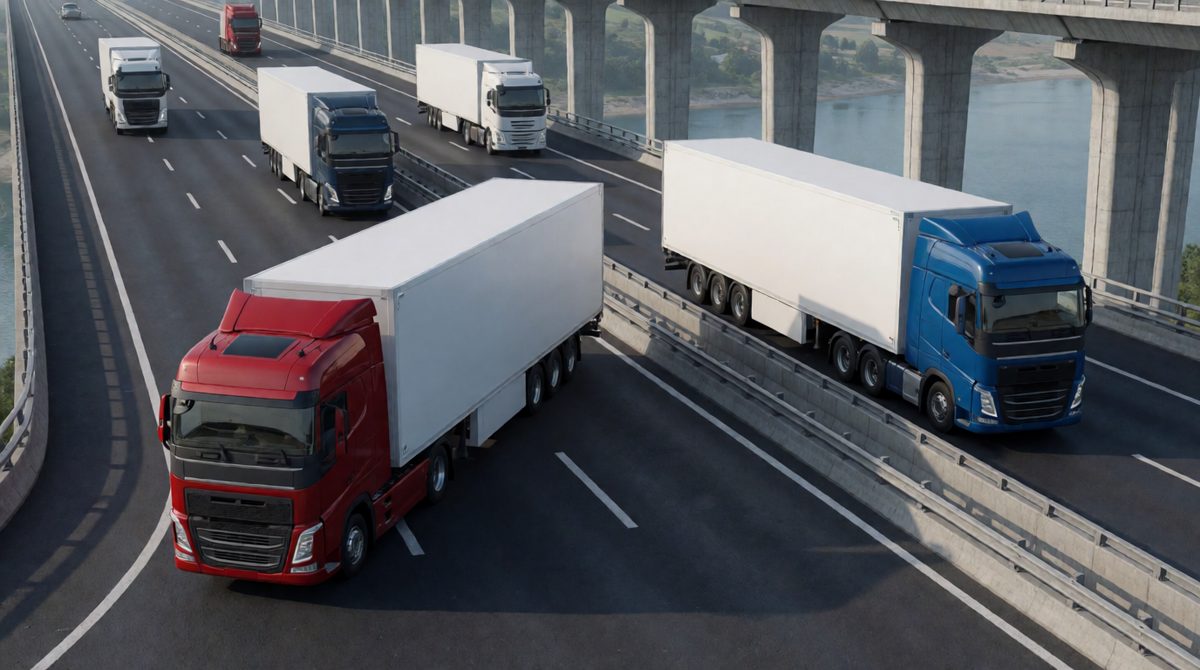
Trading bloc members trade freely with each other, so lorries cross borders without tariffs
Earlier lessons showed how tariffs and quotas protect industries. A trading bloc does the opposite for the countries inside it: they agree to cut or remove these barriers between themselves.
Key terms:
- Trading bloc: a group of countries that agree to trade more freely with each other, usually by removing tariffs and quotas between them.
- Free trade area: a trading bloc where members have no tariffs on trade with each other, but each member sets its own tariffs on non-members.
- Customs union: a trading bloc where members have no tariffs on trade with each other and all charge the same tariff on goods from non-members (a common external tariff).
🤝 Impact on members
- Goods cross borders with no tariffs, so prices are lower and consumers have more choice.
- Firms sell in a much bigger market and can gain economies of scale.
- Input costs fall because parts and materials are cheaper to buy from other members.
- Firms face more competition from other members, and some weaker firms may close.
- Members must follow the bloc's rules, so each government has less control over its own trade policy.
🚧 Impact on non-members
- Their goods still face tariffs when sold into the bloc, while member goods do not.
- Their exports become dearer than members' goods, so they may lose sales.
- Members may buy from each other instead of from cheaper producers outside the bloc.
- Some non-members try to join, or sign their own trade deals, so they are not left out.
Real examples of trading blocs
| Bloc | Where | What to remember |
|---|
| European Union (EU) | 27 countries in Europe | A customs union with a common external tariff. Goods, services, workers and money can move freely between members. Many members share the euro. |
| USMCA | The USA, Mexico and Canada | A free trade area that replaced NAFTA in 2020. Most goods cross between the three countries without tariffs. |
| ASEAN | South East Asian countries, such as Indonesia, Thailand, Vietnam and Singapore | The Association of Southeast Asian Nations. Members cut tariffs on trade with each other. |
| Mercosur | South American countries, including Brazil and Argentina | A customs union that aims for free trade between members and a common tariff on outsiders. |
You only need to know the general idea of each bloc, not fine detail. Be ready to use one of them as an example in an answer.
The World Trade Organisation (WTO)
Trading blocs are groups of countries. The World Trade Organisation (WTO) is different: it is a global organisation, based in Geneva, that most countries of the world belong to. Its job is to help trade flow as smoothly and fairly as possible.
📝 Sets the rules
Members agree trade rules, such as limits on how high tariffs can go. The WTO runs talks where members negotiate to cut trade barriers.
🔨 Settles disputes
If one country thinks another is breaking the rules, for example by dumping or using an unfair tariff, it can complain to the WTO. The WTO judges the case.
🔎 Monitors and helps
It checks the trade policies of its members and gives advice and support to developing countries so they can take part in world trade.
Actions by the WTO include: ruling that a tariff or subsidy breaks the rules; asking a country to remove it; and, if the country refuses, allowing the winning country to hit back with tariffs of its own. Its overall aim is to promote free trade and reduce protection.
Common mistakes
- The WTO is not a trading bloc. It is a global body that most countries belong to, and its aim is to reduce trade barriers for everyone, not to favour a small group.
- A free trade area and a customs union are not the same. Only a customs union has one common tariff on non-members.
- Do not say blocs only help. Say who gains (members, usually) and who loses (non-members and weak firms).
Trade patterns
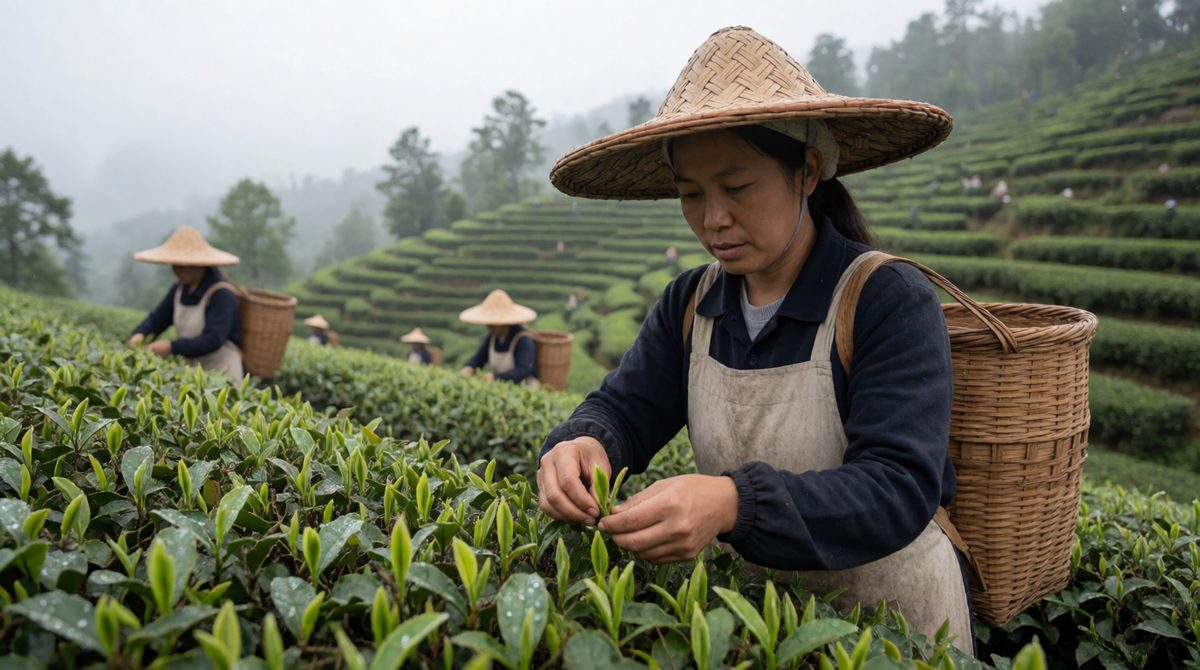
Many developing countries export primary products like tea and import manufactured goods
A trade pattern shows what a group of countries mainly exports and imports. These are general trends, so some countries do not fit. You met the primary, secondary and tertiary sectors in Primary, Secondary and Tertiary Sectors, and the same ideas help here.
| Tend to export | Tend to import |
|---|
| Developed countries | Manufactured goods such as machinery, vehicles and electronics, and services such as banking, insurance and education | Raw materials, fuel, food and cheaper manufactured goods such as clothing |
| Developing countries | Primary products such as crops, minerals and oil, and some low-cost manufactured goods | Machinery, vehicles, technology and other manufactured goods |
Why? Developed countries have more capital and skilled workers, so they make goods that need technology. Many developing countries have farmland, minerals or low labour costs but less capital. Note that a lot of trade happens between developed countries. Some developing economies are also moving into manufacturing, so their patterns are changing.
Common mistakes
- Saying that every developing country only exports food. Some export oil, metals or clothing.
- Forgetting that developed countries also export services, not just goods.
Exam-style question
Country Orvane belongs to the Ostral Trade Union, a customs union. Members have no tariffs on goods traded with each other. The union charges a 15% tariff on goods from outside. Country Denmar is outside the union and is a member of the WTO. It sells shoes to Orvane. Country Denmar mainly exports cocoa and copper.
(a) Define 'trading bloc'. [2 marks]
(b) Identify two examples of real trading blocs. [2 marks]
(c) Explain one way that Country Denmar's shoe makers may be affected by the Ostral Trade Union. [3 marks]
(d) Explain one action the WTO could take if it ruled that the 15% tariff broke WTO rules. [3 marks]
Model answer
(a) A group of countries (1) that agree to trade more freely with each other, such as by removing tariffs between them (1).
(b) Any two from: the EU (1), USMCA (1), ASEAN (1), Mercosur (1).
(c) The shoe makers face a 15% tariff when selling to Orvane (1), but shoes from other union members have no tariff (1). Their shoes become dearer than members' shoes, so Orvane's consumers may buy fewer of them and Denmar's sales may fall (1).
(d) The WTO could judge the complaint (1). If it rules the tariff breaks the rules, it can ask the union to remove it (1). If the union refuses, it can allow Denmar to hit back with tariffs on the union's goods (1).
Exam tip
In part (c), compare the tariff on the outsider with the no-tariff price for members. That comparison is where the marks are.
Recap
- A trading bloc is a group of countries that trade more freely with each other. Free trade areas have no internal tariffs; customs unions also share a common external tariff.
- Members usually gain lower prices, more choice and bigger markets; some firms face tougher competition. Non-members face tariffs and may lose sales.
- Examples: the EU, USMCA, ASEAN and Mercosur.
- The WTO makes trade rules, settles disputes, monitors members, and helps developing countries.
- Developed countries tend to export manufactured goods and services; developing countries tend to export primary products and import manufactured goods.