📦 Exports
Export prices rise for foreign buyers. UK goods look more expensive abroad, so the demand for exports falls.
This topic is examined on Paper 2: Macroeconomics and the Global Economy.
Sign up to access the complete lesson and track your progress!
Unlock This CourseAn exchange rate is not fixed in stone. It can rise or fall. Which word you use depends on how the change happens, so there are two pairs of words to learn.
Key terms:
Here is a simple way to remember it. Appreciation and depreciation happen in the market (floating). Revaluation and devaluation are chosen by the government (fixed). The effects on trade are the same either way.
A currency that appreciates is sometimes called a stronger currency. One that depreciates is a weaker currency. Remember that a rise in one currency is a fall in the other. If the pound rises against the dollar, the dollar falls against the pound.

When your currency appreciates, holidays abroad get cheaper because each pound buys more foreign currency
Let us use the pound and the dollar. The pound appreciates from £1 = $1.25 to £1 = $1.50. Each pound now buys more dollars. That sounds good, but look at what it does to prices.
Exports. A UK firm sells a machine for £30,000. Its price for an American buyer is:
Before: £30,000 × 1.25 = $37,500
After: £30,000 × 1.50 = $45,000
The UK price in pounds has not changed, but the price in dollars has gone up by $7,500.
Imports. A UK shop buys a US jacket that costs $60. Its price in pounds is:
Before: $60 ÷ 1.25 = £48
After: $60 ÷ 1.50 = £40
The jacket is now £8 cheaper for UK buyers.
Export prices rise for foreign buyers. UK goods look more expensive abroad, so the demand for exports falls.
Import prices fall for UK buyers. Foreign goods look cheaper, so the demand for imports rises.
So the UK is likely to sell fewer exports and buy more imports. Export earnings are likely to fall and spending on imports is likely to rise. The current account moves towards deficit: a surplus gets smaller or a deficit gets bigger. (You met the current account in the lesson called The Current Account.)
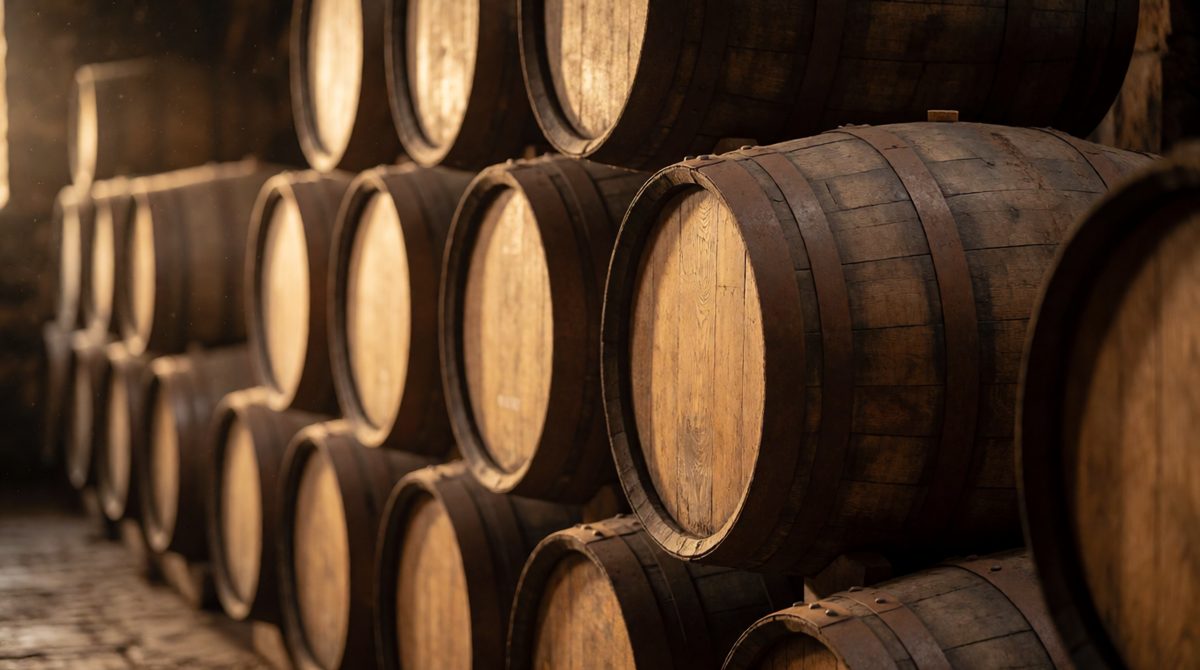
A depreciation makes exports cheaper abroad, helping firms like this whisky distillery sell more overseas
Now the pound depreciates from £1 = $1.50 back to £1 = $1.25. The effects go the other way.
Exports. The £30,000 machine now costs an American buyer:
£30,000 × 1.25 = $37,500, down from $45,000.
Imports. The $60 jacket now costs a UK buyer:
$60 ÷ 1.25 = £48, up from £40.
Export prices fall for foreign buyers, so the demand for exports rises.
Import prices rise for UK buyers, so the demand for imports falls.
The UK is likely to sell more exports and buy fewer imports. The current account is likely to move towards surplus: a deficit gets smaller or a surplus gets bigger.
| Effect on... | Appreciation or revaluation | Depreciation or devaluation |
|---|---|---|
| Export prices (in foreign currency) | Rise | Fall |
| Import prices (in home currency) | Fall | Rise |
| Demand for exports | Falls | Rises |
| Demand for imports | Rises | Falls |
| Current account | Moves towards deficit | Moves towards surplus |
For a floating rate you can show appreciation with the currency diagram. Draw the exchange rate (the price of £1 in dollars) on the vertical axis and the quantity of pounds on the horizontal axis. Draw a downward-sloping demand curve D and an upward-sloping supply curve S, meeting at the first equilibrium. Label the exchange rate ER1. To show appreciation, shift D to the right to D1. The new equilibrium gives a higher exchange rate, ER2. For depreciation, shift D to the left, or shift S to the right, and show the exchange rate falling.
The size of the change depends on how responsive buyers are to price changes. If demand for exports is price inelastic, a fall in export prices may not bring many extra sales. You met this idea in the lessons on price elasticity of demand.
Country Tirvana has a floating exchange rate. Its currency is the tiv. The exchange rate falls from 1 tiv = 2.00 Sorian dollars to 1 tiv = 1.60 Sorian dollars.
(a) Define depreciation. [2 marks]
(b) A Tirvana firm sells a tractor for 10,000 tivs. Calculate the new price of the tractor in Sorian dollars. [2 marks]
(c) Explain how the change in the exchange rate may affect Tirvana's current account. [4 marks]
(a) A fall in the value of a currency against another currency (1) when the exchange rate is set by the market (1).
(b) 10,000 × 1.60 (1) = 16,000 Sorian dollars (1). The old price was 20,000 Sorian dollars.
(c) The fall in the tiv makes Tirvana's exports cheaper in Sorian dollars (1), so the demand for exports is likely to rise (1). Imports from Soria become more expensive in tivs (1), so the demand for imports is likely to fall (1). Export earnings are likely to rise and import spending to fall, so the current account is likely to move towards surplus.
For a "may affect" question, follow the chain: exchange rate, then prices, then demand, then the current account. Each link earns a mark.