 By the Brainy Lemons team
Pearson Edexcel IGCSE Business (4BS1) is an exam-only International GCSE graded 9 to 1. You sit two papers, each 1 hour 30 minutes and 80 marks: Paper 1 is about a small business and Paper 2 about a large one. Both test all five sections and there are no tiers or coursework.
That’s the quick answer. This guide goes through the whole course: what you study, how each question type is marked, how it compares with UK GCSE Business, whether it’s hard and how to plan your revision.
Every exam fact here comes from Pearson’s own specification (the official list of what you need to know) and its exam support pages. We’ll also show how our online course follows it, if you’re studying at home or want help alongside school.
At a glance
- Exam board: Pearson Edexcel
- Qualification: International GCSE (9-1) Business, code 4BS1
- Papers: 2 written exams, 1 hour 30 minutes each
- Marks: 80 per paper, 160 in total, each paper 50%
- Tiers: none, everyone sits the same papers
- Coursework: none, it’s 100% exam
- Exam series: June and November
- Last exams for 4BS1: November 2028
What is Edexcel IGCSE Business?
IGCSE stands for International GCSE. Pearson calls it the Pearson Edexcel International GCSE in Business, and its code is 4BS1. It was first taught in September 2017 and first examined in June 2019. Pearson says the International GCSE (9-1) is comparable to the reformed UK GCSEs in demand and standards.
Business is a subject about how real businesses work: why they exist, how they treat their staff and customers, where their money comes from and how they make things. You can read the full specification on Pearson’s International GCSE Business page. The latest version is Issue 2, dated February 2026.
New to the subject? Our free first lesson, an introduction to business objectives, is a good place to start. It explains what businesses are trying to achieve and how to write SMART objectives.
What you study in IGCSE Business: the five sections
Pearson splits the content into five sections. They’re listed separately, but the spec makes the point that they link together, because a decision in one area (say, marketing) always affects the others (like finance and staff).
| Section | Subtopics in the specification |
|---|---|
| 1. Business activity and influences on business | Business objectives, types of organisations, classification of businesses, location, business and the international economy, government objectives and policies, external factors, what makes a business successful |
| 2. People in business | Internal and external communication, recruitment and selection, training, motivation and rewards, organisation structure and employees |
| 3. Business finance | Sources of finance, cash flow forecasting, costs and break-even analysis, financial documents, accounts analysis |
| 4. Marketing | Market research, the market, the marketing mix |
| 5. Business operations | Economies and diseconomies of scale, production, factors of production, quality |
1. Business activity and influences on business
This is the biggest section. You learn what businesses aim for (survival, profit, market share, social goals), the types of business from sole traders to multinationals, and the three sectors (primary, secondary and tertiary). Then you study the world outside the business: globalisation, exchange rates, interest rates, government spending, laws and trade blocs. It ends with how to judge whether a business is successful.
Survival or Profit?
Run a 3D smoothie business through ten years of booms, crises and rivals, and choose survival, profit maximisation or satisfactory profit. A free way to see why business objectives change.
Play free →2. People in business
Here you study the people side: why good communication matters, how firms recruit and train staff, motivation theories (Taylor, Maslow and Herzberg), financial and non-financial rewards, and organisation charts with ideas like span of control and delegation.
3. Business finance
This section of the subject has the most maths, so give it extra practice. You learn why businesses need short-term and long-term finance and where it comes from, then cash flow forecasts, break-even, the statement of comprehensive income, the statement of financial position and ratios such as gross profit margin, ROCE (return on capital employed), the current ratio and the acid test ratio.
4. Marketing
Marketing covers market research, market segmentation, niche and mass markets, and the marketing mix (product, price, place and promotion), including the product life cycle and the Boston Matrix. Market research is a good place to start, and our lesson on how market research helps a business understand customer needs is a good way in.

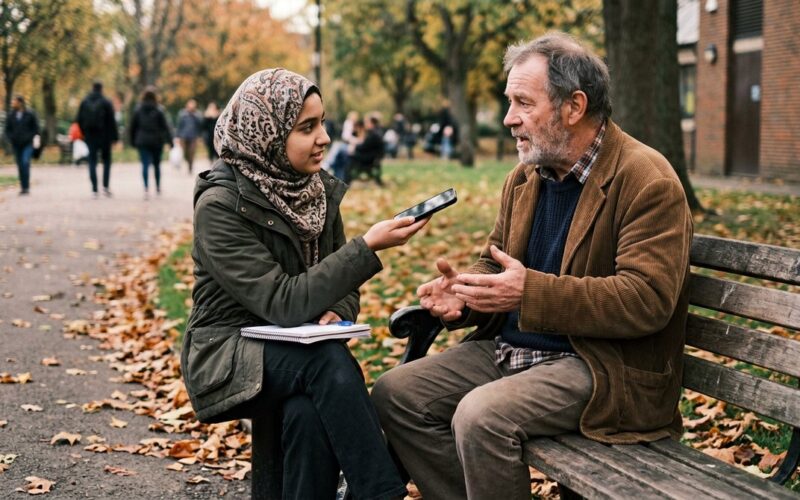
A street survey is primary research: asking real customers what they want before a business makes a decision.
5. Business operations
The last section is about making things well and cheaply: job, batch and flow production, productivity, lean production (just-in-time and Kaizen), robotics, the factors of production and quality control versus total quality management (TQM). It starts with internal economies of scale, the cost savings a business gets as it grows.
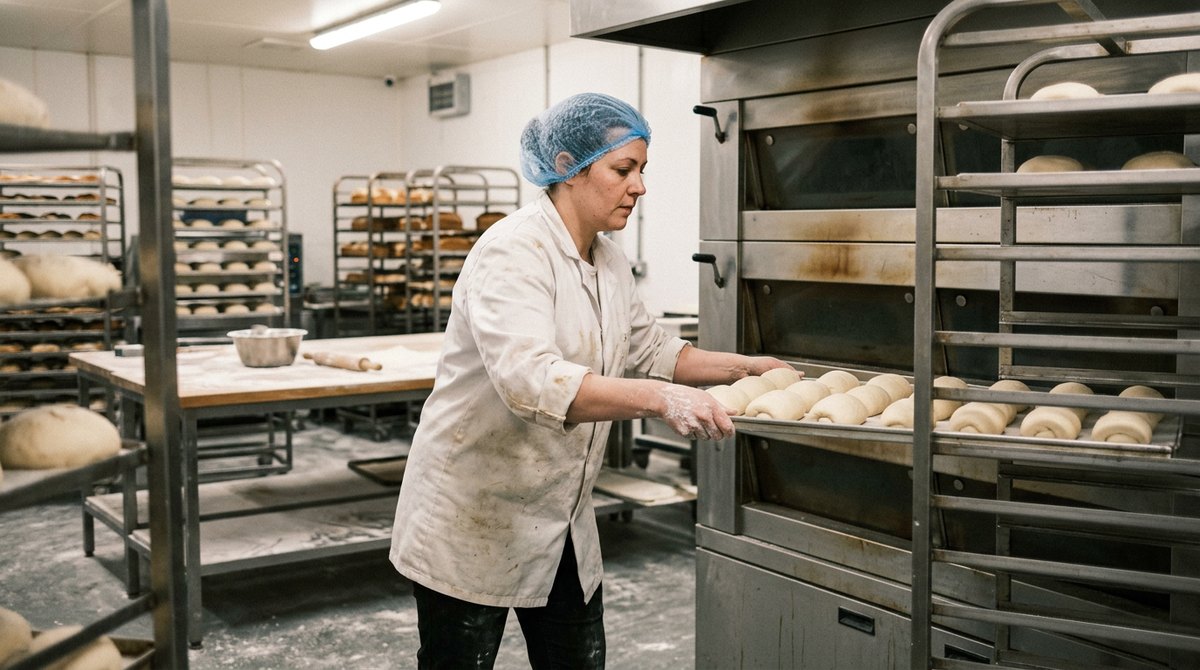
A bakery making rolls a tray at a time is batch production, one of the three production methods in section 5.
All five sections, lesson by lesson. Our course follows the 4BS1 spec in the same order, with a quiz after every lesson.
Try 3 lessons free →How Edexcel IGCSE Business is examined
There are two exams and nothing else. Both papers can ask about anything in the five sections. What changes is the business in the case study (the story about a business that every question is based on): a small business in Paper 1 and a large business in Paper 2.
| Paper | Case study business | Time | Marks | Weight |
|---|---|---|---|---|
| Paper 1: Investigating small businesses (4BS1/01) | Up to 49 employees, local or national market | 1 hour 30 minutes | 80 | 50% |
| Paper 2: Investigating large businesses (4BS1/02) | A large business: more than 250 employees, multinational or global market | 1 hour 30 minutes | 80 | 50% |
Each paper has four compulsory questions worth 20 marks each. The parts are a mix of multiple-choice, short-answer, data-response and open-ended questions. You can use a calculator in both papers. Exams run in the June and November series, and you can sit them on paper or as an onscreen assessment. Pearson says the onscreen assessment has the same questions at the same time; only the format is different.
Grade boundaries are set on your total out of 160, not on each paper separately, so a stronger Paper 2 can make up for a weaker Paper 1.
Question types and marks
Pearson gives each command word (the instruction word at the start of a question) a fixed number of marks, set out in its Getting Started guide. Once you know the pattern, you know exactly how much to write.
| Command word | Marks | What the examiner wants |
|---|---|---|
| Multiple-choice, Define, Give | 1 | Recall a fact or a definition |
| State, Identify, Complete the table | 1 | A short answer from the case study or the data |
| Calculate | 2 | A correct answer from the data, with workings |
| Outline | 2 | Two linked points, in context |
| Explain | 3 | A point plus two steps of development, no context needed |
| Analyse | 6 | A developed chain of reasoning about the case study business |
| Justify | 9 | Pick one of two options and back it with analysis and a judgement |
| Evaluate | 12 | Knowledge, application, analysis and a supported conclusion |
These marks test four skills, called assessment objectives (AOs): knowledge (AO1), application to the case study (AO2), analysis (AO3) and evaluation (AO4). Application carries the most weight, about 38% to 39% of the qualification, so using the context of the case study really matters in almost every question. Analysis only comes in on the 6, 9 and 12-mark questions, and evaluation on the 9 and 12-mark ones.
An example question
Here’s a short example we’ve written in the same style as a Paper 1 question. It isn’t from a real paper, but it shows how the marks build up.
Lemon Lane Bakery is a small business with 12 employees. It sells bread and cakes to customers in one town. The owner wants to open a second shop, but a large supermarket has just opened nearby.
- (a) Define the term stakeholder. (1 mark)
- (b) State one way Lemon Lane Bakery could finance its second shop. (1 mark)
- (c) Analyse the impact of the new supermarket on Lemon Lane Bakery. (6 marks)
- (d) Lemon Lane Bakery is choosing between opening a second shop or selling online. Justify which option it should choose. (9 marks)
For (b) “a bank loan” alone is too general. Pearson’s examiners say the business name doesn’t count as context either. Something like “retained profit from its bread and cake sales” ties it to this bakery. For (d) you only need to argue for one choice, as long as your analysis weighs it up and you finish with a clear judgement. That’s where the application, analysis and evaluation marks come from.
Our lesson on small business case study analysis walks through a full case study step by step, and command words and question analysis drills each question type.
Calculations and formulae
Questions that use numbers make up about 10% of the marks. The maths is percentages, averages, revenue, costs and profit, profit margins and cash flow. The good news: the business formulas, such as ROCE and the acid test ratio, are printed in the paper. Show your workings, because a correct method can still earn a mark if the final answer is wrong, and always round to the decimal places the question asks for.
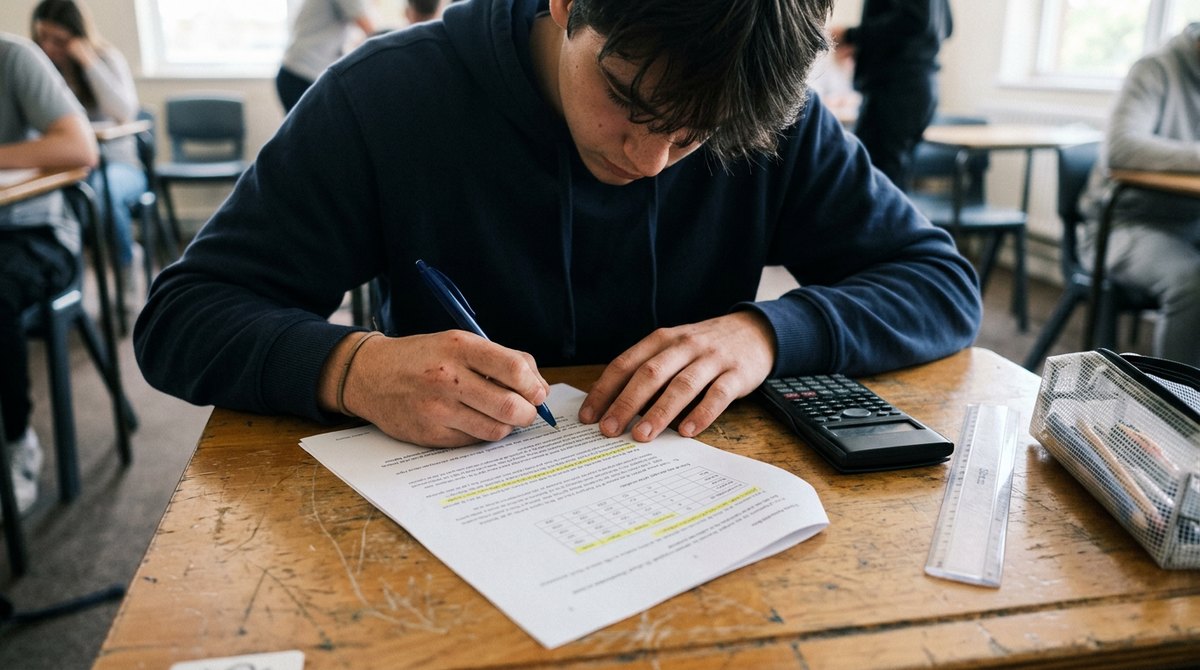
You can use a calculator in both papers, and the business formulas are printed for you.
The new International GCSE Business from 2027
Pearson is replacing 4BS1. A new International GCSE Business starts teaching in September 2027, with first exams in May/June 2028 and first certificates in 2029. It has a modular structure with a choice of modular or linear exams, and updated content on technology and AI. Pearson says the modular route is only open to schools outside the UK. The new specification is due in spring 2027.
What does that mean for you? If you’re starting a two-year course now, in the 2026-27 school year, you’ll sit 4BS1, and the last chance to sit it is November 2028. If you start in September 2027 or later, check with your school or exam centre which version you’ll be entered for.
IGCSE Business vs GCSE Business
Lots of people search for Edexcel GCSE Business paper 1 when they mean the IGCSE, or the other way round. They’re different qualifications from the same board.
| IGCSE Business (4BS1) | Edexcel GCSE Business (1BS0) | |
|---|---|---|
| Papers | Paper 1: Investigating small businesses Paper 2: Investigating large businesses | Theme 1: Investigating small business Theme 2: Building a business |
| Length | 1 hour 30 minutes each | 1 hour 45 minutes each |
| Marks | 80 per paper | 90 per paper |
| Exam series | June and November | May/June only |
| Topics per paper | Either paper can test any of the five sections | Each paper covers its own theme of five topics |
Both are graded 9 to 1 and both have two equally weighted papers. The big difference is the feel. The IGCSE is more international, with globalisation, multinationals and exchange rates built into the content.
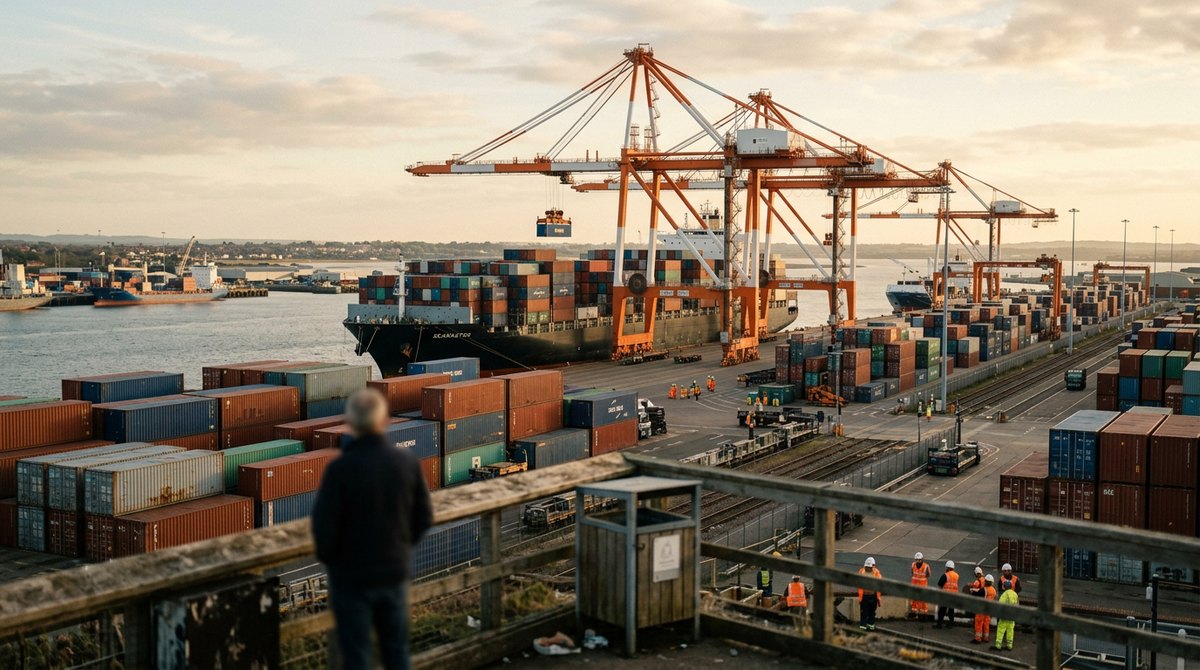
International trade, like the containers moving through this port, runs right through the IGCSE content.
Is IGCSE Business hard?
Most of the ideas in this subject aren’t hard to understand. What catches students out is the exam technique. You have to apply what you know to the case study, write in linked chains of reasoning and finish the longer answers with a real judgement. Pearson’s examiner reports keep saying the same thing: answers that could fit any business, bullet points in long answers and conclusions that just repeat earlier points all lose marks.
So in June 2026 about three in four international candidates got a grade 4 or above, and just under a third got a 7 or above. A grade 9 is rare at 5.2%, so the top grade really does need strong exam technique. In Pearson’s much smaller UK-only group, 61.9% got a 4 or above.
It suits you if it’s a subject you’d enjoy: you like real-world examples, enjoy a debate and don’t mind some maths. There’s no required prior learning. Pearson says it leads on to International A Level and beyond, so it’s a good base for A level Business, Economics or Accounting.
How to prepare: a two-year IGCSE Business revision plan
Here’s a simple plan if you have two years before your June exams. Shorten each step if you have one year.
- Year 1, autumn: Section 1, business activity and influences. Learn the key terms as you go.
- Year 1, spring: Section 2, people in business. Start practising 3-mark Explain answers.
- Year 1, summer: Section 3, business finance. Do a few calculations every week.
- Year 2, autumn: Sections 4 and 5, marketing and operations. Add 6-mark Analyse answers.
- Year 2, spring: full past papers under timed conditions, 9- and 12-mark answers, and the examiners’ reports.
- Last six weeks: revision of weak topics and formulas, plus one Paper 1 and one Paper 2 each week.
Past papers and mark schemes are on Pearson’s website, but the newest ones stay locked for nine months after each exam series, so teachers usually have them first. With 90 minutes for 80 marks you have just over a minute per mark, so give the 12-mark question about 13 minutes.
Pearson’s Getting Started guide suggests about 125 guided learning hours (time spent being taught) over two years, with 15 of them for revision, so pick your exam series below to see what that means each week.
- I can name the five sections and their main subtopics
- I can explain the difference between Paper 1 and Paper 2
- I can define the key terms in every section
- I can use the case study in State and Outline answers
- I can calculate profit margins, ROCE and the acid test ratio
- I can complete and read a cash flow forecast and a break-even chart
- I can write a 6-mark Analyse answer in linked chains
- I can pick one of two plans and justify it in a 9-mark answer
- I can finish a 12-mark Evaluate answer with a supported conclusion
Studying an IGCSE Business course online with Brainy Lemons
Can you study IGCSE Business online? Yes. Our Pearson Edexcel IGCSE Business online course has 260 lessons of about 30 minutes each, written from the 4BS1 specification and in the same order. Every lesson has a quiz, a Who Wants to Be a Lemonaire? quiz show and a Last Stand zombie defence game, and there are 4,944 flash cards across the course.
A timetable plans your lessons week by week to your finish date, on a one-year or two-year plan, and your dashboard shows quiz scores and the topics that need another look. The last part of the course is all exam practice: Paper 1 and Paper 2 case studies, every question type and full mock exams. There are also 8 free 3D Business games for the trickiest topics. You can read more about how it all fits together in Start Learning GCSE and IGCSE Online With Brainy Lemons.
The Production Line
Run a 3D factory: pick job, batch or flow production for each order and sort the facts before the belt speeds up.
Play free →If you’re not at a school, you’ll need to enter as a private candidate at an exam centre that offers Pearson Edexcel International GCSEs. Ask early, because entry deadlines are months before the exams. You can try the first three lessons free or see everything on the Edexcel IGCSE Business course page.
Edexcel IGCSE Business FAQs
What is the code for the Pearson IGCSE Business course?
It’s 4BS1, with Paper 1 coded 4BS1/01 and Paper 2 coded 4BS1/02.
Is there coursework in IGCSE Business?
No. Your grade comes from the two exams only, each worth 50%.
Does IGCSE Business have tiers?
No. There’s a single tier. Everyone sits the same papers and can get any grade from 9 to 1.
Can I use a calculator in IGCSE Business?
Yes, in both papers. The business formulas are printed in the paper too, so focus on knowing when to use each one.
What topics are on Paper 1 and Paper 2?
Both papers can test anything from all five sections, but Paper 1 uses a small business case study and Paper 2 a large business, usually a multinational.
When are the IGCSE Business exams?
4BS1 is available in the June and November series. The last exams for 4BS1 are in November 2028, before the new specification takes over.
Can I study Edexcel IGCSE Business online?
Yes. You can learn the whole course online at home. Then you sit the exams as a private candidate at a centre that offers Pearson International GCSEs.
Get ready for both IGCSE Business papers
Learn all five sections in short lessons, then practise every question type from Define to the 12-mark Evaluate, with games that make it stick.
- 260 short lessons that follow the Pearson Edexcel 4BS1 specification
- A quiz, a quiz show and a zombie defence game on every lesson
- 4,944 flash cards, from easy to exam-hard
- 8 3D Business games for the hardest topics
No card needed. Works on any device.