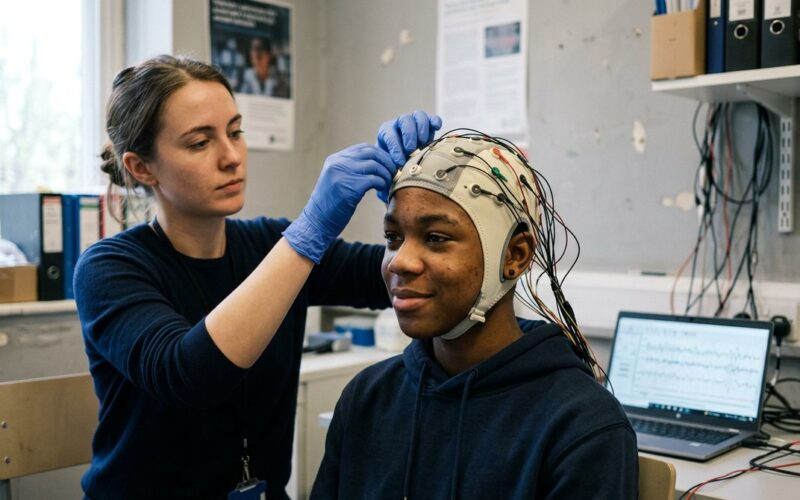
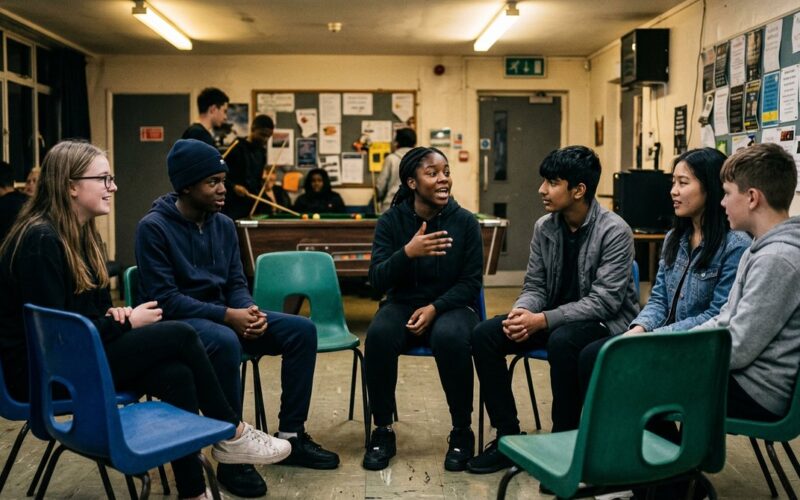
 By the Brainy Lemons team
Yes, you can study GCSE Psychology online from home. Most online courses teach the AQA GCSE Psychology specification (8182). You learn the course online at your own pace, then sit two written papers of 1 hour 45 minutes each in May or June at a school, college or exam centre that accepts private candidates.
That’s the short answer. Online learning suits you if you’re home educated, if your school doesn’t teach it, or if you want an extra GCSE alongside your school subjects. Psychology is the scientific study of the mind and human behaviour, and it’s new to almost everyone, so nobody starts ahead.
This guide explains how it works, step by step: what you study, how the exam works, how to book your exam as a private candidate, what a good online course should include, what’s free, and a weekly plan you can follow.
At a glance
- Board and code: AQA GCSE Psychology, 8182
- Exams: every May/June. The June 2027 papers are on 10 May and 17 May 2027
- Papers: two written exams, each 1 hour 45 minutes, 100 marks, 50% of the GCSE
- Tiers: none, everyone sits the same papers
- Coursework: none, so it works well for online study
- Where you sit it: in person, at an exam centre
- Entry requirements: none, you don’t need to have done any psychology before
Can you study GCSE Psychology online?
Yes. The GCSE qualification is exactly the same whether you learn it in a classroom or on a laptop at home. You sit the same papers, on the same day, as every other student in the UK, and you get the same grade from 9 to 1 and the same certificate.
That’s because there’s no coursework (work that’s marked during the course) and no other non-exam assessment. Your whole grade comes from the two exams at the end, so where you learn the content doesn’t matter. The only part you can’t do online is the exam itself.
Who studies psychology this way?
- Home-educated students who want a GCSE that fits a home timetable.
- Students whose school doesn’t offer it and want a GCSE in Psychology as an extra subject, often because they’re thinking about A level Psychology.
- Students learning alongside school, who use an online course to catch up, go over topics again or revise.
If you’re still at school, ask your exams officer first. Some schools will enter you for an extra GCSE even if they don’t teach it, which saves you finding a centre.
What you study on an online GCSE Psychology course
Any good distance learning course follows the exam board’s specification (the official list of everything you can be tested on). For AQA 8182 there are eight topics, four on each paper. You can read the full list on the AQA GCSE Psychology specification page.
| Paper | Topic | What it’s about |
|---|---|---|
| Paper 1: Cognition and behaviour | Memory | How you take in, store and get back information, and why you forget |
| Paper 1 | Perception | How your brain makes sense of what your eyes see, and why illusions fool you |
| Paper 1 | Development | How the brain develops, Piaget’s stages and Dweck’s mindset theory |
| Paper 1 | Research methods | How psychologists plan studies, collect data and handle the maths |
| Paper 2: Social context and behaviour | Social influence | Conformity, obedience, helping and crowd behaviour |
| Paper 2 | Language, thought and communication | Language and thinking, animal communication and body language |
| Paper 2 | Brain and neuropsychology | The nervous system, neurons and the parts of the brain |
| Paper 2 | Psychological problems | Mental health, depression and addiction, and their treatments |
Most students start with memory. Our free first lesson on encoding, storage and retrieval is a good taste of how the course begins. If you want every topic and key study in detail, our complete guide to AQA GCSE Psychology covers both papers.
How the exam works when you learn online
The two papers
Studying online changes how you learn, not how you’re assessed. Here’s what you’ll sit at the end of the course.
| Paper | Length | Marks | Share of GCSE | June 2027 date |
|---|---|---|---|---|
| Paper 1: Cognition and behaviour (8182/1) | 1 hour 45 minutes | 100 | 50% | Monday 10 May 2027, afternoon |
| Paper 2: Social context and behaviour (8182/2) | 1 hour 45 minutes | 100 | 50% | Monday 17 May 2027, afternoon |
The dates come from the board’s GCSE Psychology key dates page, checked in October 2026. Always confirm them with your exam centre.
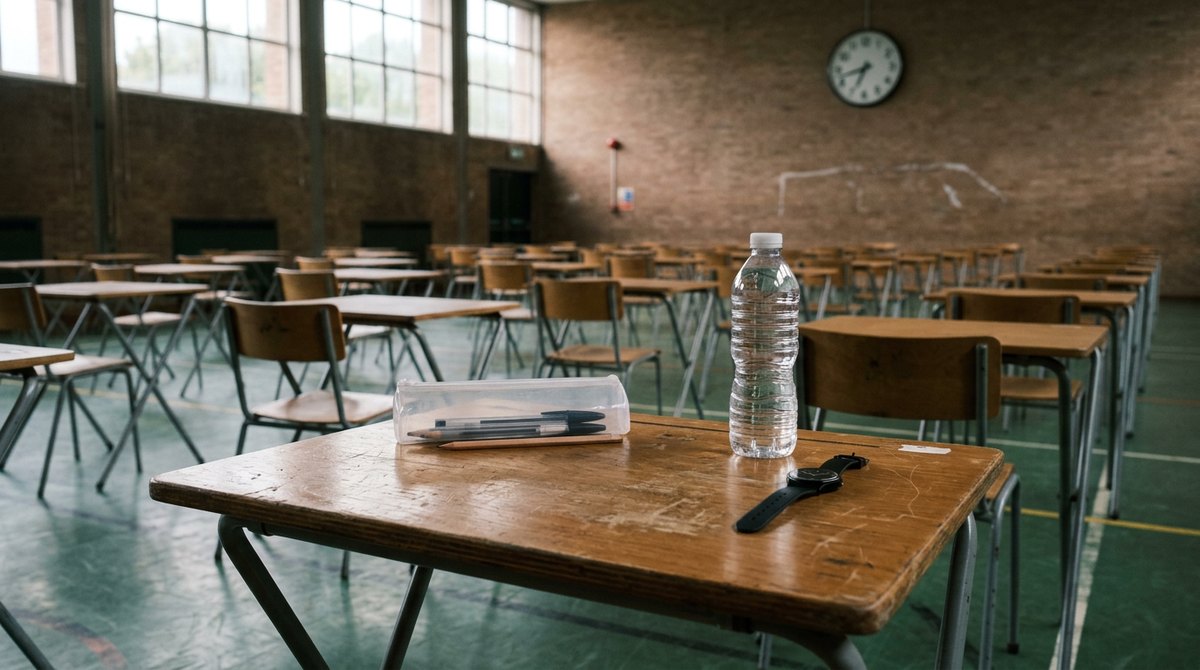
Online learners sit exactly the same papers as everyone else, at a desk like this in an exam hall.
Question types
Each written exam mixes multiple choice, short answer and extended writing questions. Lots of questions start with a short story about a made-up study, called a stem, and ask you to use what you know about it. So learning facts isn’t enough: you need to practise applying them. Answers are written in English, so clear writing helps on the longer questions.
Research methods and maths
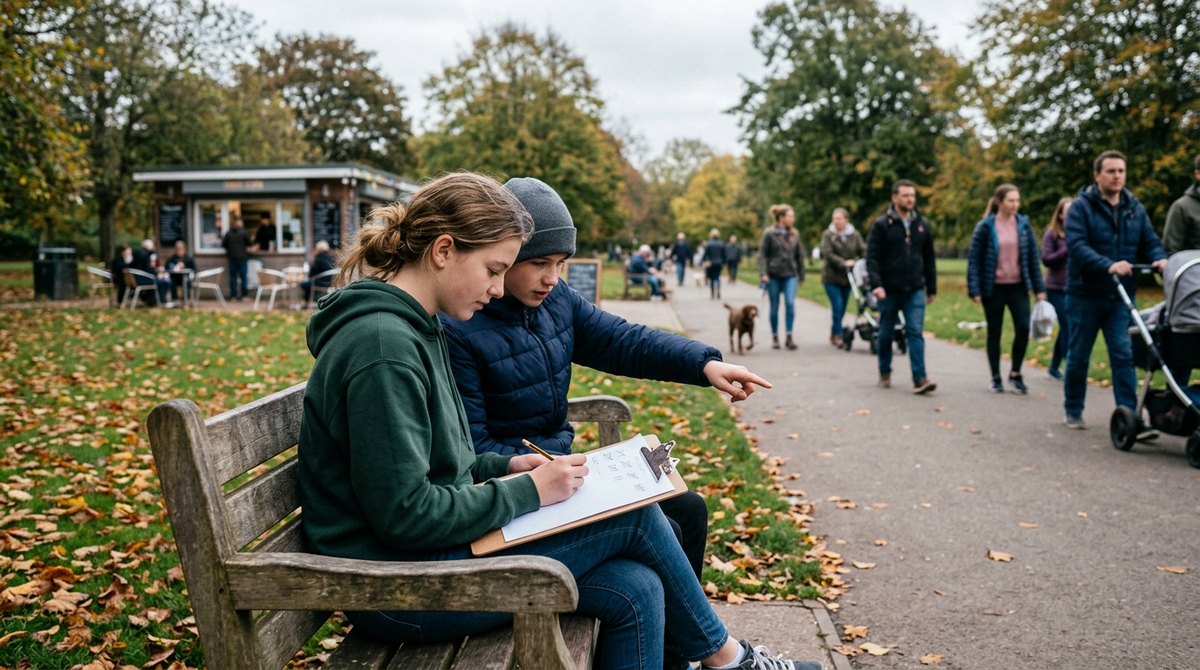
An observation study needs nothing more than a bench, a clipboard and a clear plan, so you can try research methods from home.
Research methods needs extra care when you study on your own. It’s the biggest topic, it includes maths like the mean, median and mode, and it can come up on both papers. Our lesson on the null hypothesis shows the level of detail you need.
See how an online psychology lesson works. The first three lessons are free, with no card needed.
Try 3 lessons free →Sitting the exam as a private candidate
If you’re not entered by your own school, you take the exam as a private candidate. That just means you enter through an exam centre that isn’t your school.
Finding an exam centre
AQA doesn’t enter students itself. Its guidance is clear: “It’s up to the school or college whether to accept private candidates. We can’t ask a school or college to accept your entry.” Finding a centre is your job, so start early.
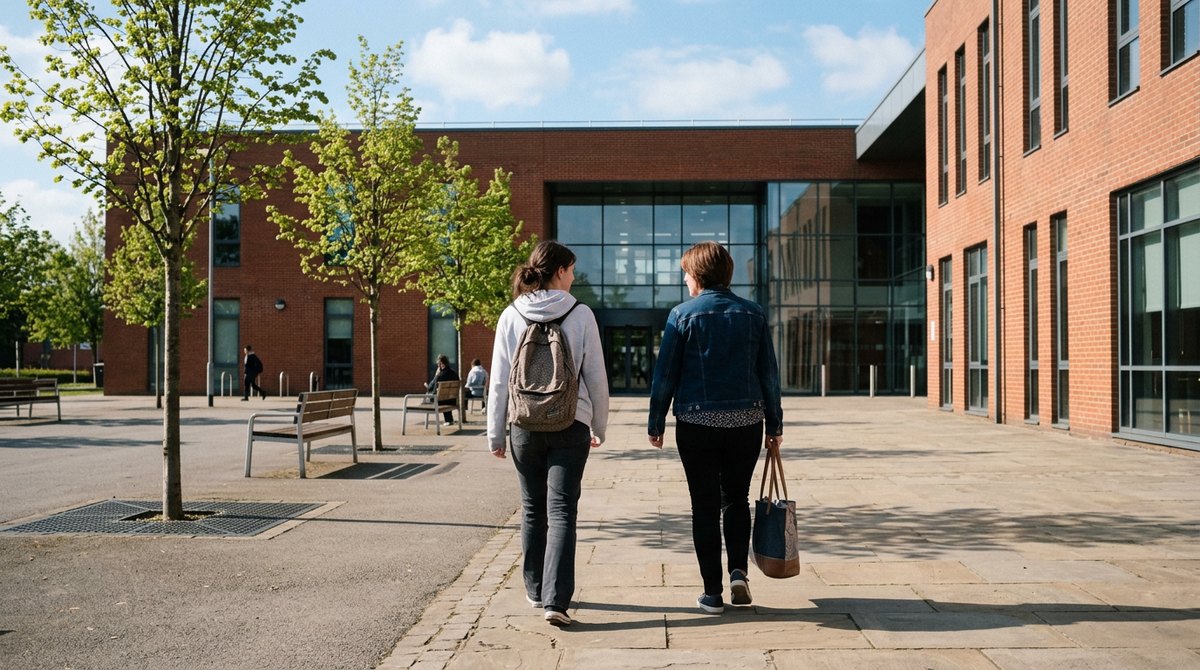
Local colleges and schools are often the easiest exam centres to reach. Visit or call early in the year.
The best place to start is the JCQ private candidates search. JCQ (the Joint Council for Qualifications) lists 190 centres that have confirmed they’ll accept private candidates, and it updates the list each December or January. You can search by postcode, board and subject. AQA adds that a school or college that isn’t on the list may still say yes, so it’s worth asking local ones too.
Fees and deadlines
Each centre sets its own entry fee and its own internal deadline, which may be earlier than the board’s closing date. Enter late and you’ll pay late entry fees on top. Many centres also add an admin fee. The exam fee is usually separate from any online course fee, so ask for a full price before you book your exam.
If you need extra time or other access arrangements, talk to the centre as early as you can. You can read more in AQA’s guide to finding a school or college as a private candidate.
A note for home-educating families
In England, the Department for Education’s guidance for parents says that families who home educate take on the full cost of their child’s education, including any public exams. So budget for exam fees from the start.
- The board and code you’re entered for: AQA GCSE Psychology 8182
- A shortlist of centres from the JCQ private candidates search
- Each centre’s fees, admin charge and entry deadline, in writing
- Any access arrangements you need, such as extra time, agreed with the centre
- Both exam dates in your calendar: Paper 1 and Paper 2
- How and when you’ll collect your results in August
What a good online GCSE Psychology course includes
There are lots of online GCSE courses, and they’re built very differently. Some send you long reading packs. Others give you short lessons with videos and plenty of practice. Here’s what to look for before you enrol.
It follows the right specification
Check the board and code. Most courses teach AQA 8182, but some teach Edexcel, which has different topics. Your course, your revision and your exam entry must all match.
Short lessons you can finish in one go
Online study works best in small chunks. A 30-minute lesson is easy to fit around school, hobbies or home education. A 3-hour unit is easy to put off. Clear explanations with pictures and videos help too, because there’s no teacher to ask when something doesn’t make sense.
Lots of testing, with feedback
Reading something once won’t make it stick. You remember far more by pulling ideas back out of your head, which psychologists call retrieval practice. Our first memory lesson even covers it. Look for quizzes after every lesson, flash cards, and feedback that shows you the right answer when you get one wrong.
A plan and a way to see your progress
Without a teacher setting homework, it’s easy to drift. A timetable that spreads the lessons across the months before your exam, and a dashboard showing what you’ve done, keeps you on track. It also lets a parent check in.
Exam practice
You need to practise exam questions, especially the longer ones, and sit at least one timed mock exam before May.
Tutor support or self-study?
Some distance learning courses include a personal tutor. The tutor marks a set of assignments, gives feedback and offers support by email. These courses tend to cost more, and you often have to finish each assignment before you move on.
A self-study course is more flexible and usually cheaper. You work through the lessons and quizzes at your own pace, and check longer answers against the board’s mark schemes. Some learners mix the two: a self-study course for the content, plus a tutor for a few sessions on essay-style answers.
Clear costs
- Check what’s included and how long you’ll have access to the course.
- See whether you can pay monthly or in one payment.
- Ask whether exam fees are included. They usually aren’t, because you pay the exam centre.
Can you do GCSE Psychology online for free?
You can learn a lot for free, but the qualification itself always costs something, because exam centres charge entry fees. Here’s what’s free:
- The specification, which lists every topic, on the AQA website.
- Past papers, mark schemes and examiner reports, also from AQA. Examiner reports explain where students lost marks, which is gold dust when you study on your own.
- Free trial lessons from online courses. Our first three AQA GCSE Psychology lessons are free to try.
A full course, like our online GCSE Psychology course, saves you planning everything yourself. Free resources are best for checking a course is right for you, and for exam practice near the end.
A weekly plan for studying psychology from home
One-year plan
The plan depends on when you start. Our course has 260 lessons of about 30 minutes, which is about 130 hours in total. Here’s how that works out if you start now, in October 2026, and sit the exams in May 2027.
| When | What to cover |
|---|---|
| Late October to December | Memory, perception and development (Paper 1) |
| January to February | Research methods, then social influence |
| March | Language, thought and communication, brain and neuropsychology, psychological problems |
| April to May | Revision, flash cards, past papers and a timed mock exam |
That’s about 12 lessons a week, or roughly 6 hours. A typical week could look like this:
- Monday to Friday: two lessons a day, each followed by its quiz.
- Saturday: two more lessons, then 15 minutes of flash cards on the week’s topic.
- Sunday: a rest day, or catch up on anything you missed.
Pick your exam year below to see how many lessons a week you’d need from today.
GCSE Psychology is set at 120 guided learning hours, the teaching time a school would give it. Our lessons add up to a little more because they include quizzes and practice.
Two-year plan
Starting in Year 10 instead? Spread the same lessons over two school years. That’s about 4 lessons a week, which fits easily alongside your other GCSEs and leaves a full term for revision.
How Brainy Lemons helps you study psychology from home
Our AQA GCSE Psychology online course is built for students learning at home or alongside school. It follows the AQA 8182 specification, topic by topic, for exams from 2026 to 2029.
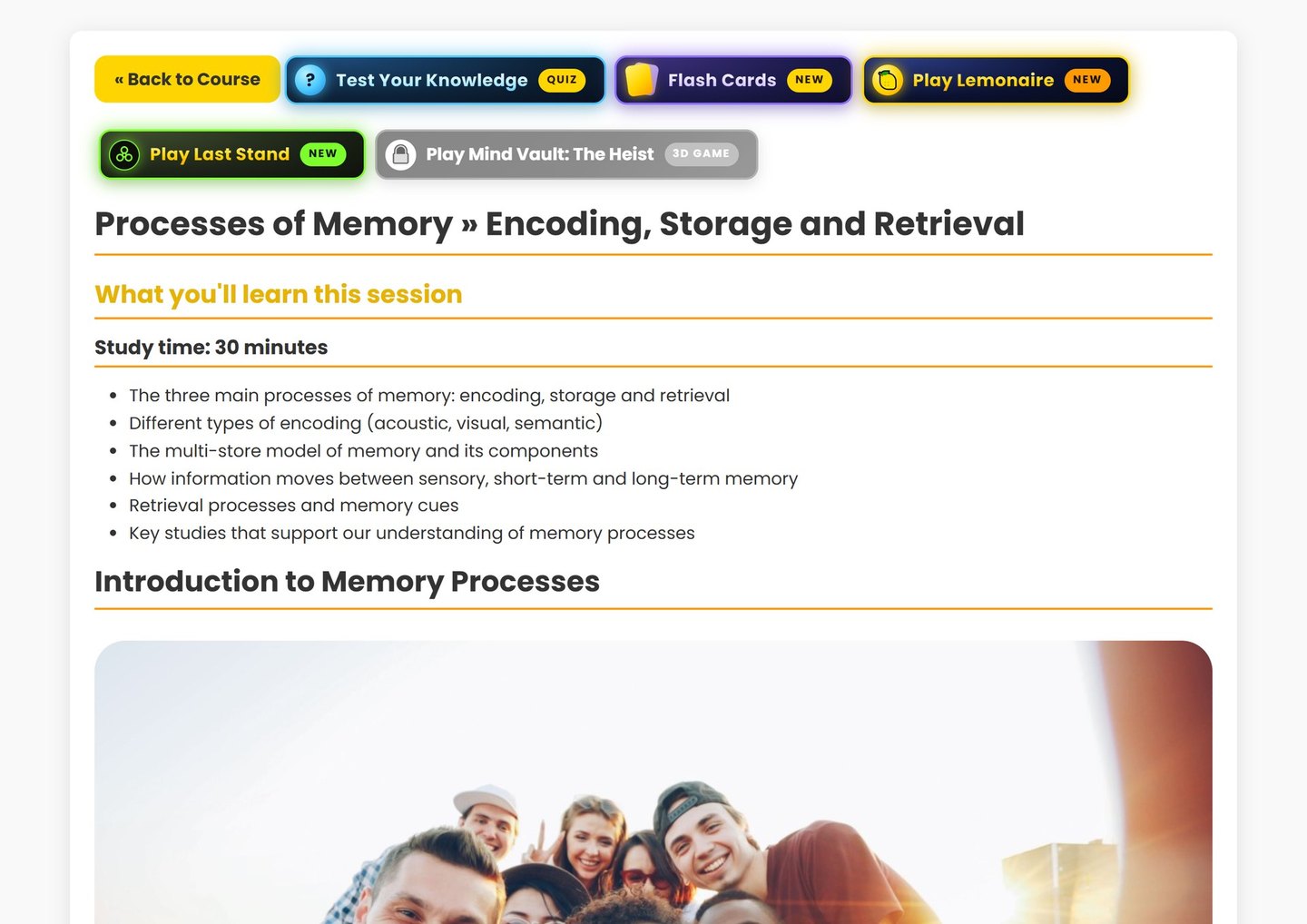
Every lesson opens with what you’ll learn, and the quiz, flash cards and games sit right at the top.
What’s in the course
Here’s what you get:
- 260 short lessons of about 30 minutes, with clear explanations, diagrams, pictures, videos and exam tips.
- A quiz on every lesson, showing the right answer the moment you get one wrong.
- Two games on every lesson: Who Wants to Be a Lemonaire?, a quiz show, and Last Stand, a zombie defence game where right answers build your defences.
- 4,647 flash cards, from easy to exam-hard.
- A study timetable: pick your start date and exam date, and it plans your lessons week by week, with time left for revision.
- A progress dashboard with quiz scores and the topics that need another look.
Learn anywhere, on any device
It works on a phone, tablet or laptop, so you’ve got access to every lesson wherever you are. You can pay in one go or monthly.
Topics such as what conformity is and the central and peripheral nervous system open the Paper 2 topics, and each lesson builds on the one before.
The full course also includes Mind Vault: The Heist, a replayable 3D game covering all of the memory topic. You break into a vault built like the multi-store model, outsmart WARDEN the security AI and test your own memory.
New to the site? Our guide to starting to learn GCSEs online with Brainy Lemons shows how it all fits together. Want to try it first? Start with lesson 1 of the course, free. If you’re weighing up the Cambridge course instead, our guide to the IGCSE Psychology syllabus compares what’s in it.
Is GCSE Psychology hard to study on your own?
It’s very doable. The topics link to everyday life, like why you forget things or why people follow the crowd, so they’re easier to remember than many subjects. Our lesson on the difference between sensation and perception is a good example of how ideas you already notice turn into exam content.
Psychology came out a little lower than similar subjects. In June 2026, 63.0% of the 12,019 AQA students got a 4 or above, and 4.1% got a grade 9.
That’s not a reason to avoid it. It just means the marks go to students who learn the studies in detail and practise exam questions every week, which is exactly what a good online course helps you do.
The tricky parts are the detail and the skills. For each key study you need the aim, method, results and conclusion, plus strengths and weaknesses. You also need research terms, some maths and lots of practice applying what you know. Little and often works far better than cramming.
It suits you if you’re curious about people, can work steadily without a teacher reminding you, and like a mix of science and writing. Topics like how the brain develops and Piaget’s view of language and thought are a good test of whether you’ll enjoy it.
Where it leads
- A level Psychology, Sociology or Biology at sixth form or college.
- Careers that involve working with people, such as teaching, nursing, social work or counselling.
- Useful skills for any career: handling data, weighing up evidence and writing clear arguments.
GCSE Psychology online FAQs
Can I study my GCSE Psychology online?
Yes. You learn the whole course online, then sit the two written exams in person at an exam centre in May or June. The GCSE is exactly the same as one taken at school.
Is there a free online GCSE Psychology course?
You can learn a lot for free using AQA’s specification, past papers and mark schemes, plus free trial lessons. Our first three lessons are free. The exam itself always has an entry fee set by the exam centre.
Can I take an online psychology GCSE alongside my school GCSEs?
Yes. Ask your school’s exams officer first, as they may enter you even if they don’t teach it. If not, you can sit it as a private candidate at another centre. A two-year plan of about 4 lessons a week fits well alongside school.
How long does GCSE Psychology take to study online?
Most schools teach it over two years. Our course is about 130 hours of lessons, so you can finish in one year at around 6 hours a week, or two years at around 2 hours a week.
Do I need a tutor for an online psychology GCSE?
Not necessarily. Many students do well with a structured course, regular quizzes and the board’s mark schemes. A tutor can help with longer written answers if you find those hard.
When should I book my exam centre?
As early as you can, ideally in the autumn before your exams. Centres set their own deadlines and fees. Late entries cost more.
Can I study it from outside the UK?
You can learn the course from anywhere, but you’ll need a centre that runs AQA GCSE Psychology exams. Not every centre abroad offers it, so check with one near you before you enrol.
Which exam board do online psychology courses use?
Most online courses teach AQA 8182. It has two papers and no coursework. Whichever you pick, make sure your course matches the board and code you’ll be entered for.
Study GCSE Psychology online, at your own pace
Short lessons, a quiz and two games on every lesson, and a timetable that plans your weeks up to the exam. Start with three free lessons today.
- 260 short lessons that follow the AQA 8182 specification
- A quiz, a quiz show and a zombie defence game on every lesson
- 4,647 flash cards, from easy to exam-hard
- 1 3D Psychology game for the hardest topics
No card needed. Works on any device.