 By the Brainy Lemons team

The IGCSE psychology syllabus is Cambridge IGCSE Psychology 0266, for exams in 2027, 2028 and 2029. You study six topics (memory, sleep, prosocial behaviour, visual perception, motivation and language) plus research methods, then sit two written papers. There’s no coursework and grades run from A* to G.
Cambridge describes the course as a way to “start thinking like a psychologist”. It’s a new subject, so there’s not much clear help out there yet. This guide walks you through every topic, the theories and named studies, how the two papers work, how it compares with AQA GCSE Psychology and how to plan your study.
Everything about the exam here comes from Cambridge’s own syllabus document (version 3, published August 2025). If you’re a parent, it should also help you check what your child will be learning.
At a glance
- Board: Cambridge International Education
- Syllabus code: 0266
- Exam years: 2027, 2028 and 2029 (June and November series)
- Papers: Paper 1 (1 hour 30 minutes, 90 marks, 53%) and Paper 2 (1 hour 20 minutes, 80 marks, 47%)
- Tiers: none, everyone sits the same papers
- Coursework: none
- Grades: A* to G
- Guided learning: about 130 hours
What’s in the IGCSE psychology syllabus?
The syllabus has seven sections, and you study all of them. Six are topics, and the seventh is research methods, which shows up on both papers.
Each topic follows the same pattern. You learn the key concepts, then three or four theories or explanations. For each theory you learn one argument for it (usually a named study) and one argument against it. Then you practise applying it to “novel scenarios”, which means real-life situations that are new to you.
| Topic | Theories and explanations | Named studies |
|---|---|---|
| 1 Memory and forgetting | Levels of processing, multistore model, motivated forgetting, the brain in memory | Craik and Tulving, Murdock, Milner et al. (HM) |
| 2 Sleep and dreams | Restoration theory, activation-synthesis, psychodynamic theory of dreaming | Robinson et al., Williams et al., Iorio et al. |
| 3 Prosocial behaviour | Biological explanation, social identity theory, social learning theory | Rushton, Levine et al., Prot et al. |
| 4 Visual perception | Gibson’s direct theory, Gregory’s constructivist theory, illusions and culture | Gibson and Walk, Haber and Levin, Bremner et al. |
| 5 Motivation and needs | Hull’s drive reduction, positive reinforcement, psychodynamic marketing, self-determination theory | Boniecki and Moore, Merchant et al., Calvo et al. |
| 6 Language development | Chomsky’s biological explanation, learning theory, Piaget’s cognitive theory | Senghas, Goldstein et al., Hewitt |
1. Memory and forgetting
You start with how memory works: encoding (getting information in), storage and retrieval (getting it back out). Then you compare two models. Craik and Lockhart’s levels of processing says deeper processing, thinking about meaning, leads to better memory. Atkinson and Shiffrin’s multistore model says information moves through the sensory register, short-term memory and long-term memory.
You also learn the psychodynamic theory of forgetting (repression and suppression) and the role of the hippocampus, amygdala and cerebellum. Our free lesson on memory and information processing is a good place to see what this topic feels like.
2. Sleep and dreams
This topic covers biological rhythms, REM and nREM sleep, and how sleep is measured with EEG, EMG and EOG. You learn about zeitgebers (outside cues like light), the body clock in the brain and the hormone melatonin. It also covers jetlag, shiftwork and three sleep disorders: insomnia, sleep paralysis and sleepwalking.

Early flights upset your body clock, which is why jetlag and shiftwork are part of the Sleep and dreams topic.
Then come three theories: the restoration theory of sleep, Hobson and McCarley’s activation-synthesis theory of dreaming and the psychodynamic theory of dreaming. Our lesson on biological rhythms opens this topic.
3. Prosocial behaviour
Prosocial behaviour means positive actions that help others, like helping, sharing and caring. You look at why people help, from three angles: biology (serotonin, oxytocin, brain areas and twin studies), social identity theory (we help people in our own group) and Bandura’s social learning theory (we copy helpful role models, including in the media).

Giving up a Saturday to sort food bank donations is prosocial behaviour, and the topic asks why people choose to help like this.
Start with our lesson on defining prosocial behaviour.
4. Visual perception
Sensation is detecting something with your senses. Perception is making sense of it. This topic covers depth cues, visual constancies and Gestalt principles, then compares Gibson’s direct theory (perception is innate) with Gregory’s constructivist theory (we use past experience). You finish with five named visual illusions and how culture affects them. Try our lesson on sensation vs perception.
5. Motivation and needs
You learn the difference between extrinsic motivation (outside rewards like pay) and intrinsic motivation (enjoyment), and Maslow’s hierarchy of needs. Then four applications: Hull’s drive reduction theory, positive reinforcement in schools, how adverts use psychodynamic ideas, and Deci and Ryan’s self-determination theory of exercise. Our lesson on defining motivation starts the topic.
6. Language development
This topic follows how children learn to talk, from babbling to full sentences. You compare Chomsky’s biological explanation (we’re born ready for language), learning theory (we copy and get rewarded) and Piaget’s cognitive theory (language grows with thinking). You also learn about Broca’s and Wernicke’s areas and aphasia, a language problem caused by brain damage.
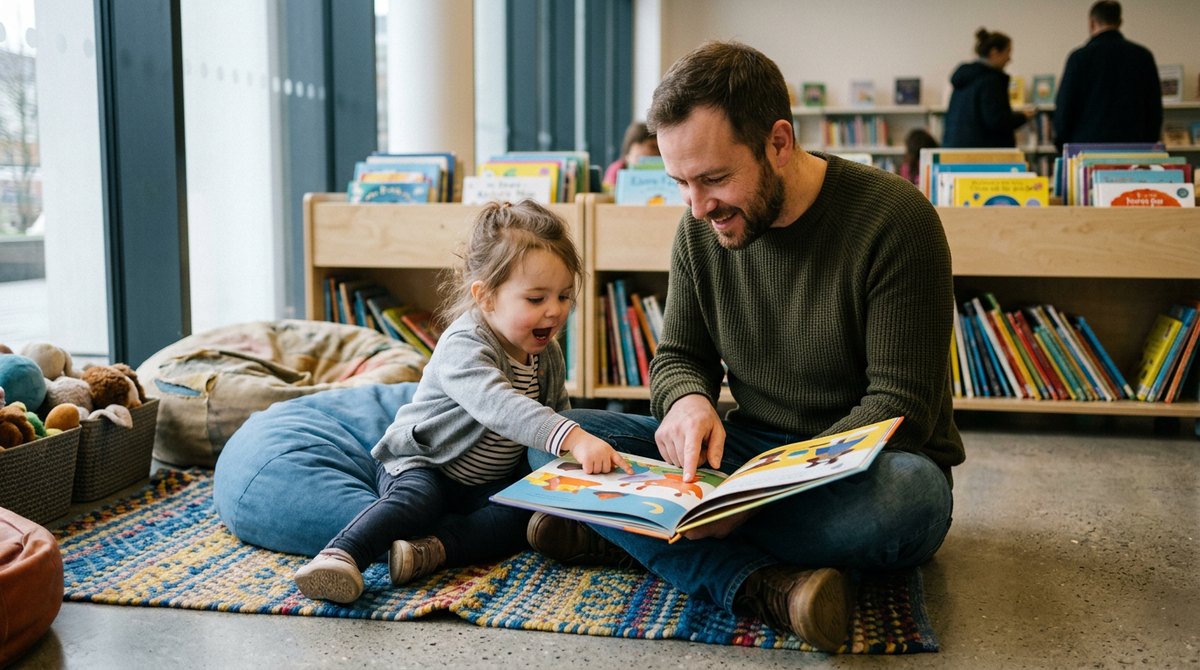
Pointing, babbling and sharing a book: the language development topic follows how children like this one learn to talk.
7. Research methods
Research methods is the biggest single section of the exam. You learn how experiments work (variables, designs, controls) and three non-experimental methods: observations, questionnaires and interviews, and case studies. You also cover sampling, validity, reliability, ethics and how to read data tables and bar charts.
Want to see the topics taught properly? Our first three Cambridge IGCSE Psychology lessons are free.
Try 3 lessons free →How the Cambridge IGCSE Psychology exam works
Everyone takes two written papers. You answer every question, and you write on the question paper.
| Paper | Time and marks | Sections | % of grade |
|---|---|---|---|
| Paper 1 | 1 hour 30 minutes, 90 marks | A Memory and forgetting (20), B Sleep and dreams (20), C Prosocial behaviour (20), D Experimental research method (30) | 53% |
| Paper 2 | 1 hour 20 minutes, 80 marks | A Visual perception (20), B Motivation and needs (20), C Language development (20), D Non-experimental research methods (20) | 47% |
Most questions are short answer. On each paper, one of sections A to C includes an 8-mark extended question, but you won’t know which section in advance. Paper 1’s research methods section also has a 4 to 6 mark question where you plan part of an experiment.
What examiners reward
Marks are split across three assessment objectives. Knowledge and understanding is 33%, application is 51% and analysis and evaluation is 16%. That means over half the marks are for using psychology in a scenario, not just remembering it.
The split is similar on both papers. Application is 53% of Paper 1 and 48% of Paper 2, so in every section you should expect to link what you know to a short scenario.
The command words tell you what to do. “Define” means give a precise meaning. “Describe” means give the main features. “Explain” means say why or how, with evidence. “Suggest” means apply what you know to a situation where several answers could be right.
A question in the exam’s style
Here’s a practice question we’ve written in the style of Paper 1. It isn’t from a real paper.
Sam hit his head in a cycling accident. He remembers his tenth birthday party, but he can’t remember anything about the week before the accident, and he forgets new people’s names within minutes. Explain Sam’s memory problems using your knowledge of retrograde and anterograde amnesia. [4 marks]
A strong answer defines both terms and links each one to Sam. Losing the week before the accident is retrograde amnesia, because those events happened before the injury. Forgetting new names is anterograde amnesia, because he can’t store new information after the injury. If you only give definitions and never mention Sam, you lose the application marks.
Named studies: what you actually need to know
There are three named studies for each of the six topics, so 18 in total. The good news: you only need their results and conclusions, and how they support a theory. Cambridge says you won’t be asked to evaluate the studies, and you don’t need to read the originals.
Cambridge publishes a summary of each one in a document called “Named studies: Summaries and reference list”. For example, the HM amnesia case study supports the role of the hippocampus and amygdala in memory, and Gibson and Walk’s visual cliff study supports Gibson’s direct theory.
The syllabus also gives exact definitions for key terms in bold. Learning these word for word is one of the quickest wins in revision.
Research methods on Paper 1 and Paper 2
Research methods is worth 50 of the 170 marks across the two papers. It’s split by paper, which catches people out. Paper 1 focuses on the experimental method. Paper 2 focuses on non-experimental methods. Sampling, validity, reliability, ethics, the research process and dealing with data can come up on either.
You don’t need to calculate a mean or a range, but you do need to know what they show and when to use them.
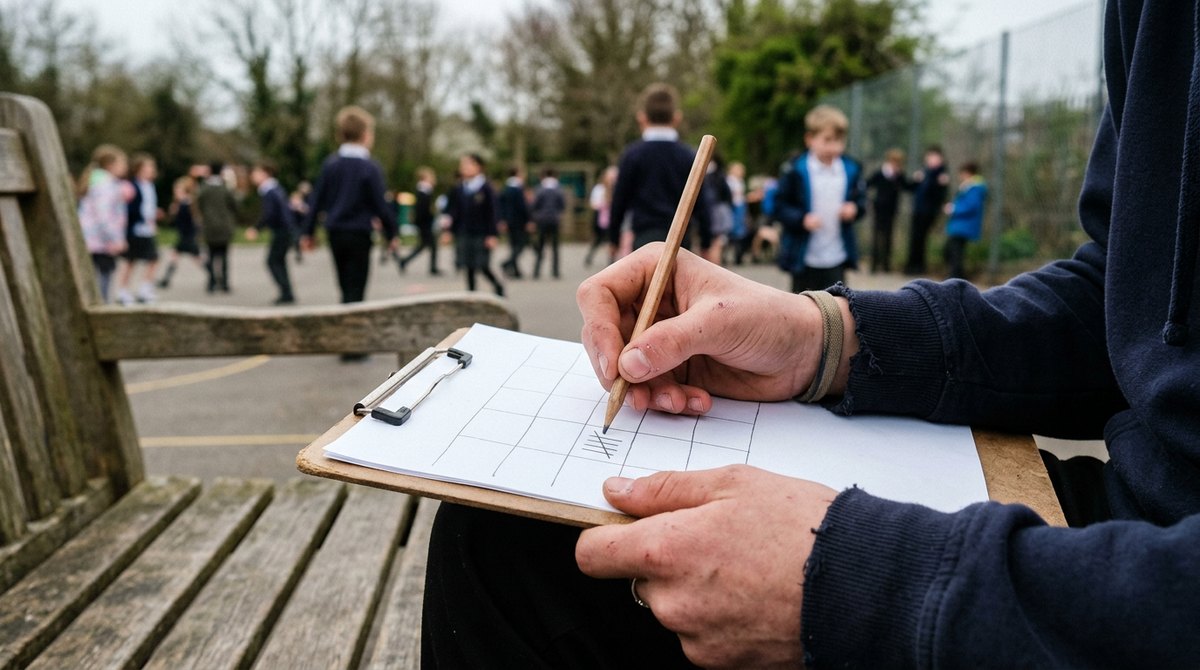
A tally chart is how you record behaviour in a structured observation, one of the Paper 2 research methods.
Exam years, zones and private candidates
The 0266 syllabus is for exams in 2027, 2028 and 2029, in the June and November series. Cambridge says it isn’t available in every part of the world in June, though, so check the availability notice on the Cambridge IGCSE Psychology 0266 page. That page also says the November series is open in every zone.
Private candidates can enter, which matters if you’re home educated. You’ll need an exam centre that offers Cambridge exams to take you on, so contact one early. You don’t need to have studied psychology before.
Cambridge IGCSE Psychology vs AQA GCSE Psychology
If you’ve also seen “GCSE psychology syllabus”, that’s usually AQA GCSE Psychology (8182). Both cover memory, perception, language and research methods, but the topics, papers and grades differ.
There’s also OxfordAQA International GCSE Psychology (9218), a different international course. OxfordAQA’s two papers, Cognition and behaviour and Social context and behaviour, are worth 50% each. Check which board your school or exam centre uses before you buy any notes or resources.
| Cambridge IGCSE Psychology (0266) | AQA GCSE Psychology (8182) | |
|---|---|---|
| Papers | 1 hour 30 minutes (90 marks) and 1 hour 20 minutes (80 marks) | Two papers, each 1 hour 45 minutes and 100 marks |
| Split | 53% and 47% | 50% and 50% |
| Topics | Memory, sleep and dreams, prosocial behaviour, visual perception, motivation, language development | Memory, perception, development, social influence, language, brain and neuropsychology, psychological problems |
| Grades | A* to G | 9 to 1 |
| Coursework | None | None |
The AQA details come from AQA’s specification at a glance. If your school uses AQA, see our AQA GCSE Psychology course instead.
Is IGCSE Psychology hard?
It’s a fair amount of content: six topics, each with three or four theories or explanations, 18 named studies and research methods on top. But it’s very structured. Every theory comes with exactly one argument for and one against, so you always know what to learn.
The tricky part is application. With 51% of marks for applying your knowledge, you need lots of practice linking theories to scenarios.
Cambridge expects about 130 guided learning hours. The subject suits students who like asking why people behave the way they do, who enjoy science and writing, and who are happy to learn precise definitions. Lots of students find the topics more interesting than they expected, because they’re about everyday life: sleep, memory, helping, adverts and how babies learn to talk.
Cambridge says students with A* to C are well prepared for courses including Cambridge International AS and A Level Psychology. It’s also useful for anyone heading towards biology, health, teaching or social sciences.
A two-year study plan
Here’s a simple way to spread the IGCSE psychology syllabus over two school years, learning each research method alongside a topic rather than leaving them all to the end.
| Term | Topic | Research methods |
|---|---|---|
| Year 1, autumn | Memory and forgetting | Experiments, variables, designs |
| Year 1, spring | Sleep and dreams | Controls, sampling, ethics |
| Year 1, summer | Prosocial behaviour | Data tables, bar charts, a Paper 1 practice paper |
| Year 2, autumn | Visual perception | Observations |
| Year 2, spring | Motivation and needs, then language development | Questionnaires, interviews, case studies |
| Year 2, summer | Revision | Specimen papers, timed practice |
Pick your exam series below to see how many lessons a week you need from your own start date.
Each week, finish your lessons, make short notes, test yourself on the bold definitions and write one practice answer that applies a theory to a scenario. Cambridge’s specimen papers and mark schemes are the best guide to the real questions, and teachers can get more resources through Cambridge’s School Support Hub.
Studying Cambridge IGCSE Psychology online with Brainy Lemons
Our Cambridge IGCSE Psychology online course has 260 short lessons written from the 0266 syllabus for exams in 2027 to 2029. They follow the syllabus order, starting with memory and working through sleep, prosocial behaviour, visual perception, motivation and into language development.
Each lesson takes about 30 minutes and ends with its own quiz. You also get two games on every lesson: the Who Wants to Be a Lemonaire? quiz show and the Last Stand zombie defence game, where right answers earn what you need to win. There are 4,623 flash cards too, from easy to exam-hard.
A study timetable plans your lessons week by week up to your finish date, and the dashboard shows quiz scores and weak topics, which is handy for parents. New to the site? Our quick start guide shows how it all works, and you can read more about the Lemonaire quiz show.
The first three lessons are free, starting with Introduction to Memory and Information Processing. Or see what’s in the full Cambridge IGCSE Psychology course.
IGCSE psychology syllabus FAQs
What is the code for Cambridge IGCSE Psychology?
The syllabus code is 0266, which you’ll see on the syllabus, past papers and exam entries.
Is there an IGCSE Psychology syllabus for 2026?
No. The 0266 syllabus is for exams in 2027, 2028 and 2029, so there are no 0266 exams in 2026.
How many topics are in IGCSE Psychology?
Six topics plus research methods: memory and forgetting, sleep and dreams, prosocial behaviour, visual perception, motivation and needs, and language development.
Does IGCSE Psychology have coursework?
No. Your grade comes from two written papers, worth 53% and 47%.
Can I take IGCSE Psychology as a private candidate?
Yes, Cambridge allows private candidates for 0266, but you’ll need an exam centre that offers Cambridge exams to enter you, so contact one early.
Is there a Cambridge IGCSE Psychology coursebook?
Yes. Cambridge University Press published the Cambridge IGCSE Psychology Coursebook in September 2025. You can also learn from the syllabus, Cambridge’s named study summaries and an online course like ours.
Can you study IGCSE Psychology online?
Yes. Our online course has 260 lessons of about 30 minutes, written from the 0266 syllabus, with quizzes, games and flash cards. The first three lessons are free.
Learn the Cambridge IGCSE Psychology syllabus, one short lesson at a time
From memory models to the visual cliff, our lessons follow the 0266 syllabus for exams in 2027 to 2029. Try the first three free.
- 260 short lessons that follow the Cambridge 0266 syllabus
- A quiz, a quiz show and a zombie defence game on every lesson
- 4,623 flash cards, from easy to exam-hard
No card needed. Works on any device.