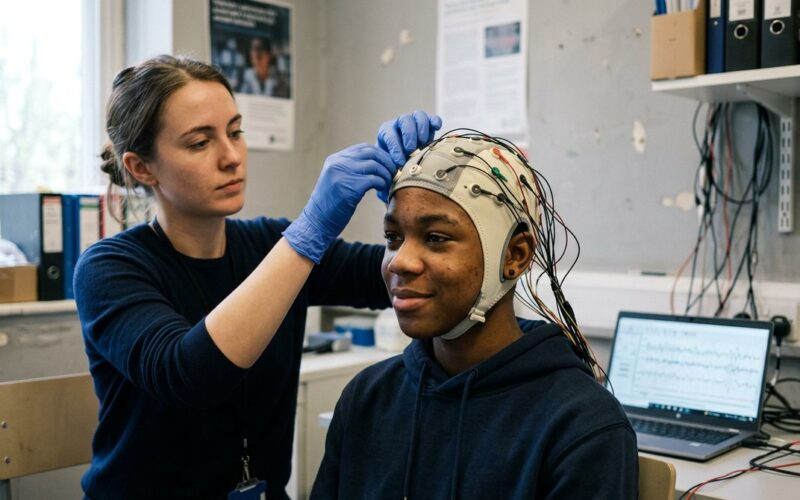
 By the Brainy Lemons team
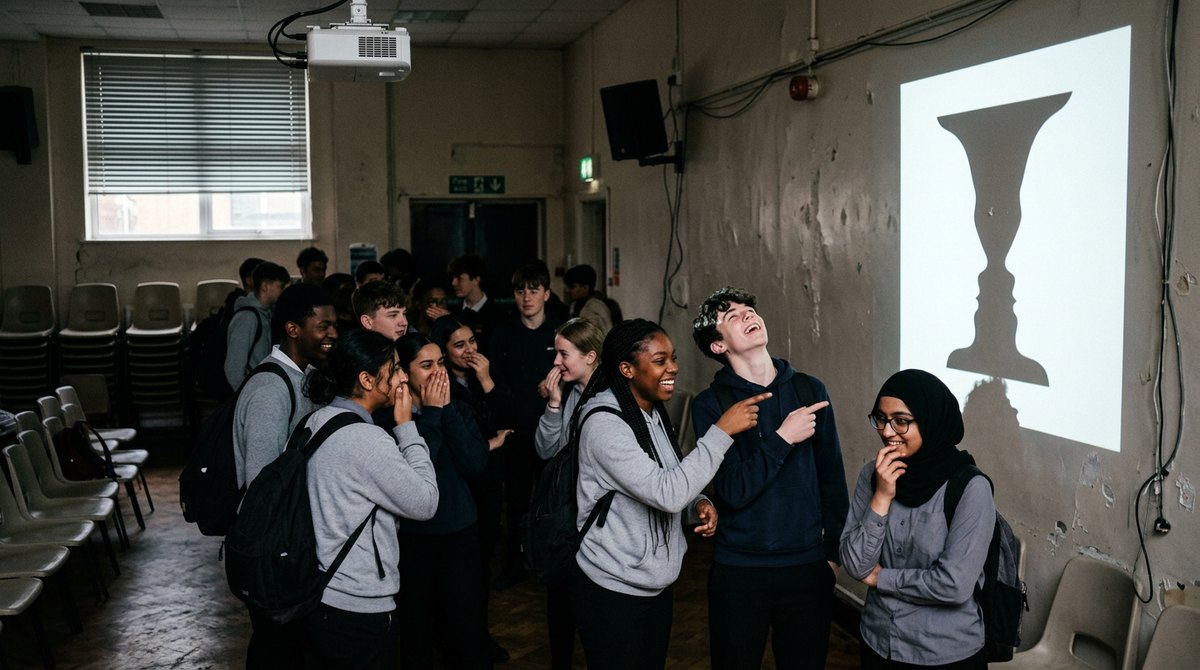
GCSE Psychology Paper 1 is AQA’s Cognition and behaviour exam (8182/1). It lasts 1 hour 45 minutes, is worth 100 marks and counts for 50% of your GCSE. It has four 25-mark sections: Memory, Perception, Development and Research methods, each mixing multiple choice, short answer and extended writing questions.
If you’re taking AQA GCSE Psychology, this is the first of your two exams. In summer 2027 it’s on the afternoon of Monday 10 May, a week before Paper 2.
This guide goes through every topic on the paper, the key studies you need, how the questions and marks work, a real question from the June 2025 paper, what the examiners said, and a revision plan you can start this term.
At a glance
- Board and paper: AQA GCSE Psychology 8182, Paper 1 (8182/1) Cognition and behaviour
- Length: 1 hour 45 minutes, written exam
- Marks: 100, which is 50% of the GCSE
- Sections: A Memory, B Perception, C Development, D Research methods (25 marks each)
- Next exam: Monday 10 May 2027, afternoon
- Tiers: none, everyone sits the same paper
- Coursework: none
- Calculator: allowed
What’s on GCSE Psychology Paper 1?
Paper 1 covers the first half of the AQA specification (the official list of what you can be examined on), called Cognition and behaviour. “Cognition” just means thinking: how you remember, see the world, and learn. Here’s the whole paper on one page.
| Section | Topic | What you study | Named studies |
|---|---|---|---|
| A (25 marks) | Memory | Encoding, storage and retrieval; episodic, semantic and procedural memory; the multi-store model; primacy and recency; reconstructive memory; interference, context and false memories | Murdock’s serial position curve; Bartlett’s War of the Ghosts |
| B (25 marks) | Perception | Sensation vs perception; monocular and binocular depth cues; visual illusions; Gibson’s direct theory; Gregory’s constructivist theory; perceptual set | Gilchrist and Nesberg; Bruner and Minturn |
| C (25 marks) | Development | Early brain development; nature and nurture; Piaget’s stage theory and its use in education; Dweck’s mindset theory; praise and self-efficacy; learning styles and Willingham’s criticism | McGarrigle and Donaldson’s naughty teddy; Hughes’ policeman doll |
| D (25 marks) | Research methods | Hypotheses; variables; sampling; experiments and other methods; correlation; research procedures; reliability and validity; ethics; data handling and maths | Used across every topic |
One thing catches students out: AQA says research methods and the maths skills “will be assessed across all topic areas in Paper 1”. So you’ll meet a sampling or variables question inside the Memory section too, not just in Section D.

Linear perspective, relative size and occlusion in one view: the road narrows, the poles shrink and the tractor hides the hedge, all monocular depth cues you’ll name in the Perception section.
Memory
You start with how memories get in, stay in and come back out: encoding, storage and retrieval. Then you learn the multi-store model, with its sensory, short-term and long-term stores and how each one differs in coding, capacity and duration.
The two named studies are favourites for longer questions. Murdock’s serial position curve study shows why we remember the start and end of a list best. Bartlett’s War of the Ghosts study shows memory rebuilding a story to fit what we already know, which he called “effort after meaning”.
Perception
Sensation is your eyes picking up light. Perception is your brain making sense of it. You’ll learn the four monocular depth cues (height in plane, relative size, occlusion and linear perspective), two binocular cues (retinal disparity and convergence) and six illusions, including the Ponzo, the Müller-Lyer and the Ames Room.
The big debate is nature against nurture. Gibson’s direct perception theory says the world gives us enough information on its own. Gregory’s constructivist theory says we build a picture using past experience. Expect to describe one and weigh it up.
Development
This section runs from the brain growing in the womb to how teenagers learn. The centre of it is Piaget’s theory of cognitive development: four stages, assimilation and accommodation, and two studies that tested his ideas about egocentrism and conservation.
After Piaget come Dweck’s fixed and growth mindsets, the role of praise and self-efficacy (your belief that you can succeed at a task), and learning styles, with Willingham’s argument that matching teaching to a “style” doesn’t help.
Research methods
Section D is the biggest topic by content. It’s all about how psychologists plan and run studies. That runs from writing a null hypothesis to choosing a sample, an experimental design and a method, and dealing with ethical issues from the British Psychological Society guidelines.
It also holds the maths: ratios, fractions, percentages, mean, median, mode and range, and drawing and reading graphs such as scatter diagrams. It’s all at the level of GCSE Maths.
Start with the Memory section. Our first three Paper 1 lessons are free, no card needed.
Try 3 lessons free →How Paper 1 is examined
Every question is compulsory, so there’s no choosing. Each section is worth 25 marks and they come in order: Memory, Perception, Development, then Research methods. With 105 minutes for 100 marks, a good pace is about a minute a mark, which leaves a few minutes to check.
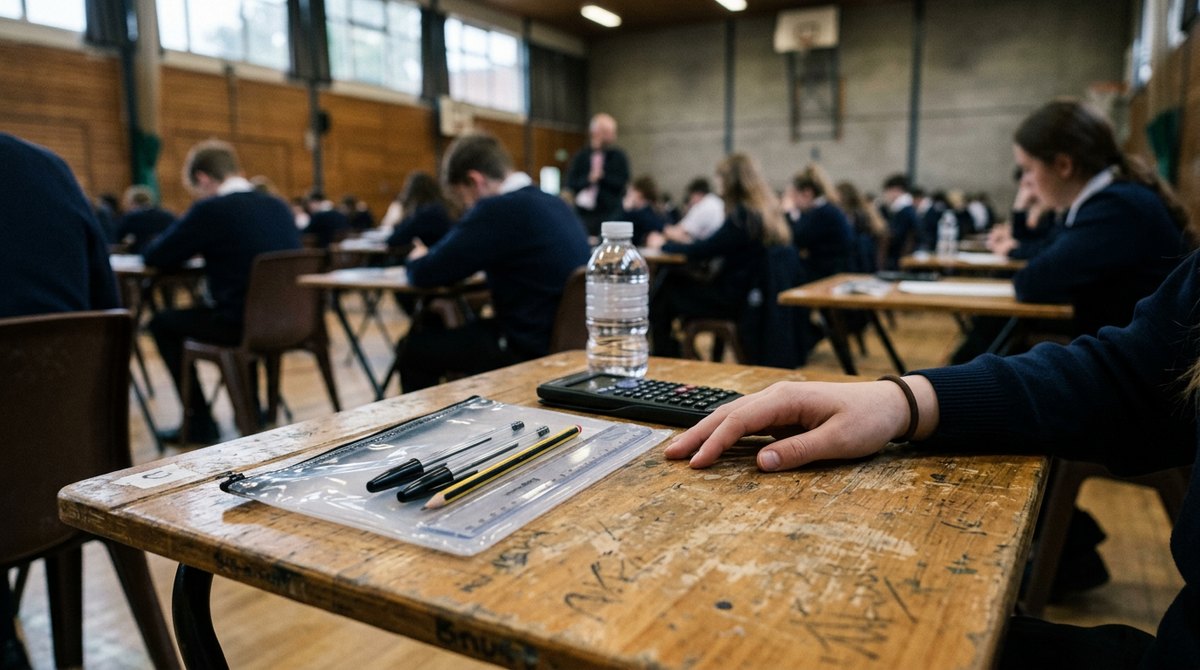
Bring a calculator. Paper 1 has a few marks for working out a percentage, fraction or ratio from a table of results.
Question types and marks
Looking at the June 2025 paper, the questions fall into five types:
- Multiple choice (1 or 2 marks): pick the right answer, such as which sampling method gives everyone an equal chance.
- Short answer (2 to 4 marks): define a term, name two depth cues, or identify the variables in a study.
- Maths (2 to 4 marks): calculate a percentage or ratio, or sketch a scatter diagram.
- Application and “design a study” (4 to 6 marks): use what you know on a new scenario, like planning an experiment about praise and driving lessons.
- Extended writing (5 to 9 marks): describe and evaluate a study or theory. In 2025 the last question was a 9-mark synoptic question, which means it pulls ideas from across the whole course.
The command word tells you what to do. “Identify” or “name” wants a word or phrase. “Describe” wants detail. “Evaluate” wants strengths and weaknesses with a judgement. Of the 50% that Paper 1 is worth, AQA puts about 17.5% on knowledge, 17.5% on applying it and 15% on evaluating, so knowing facts alone won’t get you a top grade.
A real Paper 1 question
Here are two questions from the June 2025 paper (8 May 2025), taken from AQA’s published question paper:
- “Describe and evaluate Murdock’s serial position curve study.” [9 marks]
- “Calculate the ratio of the total number of objects correctly recalled in Group A compared to Group B. Write this ratio in its simplest form.” [2 marks] (Group A recalled 180, Group B 140.)
For the ratio, 180:140 simplifies to 9:7. The mark scheme gave 1 mark if you didn’t simplify, so always finish the job.
For the 9-marker, split your time evenly. Describe the aim, method, results and conclusion in a short paragraph or two, then give two or three evaluation points that are clearly about Murdock, such as the word lists being an artificial task. Generic points like “it lacks validity” with no link to the study score very little.
Paper 1 vs Paper 2
| Paper 1 | Paper 2 | |
|---|---|---|
| Title | Cognition and behaviour | Social context and behaviour |
| Topics | Memory, Perception, Development, Research methods | Social influence, Language, thought and communication, Brain and neuropsychology, Psychological problems |
| Length and marks | 1 hour 45 minutes, 100 marks | 1 hour 45 minutes, 100 marks |
| Share of GCSE | 50% | 50% |
| Summer 2027 date | Monday 10 May, afternoon | Monday 17 May, afternoon |
Sources: AQA GCSE Psychology 8182 specification (version 1.1) and the AQA May/June 2027 GCSE timetable (version 1.2).
What examiners said about the June 2025 paper
Every year AQA publishes an examiner report on how students answered each question. The June 2025 report gives a clear picture of where marks are easy and where they slip away.
Multiple choice and maths questions went well. The surprises were the simple definitions: around 45% of students got no marks for defining a case study, and over 40% got none for self-efficacy. Those are terms straight from the specification, so learn a two-mark definition for every one.
The examiners’ other advice: read the question twice, answer the command word, give both conditions when you name an independent variable, and match the length of your answer to the marks.
Is GCSE Psychology Paper 1 hard?
It’s a fair paper if you’re organised. There are lots of named studies and terms, but no hidden tricks, and the question styles repeat every year. The research methods and maths take practice more than talent.
These are for the whole GCSE, both papers together. About 63% got a grade 4 or above and 21% got a 7 or above, which is lower than in many subjects. Many students take psychology for the first time at GCSE, so steady revision of the studies and methods makes a real difference.
Paper 1 on OCR and Edexcel
Lots of people search for psychology paper 1 without knowing the boards set different papers. Check the code on your exam entry. If it’s 8182, you’re with AQA and everything above applies.
| Board | Paper 1 | Topics | Length and marks |
|---|---|---|---|
| AQA (8182) | Cognition and behaviour | Memory, Perception, Development, Research methods | 1 hour 45 minutes, 100 marks, 50% |
| OCR (J203) | Studies and applications in psychology 1 | Criminal psychology, Development, Psychological problems, Research methods | 1 hour 30 minutes, 90 marks, 50% |
| Pearson Edexcel (1PS0) | Paper 1 | Development, Memory, Psychological problems, The brain and neuropsychology, Social influence, plus two extended questions on debates in psychology | 1 hour 45 minutes, 98 marks, 55% |
Sources: OCR GCSE Psychology J203 specification (version 2.0, July 2026) and the Pearson Edexcel GCSE Psychology specification.
GCSE psychology past papers for Paper 1
AQA puts its past papers, mark schemes and examiner reports on its GCSE Psychology assessment resources page, free. For Paper 1 you can currently get question papers for the sample set, November 2020, November 2021, June 2022, June 2023, June 2024 and June 2025.
Teachers can also use Exampro, AQA’s searchable bank of past questions, to build topic tests.
Use psychology past papers in stages. Early on, do single sections untimed with your notes. Save the newest papers, June 2024 and June 2025, for later, and start with older ones such as November 2021 and June 2022. From spring, do whole papers timed at 1 hour 45 minutes, then mark them with the mark scheme and read the examiner report for that year. Most students never read the examiner reports, and they’re the most useful thing on the page.
How to revise for Paper 1
The trick is to revise each section the way it’s examined: definitions for the short questions, studies for the long ones, and maths little and often.
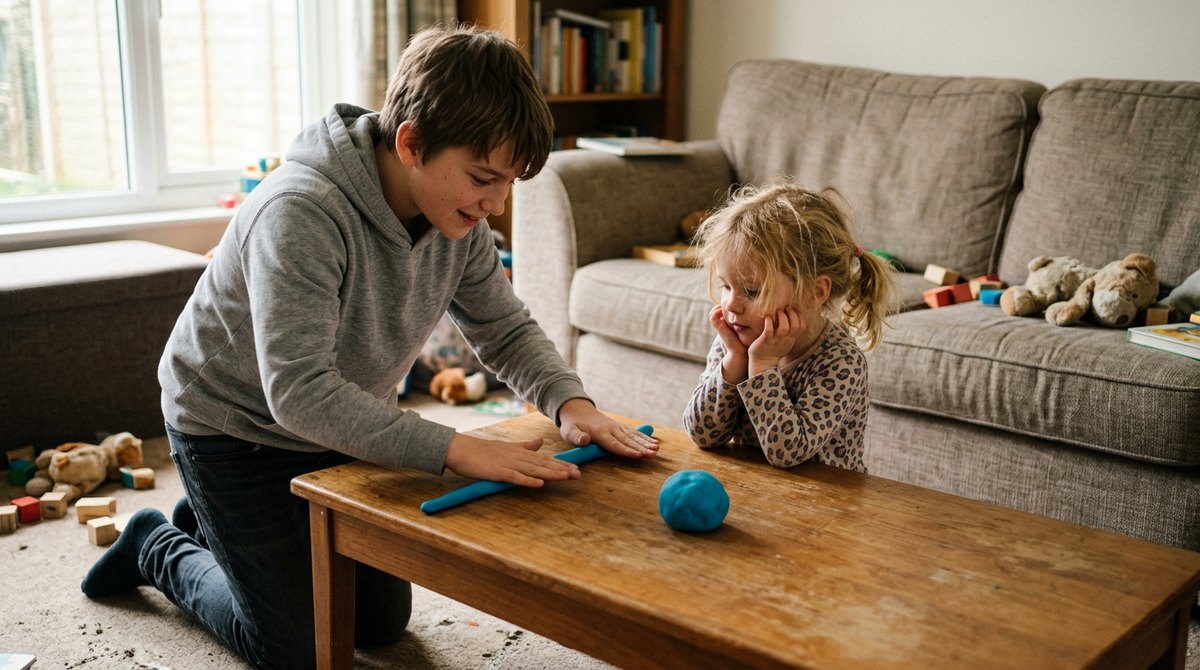
Try Piaget’s conservation task on a younger brother or sister. Seeing a five-year-old say the sausage has “more” clay makes the Development section stick.
- Memory: draw the multi-store model from memory with coding, capacity and duration for each store, and make study cards for Murdock and Bartlett (aim, method, results, conclusion, two evaluation points).
- Perception: sketch each illusion and say which explanation fits it. Find the four depth cues in real photos.
- Development: learn Piaget’s four stages with ages and one example each, then link McGarrigle and Donaldson and Hughes to the idea they challenge.
- Research methods: learn a strength and a weakness for every sampling method, design and method, and do two or three maths questions a week.
A revision plan to 10 May 2027
- Autumn term: finish learning the content. Make a definition list as you go.
- January to February: one section a week on rotation, with short practice questions and flash cards.
- March to April: timed past papers every two weeks, marked with the mark scheme. Practise one 9-mark answer each week.
- May: mixed questions, the definitions you keep missing, and an early night before the exam.
The planner uses our 260 lessons, which cover both papers, and the 120 guided learning hours listed for this GCSE on the Ofqual register. Paper 1 topics are the first 162 lessons.

A ten-minute observation in a market square teaches categories of behaviour and inter-observer reliability better than any list.
- A two-mark definition for every key term in the specification
- A study card for each named study: Murdock, Bartlett, Gilchrist and Nesberg, Bruner and Minturn, McGarrigle and Donaldson, Hughes
- A strength and weakness for every research method and sampling method
- At least three timed past papers marked with the mark scheme
- A practised plan for a 9-mark describe and evaluate answer
- A calculator, black pens, a pencil and a ruler packed the night before
Studying Paper 1 with Brainy Lemons
Our AQA GCSE Psychology online course has 260 short lessons that follow the 8182 specification in order. The first 162 cover Paper 1: 22 on Memory, 41 on Perception, 35 on Development and 64 on Research methods, with a review lesson at the end of each topic. Each one takes about half an hour.
Every lesson has a quiz, a quiz show and a zombie defence game, and the course has 4,647 flash cards, from easy to exam-hard. That’s a lot of practice at the definitions that cost marks in June 2025.
The course also has Mind Vault: The Heist, a replayable 3D game that covers all of Memory. You break into a vault built like the multi-store model, outsmart WARDEN the security AI, test your own memory and collect Memory Cards.
You can try the first three lessons free, which start the Memory section. For the whole course, both papers and the private candidate route, read our guide to AQA GCSE Psychology or see how GCSE Psychology online works from home. When you’re ready, the GCSE Psychology course page has the full details.
GCSE Psychology Paper 1 FAQs
When is GCSE Psychology Paper 1 in 2027?
AQA’s Paper 1 (8182/1) is on Monday 10 May 2027 in the afternoon session, which starts at 1.30pm. Paper 2 is on Monday 17 May 2027, also in the afternoon.
How long is psychology paper 1?
AQA’s Paper 1 is 1 hour 45 minutes for 100 marks. OCR’s is 1 hour 30 minutes for 90 marks. Edexcel’s is 1 hour 45 minutes for 98 marks.
What topics are on AQA GCSE Psychology Paper 1?
Memory, Perception, Development and Research methods, one 25-mark section each. Research methods and maths can also come up inside the other three sections.
Can I use a calculator in Paper 1?
Yes, the front of the paper lists a calculator as allowed, and there are usually a few marks for working out percentages, fractions, ratios or averages.
What’s the difference between psychology paper 1 and paper 2?
Paper 1 is about how you think (memory, perception, development and research methods). Paper 2 is about people and the brain: social influence, language and communication, brain and neuropsychology, and psychological problems. Both are 1 hour 45 minutes and 100 marks.
Are there higher and foundation tiers?
No. Everyone sits the same paper and can get any grade from 9 to 1.
Where can I find GCSE psychology past papers for Paper 1?
On AQA’s GCSE Psychology assessment resources page, free. It has question papers, mark schemes and examiner reports for recent series, including June 2025.
Get ready for every section of Paper 1
Short lessons on Memory, Perception, Development and Research methods, with quizzes, flash cards and games that make the studies and definitions stick.
- 260 short lessons that follow the AQA 8182 specification
- A quiz, a quiz show and a zombie defence game on every lesson
- 4,647 flash cards, from easy to exam-hard
- 1 3D Psychology game for the hardest topics
No card needed. Works on any device.