 By the Brainy Lemons team

GCSE Sociology Paper 1 (AQA 8192/1) is The Sociology of Families and Education. It’s a 1 hour 45 minute written exam worth 100 marks and 50% of your GCSE. Section A is families, Section B is education, and research methods and theory can come up in both.
This guide goes through each Paper 1 topic, the thinkers you need, every question type with real examples, how the 12-mark essays are marked and a revision plan you can start this week. The facts come from AQA’s specification and released papers.
At a glance
- Exam board: AQA, GCSE Sociology (8192)
- Paper: Paper 1, The Sociology of Families and Education
- Time: 1 hour 45 minutes
- Marks: 100, worth 50% of the GCSE
- Sections: A (families, 50 marks) and B (education, 50 marks), answer every question
- Tiers: none, everyone sits the same paper (grades 9 to 1)
- Next sitting: Tuesday 11 May 2027, afternoon
What is GCSE Sociology Paper 1?
GCSE Sociology has two papers, each worth half your grade, and there’s no coursework:
- Paper 1: families and education
- Paper 2: crime and deviance and social stratification (how society is layered by class, wealth and power)
Topics you learn for Paper 2 can still help on Paper 1. Social class, for example, comes up in both stratification and educational achievement.
The course is linear, so you sit both papers at the end, in the same summer. In 2027, Paper 1 is on 11 May and Paper 2 is a week later on 18 May.
Paper 1 also tests “relevant areas of social theory and methodology”. That means the big perspectives (functionalism, Marxism, feminism and interactionism) and research methods, asked about through families and schools. You can read the full GCSE Sociology specification on AQA’s site.

Three generations cooking Sunday lunch together. Who does the housework, and who teaches whom, are real Paper 1 questions.
Section A: families
Section A is worth 50 marks and has six parts. Any of them can come up.
Functions of families
You need four functions: sexual, reproductive, economic and educational. Parsons, a functionalist, said the family’s key jobs are primary socialisation (teaching children society’s norms and values) and stabilising adult personalities. Marxists and feminists see these jobs very differently.
Family forms
You learn nuclear, extended, reconstituted (step), lone parent and same-sex families, in the UK and worldwide. The key study is the Rapoports’ five types of family diversity. Our lesson on the Rapoports and family diversity covers all five.
Conjugal role relationships
Conjugal roles are the jobs partners do at home. Joint roles are shared. Segregated roles are split, with one partner doing most of the housework and childcare. Ann Oakley gives the feminist view of the “conventional family”: see our lesson on Oakley and the conventional family.
Changing relationships
Willmott and Young argued that families have become more symmetrical (more equal), with change starting in the middle class and spreading down, which they called stratified diffusion. You also cover parenting, teenagers, caring for elderly relatives and arranged marriage. Start with the symmetrical family theory.
Criticisms of families
Not everyone thinks family life is good for us. You study isolation, the loss of traditional functions, the status of women, marital breakdown and dysfunctional families. There are two named critics: Zaretsky (Marxist) and Delphy and Leonard (feminist). Both argue the family benefits some people at the expense of others.
Divorce
You need to describe the pattern of divorce since 1945 “using relevant statistical data”, explain why it rose (the law, attitudes, secularisation and the status of women) and its effects on each family member. Here are the official numbers:
The number doubled between 1960 and 1969, kept climbing after the Divorce Reform Act 1969 and peaked at 165,018 in 1993, then fell. The June 2022 paper asked students to discuss whether “changes in the law are the main reason for the pattern of divorce in Britain since 1969”.
Want the families topic taught step by step? Our lessons follow every part of the spec.
Try 3 lessons free →Section B: education
Section B is the other 50 marks, in four parts.

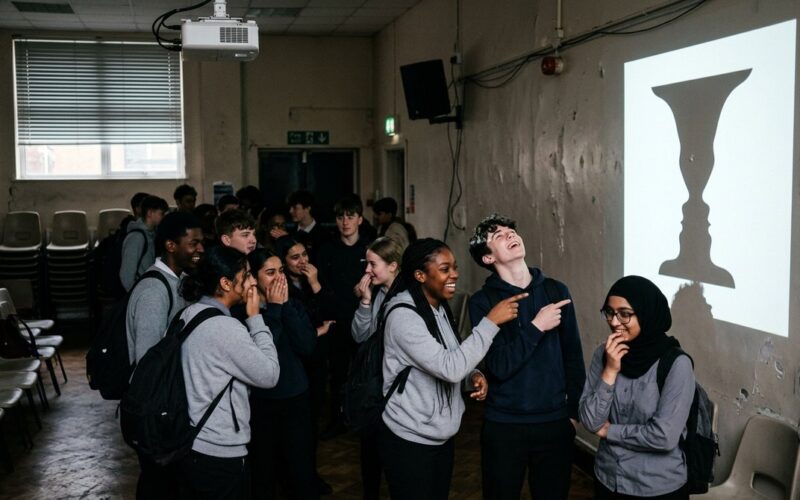
Same gates, very different results. Section B asks why.
Roles and functions of education
Three functions: serving the economy, social mobility (moving up or down the social ladder) and social cohesion (bringing society together). You also need types of school (primary, secondary, state and private), plus home schooling and de-schooling. Durkheim saw education as passing on shared norms and values, and Parsons said it runs on merit. Our lesson What is Education? opens the topic.
Education and capitalism
Bowles and Gintis, two Marxists, argued that school life mirrors the world of work, which they called the correspondence principle, so obeying rules and teachers prepares working-class pupils to accept their place (see our lesson on Bowles and Gintis).
Educational achievement
Why do some groups do better? You look at class, gender and ethnicity, with ideas like material deprivation and cultural capital. Class links straight back to social stratification on Paper 2. The named studies are Halsey on class inequalities and Ball on parental choice and competition between schools.
Processes within schools
Streaming, setting, mixed ability teaching, labelling and the self-fulfilling prophecy (when pupils start to act out a teacher’s label). The key studies are Ball on teacher expectations and the working-class “lads” in Learning to Labour, who formed a counter-school culture.
Key thinkers for Paper 1
These are the thinkers named in the specification for each Paper 1 topic. Expect at least one question on a named thinker’s views.
| Topic | Thinker | Big idea |
|---|---|---|
| Functions of families | Parsons | Functionalist: primary socialisation and stabilising adults |
| Family forms | The Rapoports | Five types of family diversity |
| Conjugal roles | Oakley | Feminist: the conventional family |
| Changing relationships | Willmott and Young | Functionalist: the symmetrical family |
| Criticisms of families | Zaretsky | Marxist: the family serves capitalism |
| Criticisms of families | Delphy and Leonard | Feminist critique of families |
| Functions of education | Durkheim | Functionalist: passing on norms and values |
| Functions of education | Parsons | Functionalist: achieved status and meritocracy |
| Education and capitalism | Bowles and Gintis | Marxist: the correspondence principle |
| Achievement | Halsey | Class-based inequalities |
| Achievement | Ball | Parental choice and competition |
| Processes in schools | Ball | Teacher expectations |
| Processes in schools | Willis | Counter-school cultures |
Perspective Prism
Shine society through three lenses (functionalism, Marxism and feminism), matching the key thinkers, applying each view to real issues and spotting the criticisms.
Play free →Research methods on Paper 1
There’s no separate methods paper. Methods questions sit inside each section. In June 2022, Section A asked for “one advantage of using a mixed methods approach to investigate conjugal role relationships” and Section B asked about group interviews on subject choices.
- research design: aims, hypotheses, pilot studies and sampling
- questionnaires, interviews and observation
- qualitative (words) and quantitative (numbers) data, and mixed methods
- primary and secondary sources, official and non-official statistics
- practical issues (time, cost, access) and ethical issues (consent, confidentiality, harm)

An interview gives detailed answers, but it’s slow and people may say what they think you want to hear. You’ll be asked to weigh up both.
A good habit: for every method, learn one strength, one weakness and one families or education example.
How Paper 1 is examined
Both sections follow the same pattern. This is how the June 2022 and June 2023 question papers were built: 11 questions per section, all compulsory.
| Question type | Marks each | Per section | Real example (June 2022) |
|---|---|---|---|
| Multiple choice | 1 | 2 | What term describes partners who live together without being married or in a civil partnership? |
| Describe | 3 | 2 | Describe what sociologists mean by kinship. |
| Strength or weakness of research in an Item | 2 | 1 | From Item A, examine one weakness of the research. |
| Identify and explain | 4 | 4 | Identify one ethical issue when investigating relationships within families and explain how you would deal with it. |
| Discuss how far sociologists would agree | 12 | 2 | Discuss how far sociologists would agree that the nuclear family is still considered the norm in Britain today. |
An Item is a short source printed on the paper, such as a summary of a study or a table of data. In June 2022, Item A summarised Ann Oakley’s 1974 study of 40 married women with young children.
So nearly half of Paper 1 rides on four essays. The 4-mark questions are the next biggest chunk, and they’re easy to practise in short bursts.
Timing: about a minute a mark
You get 105 minutes for 100 marks. That’s roughly 12 to 15 minutes per essay, 4 to 5 minutes per 4-mark question and under a minute for multiple choice. Students often say timing was the hardest part, so practise against the clock. An unfinished essay can’t reach the top level.

A watch on the desk helps you stick to a minute a mark. Underline the key words before you start writing.
How the 12-mark essays are marked
Essays are marked in four levels, looking at knowledge, applying it to the question, and evaluation, all together:
- Level 4 (10 to 12): detailed, well applied, a clear argument and a supported judgement
- Level 3 (7 to 9): good knowledge and a logical argument, but the conclusion may be unclear
- Level 2 (4 to 6): limited knowledge, only a limited attempt to evaluate
- Level 1 (1 to 3): fragments of knowledge, little or no evaluation
The jump to Level 4 is mostly about evaluation and a clear judgement. Take the June 2022 divorce question. A strong plan could be:
- Agree: the Divorce Reform Act 1969 and later laws made it easier and cheaper, and the figures above rose sharply
- But: attitudes changed, splitting up carries less stigma and secularisation means religion holds fewer people back
- Feminist view: women’s jobs and status mean they no longer have to stay in an unhappy marriage for money
- Judgement: the law made divorce possible, but social change explains why so many chose it
These points match the indicative content in the June 2022 mark scheme.
GCSE Sociology Paper 1 revision plan
Paper 1 is on the afternoon of Tuesday 11 May 2027. Here’s how long you’ve got:
A simple order for your revision:
| Stage | What to do |
|---|---|
| 1. Foundations | Key concepts and the four perspectives, because every essay uses them |
| 2. Families | All six parts, with the named thinkers and the divorce figures |
| 3. Education | All four parts, with Durkheim, Bowles and Gintis, Halsey, Ball and Willis |
| 4. Methods | One strength, one weakness and one example for each method |
| 5. Past papers | Full papers under timed conditions, marked with the mark scheme |
| 6. Final weeks | One essay plan a day, flash cards on key terms and thinkers |
Both papers are sat in the same summer, so plan for the whole course. Pick your exam year to see how many lessons a week would get you through in time. The 120 hours is the guided learning time Ofqual lists for this GCSE.
- A question paper and its mark scheme
- A timer set for 1 hour 45 minutes
- A one-page list of the Paper 1 thinkers and their big ideas
- Definitions of the key families and education terms
- One strength and one weakness for each research method
- Black pen and a quiet room with no phone
Released past papers, mark schemes and examiner reports are free on AQA’s assessment resources page. For the whole course, including Paper 2, see our AQA GCSE Sociology guide.
Revising Paper 1 with Brainy Lemons
Our AQA GCSE Sociology online course has 260 short lessons that follow the 8192 spec. Paper 1 gets two full themes, 60 lessons on families and 60 on education, after 40 lessons on the sociological approach you’ll use on both papers. Then come the crime and deviance and social stratification themes for Paper 2.
Every lesson has a quiz, a quiz show and a zombie defence game, and there are 4,618 flash cards from easy to exam-hard, ideal for the short questions on key terms and thinkers. The first three lessons are free, starting with What is Sociology?
It suits students who want extra help in Year 10 or 11 and home-educated students: read how our GCSE Sociology online course works, or see the GCSE Sociology course page.
Sociology Paper 1 FAQs
How many sociology GCSE papers are there?
Two. Paper 1 is families and education and Paper 2 is crime and deviance and social stratification. Each is 1 hour 45 minutes, 100 marks and 50% of the GCSE.
What topics are on Paper 1?
Section A is families: functions, family forms, conjugal roles, changing relationships, criticisms and divorce. Section B is education: roles and functions, education and capitalism, achievement and processes within schools. Methods and theory run through both.
How many 12-mark questions are there?
In the June 2022 and June 2023 papers there were four, two at the end of each section, worth 48 of the 100 marks.
What’s on GCSE Sociology Paper 2?
Paper 2 covers crime and deviance and social stratification. It has the same layout: 1 hour 45 minutes, 100 marks, two sections with multiple choice, short and extended answers.
Where can I find sociology GCSE past papers with answers?
AQA’s assessment resources page has released question papers with their mark schemes, which show what earns marks. Do them timed, then mark your own work.
Is WJEC Eduqas Paper 1 the same?
No. Eduqas Component 1, Understanding Social Processes, is also 1 hour 45 minutes and 50% of the GCSE, and covers families, education and research methods. But the questions and content differ, so use your own board’s past papers. This guide is for AQA 8192.
Can I take GCSE Sociology as a private candidate?
Yes. The specification is open to private candidates, such as home-educated students, through a centre that accepts them. There’s no coursework, so you only sit the two papers.
Get ready for Paper 1: families and education
Learn every Paper 1 topic and thinker in short lessons, then test yourself with quizzes and flash cards until the 12-mark essays feel easy.
- 260 short lessons that follow the AQA 8192 specification
- A quiz, a quiz show and a zombie defence game on every lesson
- 4,618 flash cards, from easy to exam-hard
- 2 3D Sociology games for the hardest topics
No card needed. Works on any device.