 By the Brainy Lemons team

Online GCSE courses let you study a GCSE or IGCSE at home, on your own timetable, using lessons, quizzes and resources on the internet. The course teaches you. The exam is separate: you book it at an approved exam centre and sit it on paper in May or June, like any school student.
There are lots of ways to study GCSEs online, and they’re very different. Some are full online schools with live classes. Some give you a tutor who marks your work. Others are self-study courses you work through on your own.
This guide is for students aged 14 to 16 and their parents. We’ll cover who online learning suits, what a good course includes and what to ask before you pay. We’ll also explain how the exams work and give you an honest look at what our own courses include.
At a glance
- You can study a GCSE or IGCSE online, but you sit the exam in person at an exam centre
- Most courses don’t include the exam. You book it as a private candidate and pay the centre
- June 2027 entry deadline: 21 February 2027 (JCQ). First exam: 10 May 2027. Results: 19 August 2027
- Always match the course to the exact exam board and code
- Written-exam subjects (psychology, sociology, business) are the easiest to take this way
- Grade 4 is a standard pass. Grade 5 is a strong pass
What are online GCSE courses?
An online course teaches one GCSE subject through a website or app. You learn from lessons, videos, quizzes and practice questions instead of (or as well as) a classroom. You can usually log in 24/7, from anywhere, on any device.
A GCSE qualification isn’t the same thing as a course. The qualification comes from an exam board, also called an awarding body: AQA, Pearson Edexcel, OCR or Cambridge. Whoever teaches you, if you pass the same exam you get the same certificate. A college can’t tell whether you learnt it in school or online.
What are the three main kinds of online course?
Online courses for GCSE come in three main kinds, and they do very different jobs. Work out which one you’re looking at before you compare prices.
| Type | What you get | Best for |
|---|---|---|
| Online school | A full timetable of live lessons with teachers, usually 5 to 10 subjects | Students leaving school completely who want structure and classmates |
| Tutor-supported distance learning | Course materials plus tutor support: someone who marks assignments and answers questions | Students who work well alone but want feedback on their writing |
| Self-study course | Lessons, quizzes and revision tools you work through at your own pace | Homeschooling on a budget, adding one extra subject, or revising alongside school |
Prices usually follow that order: an online school costs the most and a self-study course the least. None of them is “best”. The right one depends on how much help you need and how much you can spend.
Who is online learning for?
Studying GCSEs online isn’t only for students who’ve left school. Online education can help in lots of situations. Here are the four groups we hear from most.
Home educated students
Homeschooling families often use an online course to give each subject a clear route from the first topic to the exam, which takes a lot of the planning off a parent’s shoulders and lets your child work more independently as the exams get closer. You still need to find an exam centre, which we cover in our guide to GCSEs for home educated students.
Home education is legal in England, and families are free to choose how they teach. That includes the order of topics, the pace, and which GCSEs your child takes. Some homeschooling families use an online course for every subject, while others mix in a tutor, textbooks or a local college.
Students adding an extra subject
Some students in school want one more GCSE their timetable doesn’t allow. Others want a subject their school doesn’t teach at all, like psychology, sociology or marine science. You can study it online and sit it as a private candidate.
Students catching up or revising
Missed lessons through illness? Changed schools and found a different exam board? A course that follows your exact specification lets you fill the gaps topic by topic. Then you can revise with quizzes before the exam.
Families living abroad
Families outside the UK often choose the International GCSE (IGCSE) from Pearson Edexcel or Cambridge. It’s at the same level as a GCSE, recognised by schools, colleges and universities, and can be sat at centres around the world. Many are assessed only by exams, which makes them simpler to arrange.
Want to see what an online lesson looks like? The first three lessons of every Brainy Lemons course are free, with no card needed.
Find your course →Why GCSEs matter after 16
GCSEs are the first big qualifications most people take in the UK. Colleges, sixth forms, apprenticeships and employers all look at them, and they’re recognised as the starting point for almost every career path, whether that’s medicine, a trade or running your own business.
- Sixth form and college. Entry requirements vary, but many ask for five GCSEs at grade 4 or above, often including GCSE English Language and GCSE Maths.
- A levels. For subjects like the sciences or languages, you may need grade 6 or higher in that subject.
- Apprenticeships. Most ask for English and maths at grade 4, or for you to keep studying them.
- University. Universities look at GCSE grades as well as A levels, especially English and maths.
In England, if you don’t get grade 4 in English and maths by 16, you’ll normally keep studying them at college or sixth form, so if you’re choosing which GCSEs to study online, make sure those two core subjects are covered somewhere in your plan.
Foundation or Higher tier?
Some subjects, including GCSE Maths, the sciences and French, are tiered. Foundation tier papers lead to grades 1 to 5, and Higher tier papers lead to grades 4 to 9 (with a grade 3 allowed if you just miss 4). A good course for a tiered subject tells you which tier it covers. Subjects like English Literature, history and psychology aren’t tiered: everyone sits the same papers.
Grade 4 is a standard pass and grade 5 is a strong pass. Pearson’s 9 to 1 grading FAQs explain how the grades line up with the old letters.
How many students get grade 4 or above?
About two in three GCSE results reach grade 4. The written-exam subjects that suit online study, like sociology and psychology, sit close to that average. The separate sciences score higher, but don’t read that as “easier”. Who takes a subject shapes its results as much as how hard it is.
What a good online GCSE course includes
Whatever kind of course you choose, these are the things that help most when you’re learning on your own.
- One exam board, one specification. The course should name the board and the code (for example AQA 8182 or Cambridge 0460) and cover every topic. Each board has different topics and question styles.
- Short lessons in a sensible order. Bite-sized lessons are easier to fit around the rest of your week than long chapters.
- Regular testing. A quiz after each lesson shows what stuck. Reading isn’t the same as remembering.
- Feedback when you get it wrong. A good quiz explains why an answer is right, not just that it’s wrong.
- A plan and a way to track progress. Studying alone, you need to see what’s done and what’s left.
- Works on your device. Check it on the phone, tablet or laptop you’ll actually use.
- A free trial. You should be able to try lessons before you pay.
Flexible learning is great, but it cuts both ways. With no teacher setting homework, the course itself has to keep you going. Look for features that bring you back, like a timetable, progress tracking and games that make revision less of a chore.
The course and the exam are separate
This is the part that catches families out. Paying for a course almost never enters you for the exam. Exam boards don’t take entries from students directly, so every entry goes through an approved centre: usually a school, college or private exam centre.
When you sit exams at a centre where you aren’t a student, you’re a private candidate. The JCQ private candidates page (JCQ is the Joint Council for Qualifications) lists centres that accept them. Each one decides whether to take you and sets its own fee, so ask about payment early. You sit the same papers as everyone else and get the same certificate.
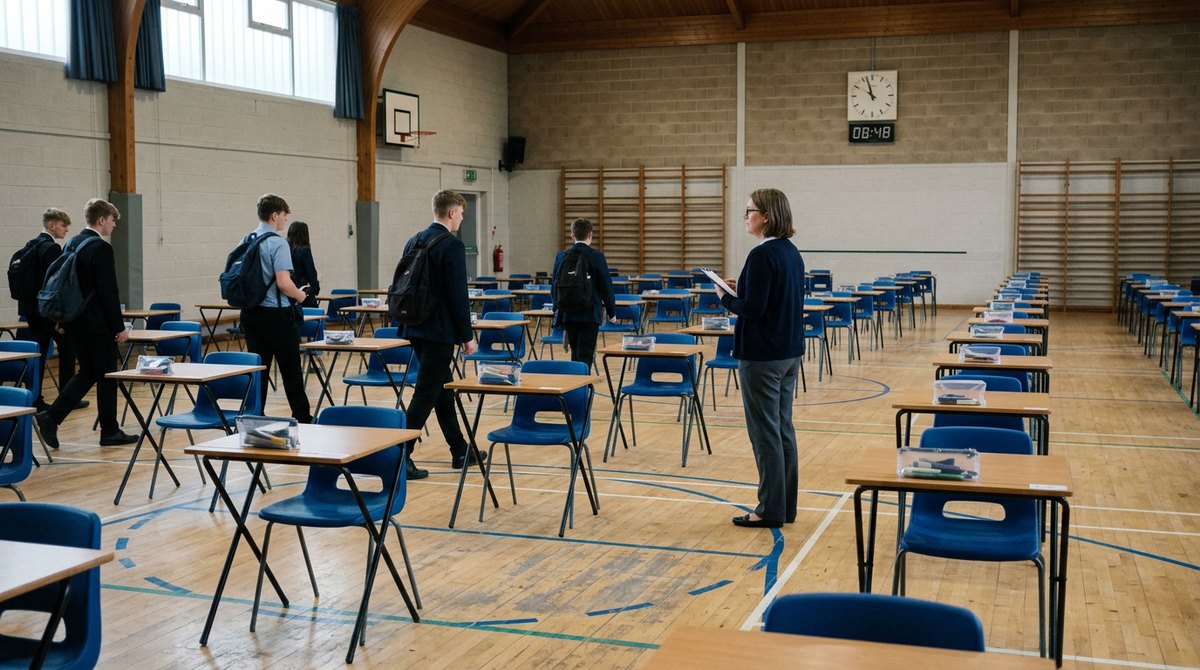
Whether you studied online or in class, you sit the exam in a hall like this, at an approved exam centre.
When are the 2027 deadlines?
JCQ’s key dates for summer 2027 give 21 February 2027 as the deadline for GCSE entries. The first exam is on 10 May 2027, and results come out on 19 August 2027. Centres often close their own entries earlier, so get in touch in the autumn.
Which subjects need more than a written exam?
Some GCSEs include parts the centre has to run, such as science practicals, a spoken language task in English, a speaking test in French or Spanish, or geography fieldwork. Not every centre can do this for private candidates, or it may cost extra.
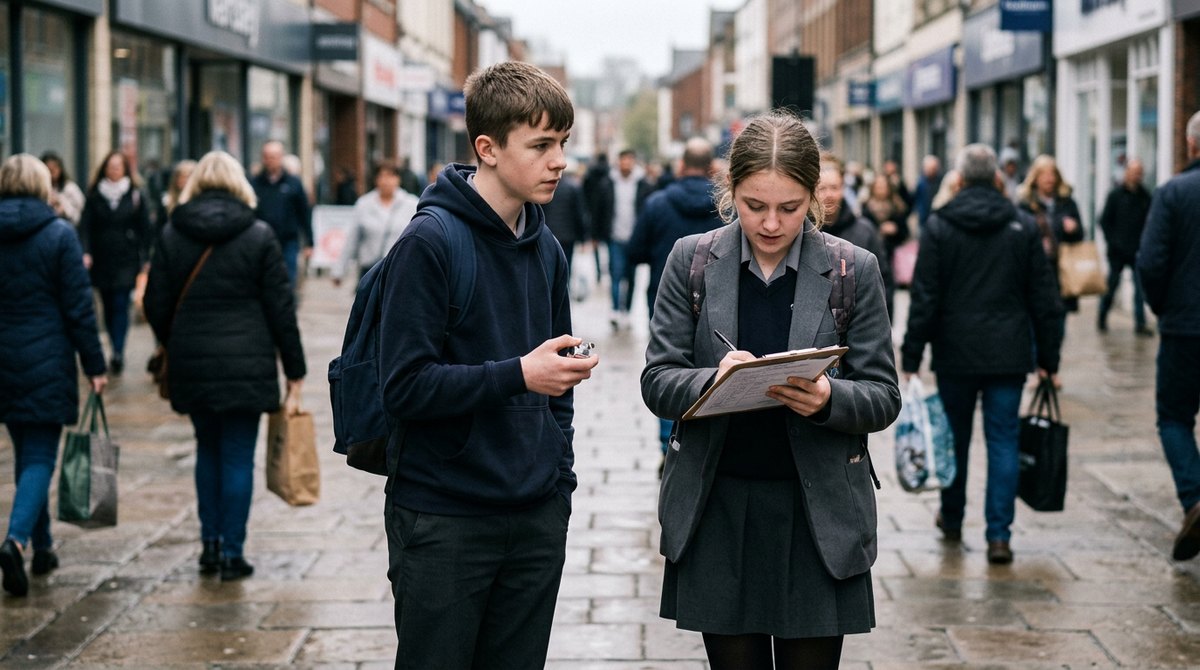
Geography fieldwork, like a pedestrian count, has to be done and signed off through a centre.
| Subject | What a private candidate needs |
|---|---|
| AQA GCSE Psychology, Sociology, Business, History, Computer Science | Written exams only. No extra conditions |
| AQA GCSE Biology, Chemistry, Physics | The centre must let you do the required practicals |
| AQA GCSE English Language | The centre must offer the spoken language part |
| AQA GCSE Geography | Fieldwork on two separate occasions, signed off by the centre |
| Pearson Edexcel International GCSE Biology (4BI1) | Two written papers. Practical skills are tested inside the papers |
Source: AQA’s guidance for private candidates and Pearson’s 4BI1 specification, checked October 2026.
Questions to ask before you pay
Use this checklist when you’re comparing GCSE courses online. Tick each one off before you spend anything.
- I know the exam board and code for every subject I want
- I’ve checked the course follows that exact specification
- I’ve tried free lessons and they work on my device
- I know whether the price includes the exam (it usually doesn’t)
- I’ve found an exam centre that will take me as a private candidate
- I know the centre’s fee and entry deadline
- I’ve checked if my subjects need practicals, speaking or fieldwork
- I know whether I get a tutor, marked work, or self-marking quizzes
- I have a weekly study plan that ends before the exams start
Also ask how long you keep access. Some courses give you a fixed time, so check it lasts until your exam. And ask what help you get when you’re stuck: a tutor, an email address, or worked answers.
Which subjects work well online?
Any subject can be studied this way. Some are much easier to finish as a private candidate, though, because they’re assessed only by written exams.
Psychology and sociology
Most schools don’t teach them before Year 10, so nobody starts behind. AQA lists no extra conditions for private candidates in either. Read our guides to studying GCSE Psychology online and the GCSE Sociology online course, or try the first lessons on how memory works and what sociology is. When you’re ready, see our GCSE Psychology online course and GCSE Sociology online course.
Geography
IGCSE Geography is our most searched course. Cambridge IGCSE Geography (0460) offers a written Paper 4 instead of coursework, so you don’t need a centre to run fieldwork. Our IGCSE Geography online course starts with a lesson on the river journey from source to mouth.
Business and biology
Pearson Edexcel International GCSE Business and Biology are both assessed by written papers. Try the first lessons on business objectives and the seven life processes.
English and maths
For GCSE English and GCSE Maths, check the speaking requirement and the tier before you choose. GCSE English Literature is a separate qualification from English Language, so check which one a college or apprenticeship asks for, as many specifically want English Language, and plenty of students take both.
How to make an online course work
The biggest risk when you study a GCSE online isn’t the course. It’s drifting. Here’s a simple weekly routine that works for most students.
| Day | What to do |
|---|---|
| Monday | One new lesson, then the lesson quiz |
| Tuesday | One new lesson, then flash cards on last week’s key terms |
| Wednesday | Rest, or catch up if you missed a day |
| Thursday | One new lesson, then the quiz |
| Friday | Revisit anything you got wrong this week |
| Weekend | One exam-style question, marked with the board’s mark scheme |
Three lessons a week, every week, gets you through most courses over two school years. Plan backwards from your exam date so the content is finished by Easter of exam year. That leaves time in the spring for past papers. Little and often beats a big push once a week.
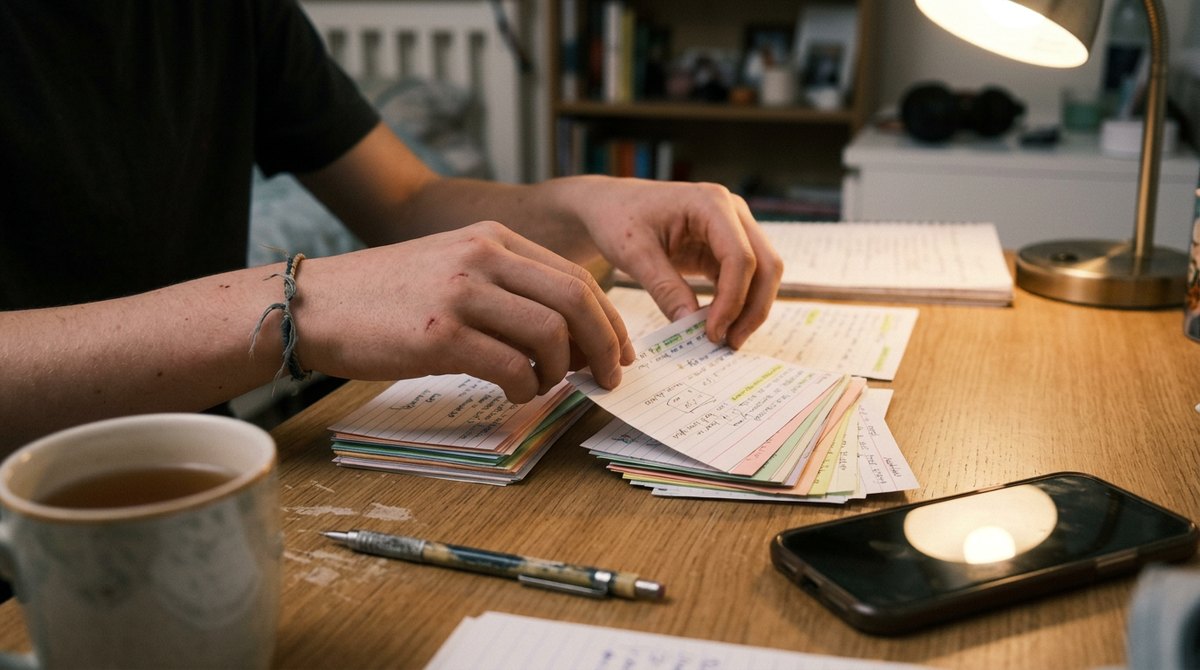
Sorting flash cards into “know it” and “not yet” piles is a quick way to spend Tuesday’s ten minutes.
Use the exam board’s website as well as your course. Past papers, mark schemes and examiner reports cost nothing, and they show exactly what earns marks.
Online GCSE courses with Brainy Lemons
Brainy Lemons is a self-study course, the third type in the table above. Here’s an honest look at what that means, so you can decide if it’s the right kind of support for you.
Every course follows one exam board’s specification, lesson by lesson, in short lessons that work on a phone, tablet or laptop. Each lesson has its own quiz, a TV-style quiz show called Lemonaire and a zombie defence game called Last Stand, all written from that lesson. There are flash cards for key terms, a study timetable and progress tracking.
What we don’t do: there are no live classes or personal tutor, and we don’t enter you for exams. You book those yourself through an exam centre. If you want someone marking your essays every week, a course with tutor support is a better fit. You can enrol on one of those and still use ours for revision.
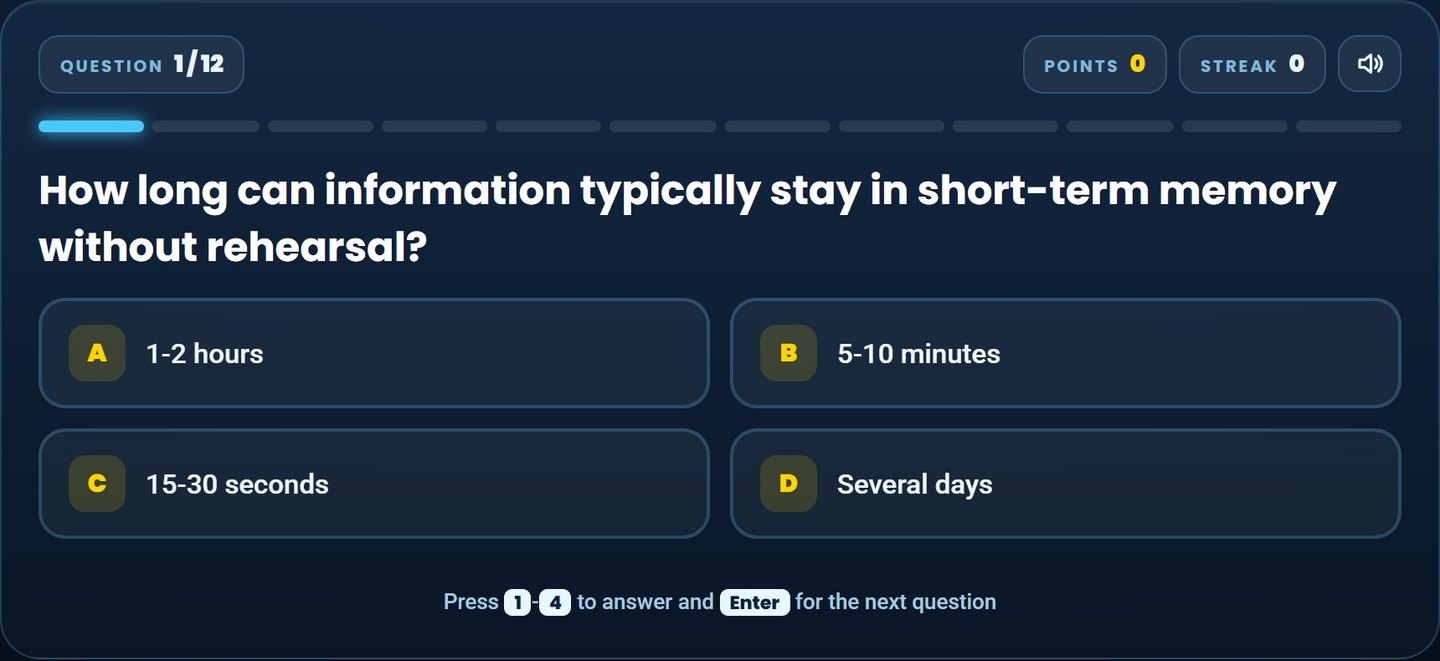
Every lesson ends with a quiz that explains the right answer.
On our pricing page in October 2026, one course costs £84, two cost £154 and three cost £210. Or pay £10 a month for 12 months. You can try the first three lessons of every course before paying a penny.
Here are the courses we run, with their codes and exam years.
AQA GCSE
- Psychology (8182), exams 2026 to 2029
- Sociology (8192), exams 2026 to 2029
- Biology (8461), exams 2027 to 2029
- Chemistry (8462), exams 2027 to 2029
- Geography (8035), exams 2027 to 2029
Pearson Edexcel International GCSE
- Biology (4BI1), exams 2026 to 2029
- Business (4BS1), exams 2026 to 2029
- Geography (4GE1), exams 2026 to 2029
Cambridge IGCSE
- Geography (0460), exams 2027 to 2029
- Geography (9-1) (0976), exams 2027 to 2029
- Psychology (0266), exams 2027 to 2029
- Sociology (0495), exams 2027 to 2030
- Economics (9-1) (0987), exams 2027 to 2029
- Environmental Management (0680), exams 2027 to 2029
- Marine Science (0697), exams 2027 to 2029
- Travel and Tourism (0471), exams 2027 to 2029
Not sure where to start? Have a look at how it works, or play our GCSE games first.
Online GCSE courses FAQs
Can I do GCSEs online?
Yes. You can study the whole course online, at home and at your own pace. The exams aren’t online: you sit them on paper at an approved exam centre, like every other GCSE student.
Can I study my GCSE Psychology online?
Yes. Psychology is one of the best subjects to study online. AQA’s GCSE Psychology is assessed by two written exams, with no practicals or coursework, so a private candidate only needs an exam centre. See our AQA GCSE Psychology online course.
Are there affordable options to complete IGCSEs online?
Yes. Prices vary a lot. A full online school with live lessons costs far more than a self-study course. One of our courses costs £84, or £10 a month for 12 months (October 2026), and the first three lessons are free. Remember to budget for exam centre fees too.
Are online GCSE courses free?
Some free resources exist, such as exam board past papers and our free games. Full courses are usually paid. Every Brainy Lemons course lets you try the first three lessons free, with no card needed.
Is an IGCSE the same as a GCSE?
They’re at the same level, and colleges and sixth forms accept both. IGCSEs are set by Pearson Edexcel and Cambridge, and many are assessed only by written exams, which makes them easier to arrange as a private candidate.
Do online GCSEs count the same as ones taken in school?
Yes. The qualification comes from the exam board, not the course. If you sit the same exam with the same board, you get the same certificate as a student in school.
How long does an online GCSE course take?
Most GCSE specifications are designed to be taught over two years, like Years 10 and 11. You can go faster if you have more time each week, but plan backwards from your exam date.
Study your GCSE or IGCSE online, one short lesson at a time
Online GCSE and IGCSE courses that follow the exam board specification, lesson by lesson, with a quiz and two games on every lesson.
- Short lessons written for one exam board and one specification
- A quiz, a quiz show and a zombie defence game on every lesson
- Study on any device: phone, tablet or laptop
The first 3 lessons of every course are free. No card needed.