 By the Brainy Lemons team
Edexcel IGCSE Geography is Pearson’s International GCSE in Geography, code 4GE1. You sit two exams: Paper 1 Physical geography (1 hour 10 minutes, 70 marks, 40%) and Paper 2 Human geography (1 hour 45 minutes, 105 marks, 60%). There’s no coursework and no tiers. It’s graded 9 to 1.
The bit most guides skip is the choice. You don’t study every topic. On each paper you pick two of three main topics and one fieldwork enquiry. On the human paper you also pick one of three global issues. Pick well and the course feels much lighter.
This guide covers what’s in the geography specification, how each exam works, the fieldwork you need, how students actually score and a revision plan you can start this week. Every exam fact comes from the board’s own documents.
At a glance
- Board: Pearson Edexcel
- Qualification: International GCSE (9-1) in Geography, code 4GE1
- Exams: two papers, 175 marks in total
- Physical geography: 1 hour 10 minutes, 70 marks, 40%
- Human geography: 1 hour 45 minutes, 105 marks, 60%
- Tiers: none, everyone sits the same papers
- Coursework: none, fieldwork is tested in the exams
- Next exams: 18 May and 26 May 2027
What is Edexcel IGCSE Geography?
An International GCSE (IGCSE) is the international version of a GCSE. It’s the same level. Sixth forms and colleges accept it in the same way. The board calls this one the International GCSE in Geography, code 4GE1. Don’t mix it up with the UK GCSE Geography A or B courses, which have different topics.
The idea is simple: the first paper is physical geography (rivers, coasts, hazards) and the second is human geography (jobs and energy, the countryside, cities and big global issues). Both test the same skills: knowing places, explaining processes, reading data and making judgements.
The current version is Issue 4, published in February 2026. You can read it on Pearson’s International GCSE Geography page, along with past papers and other resources. It’s the version this guide follows.
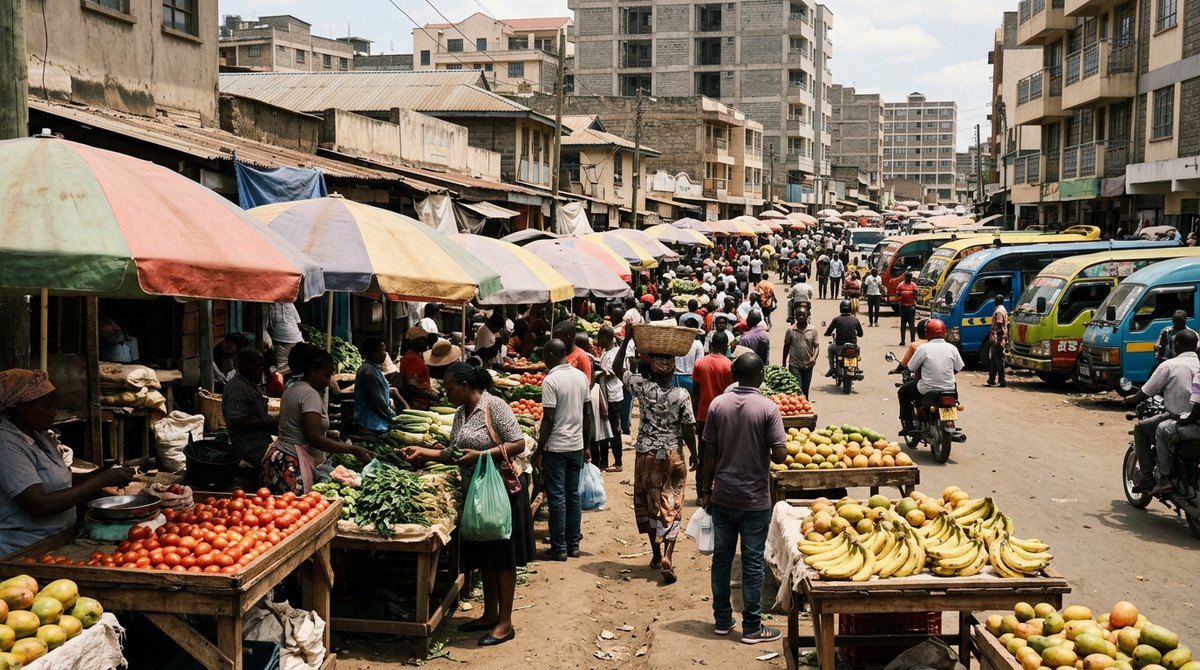
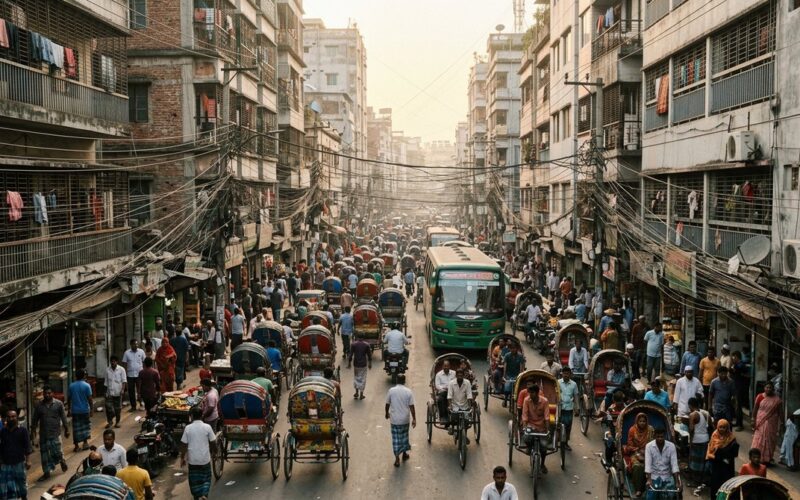
A market street in Nairobi. Fast-growing cities like this are the heart of the urban environments topic.
What’s in the geography specification?
There are nine topics plus fieldwork, but you won’t answer questions on all of them. Here’s how they split and how many of our lessons cover each one.
| Topic | Exam and section | What you study | Our lessons |
|---|---|---|---|
| 1. River environments | Physical, Section A (pick 2 of 3) | The water cycle, drainage basins, river landforms, river management | 68 |
| 2. Coastal environments | Physical, Section A | Waves, coastal landforms, coastal ecosystems, coastal management | 61 |
| 3. Hazardous environments | Physical, Section A | Tropical cyclones, earthquakes and volcanoes, their impacts and management | 44 |
| 4. Economic activity and energy | Human, Section A (pick 2 of 3) | Economic sectors, population and resources, energy security | 62 |
| 5. Rural environments | Human, Section A | Biomes, how people use rural land, rural change and sustainable rural living | 36 |
| 6. Urban environments | Human, Section A | Urbanisation, land use in cities, urban problems and their management | 12 |
| 7. Fragile environments and climate change | Human, Section C (pick 1 of 3) | Deserts and other fragile places, desertification, climate change responses | 12 |
| 8. Globalisation and migration | Human, Section C | The global economy, transnational companies, migration and tourism | 10 |
| 9. Development and human welfare | Human, Section C | Measuring development, uneven development, aid and closing the gap | 9 |
| Fieldwork | Section B of both (pick 1 of 3 on each) | Planning an enquiry, collecting and presenting data, conclusions | 10 |
The physical paper
River environments starts with the hydrological cycle (how water moves between the sea, air and land). Our first lesson on the hydrological cycle is a good taste of the course. You then learn how rivers carve waterfalls, meanders and floodplains. Last comes how countries manage water.
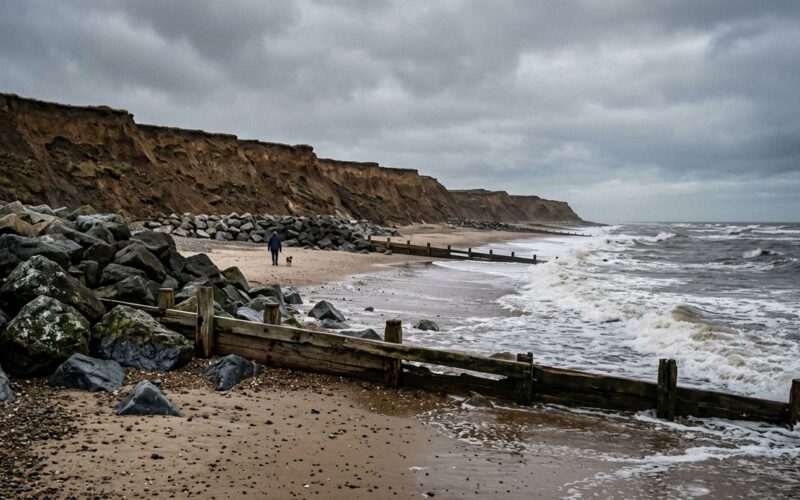
Coastal environments covers how waves erode, move and drop material, the landforms that creates, coastal ecosystems under threat and how coasts are protected. Hazardous environments covers natural hazards: where cyclones, earthquakes and volcanoes happen, how they’re measured and why some countries cope far better than others.
The human paper and global issues
Economic activity and energy looks at jobs (farming, factories, services, research), how they change as countries grow and where energy comes from. Rural environments covers biomes and how people farm and live in the countryside. Urban environments covers urbanisation trends around the world and the problems cities face.
Section C is your global issue: fragile environments and climate change, globalisation and migration (starting with the rise of the global economy), or development and human welfare. You answer just one, but it’s worth 35 marks, a third of that paper.
Case studies and located examples
You need four in-depth case studies: two for your physical topics and two for your human topics, each pair with one developed country and one developing or emerging country. On top of that you need shorter “located examples”, real places that back up a point. Make revision notes for each case study under the same headings: where, causes, effects, responses, plus one or two real figures.
Every topic and every choice, in short lessons. Our course follows the 4GE1 specification topic by topic.
See the course →How the IGCSE Geography exam works
Both papers mix four question types: multiple-choice, short-answer, data-response (using a map, photo or graph) and open-ended. You get a Resource Booklet with the figures. You’ll need a calculator too. Your exam centre can run the papers on paper or onscreen.
| Exam | Time | Marks | % of grade | Sections |
|---|---|---|---|---|
| Paper 1: Physical geography (4GE1/01) | 1 hour 10 minutes | 70 | 40% | A: two topics (50 marks). B: one fieldwork question (20 marks) |
| Paper 2: Human geography (4GE1/02) | 1 hour 45 minutes | 105 | 60% | A: two topics (50 marks). B: one fieldwork question (20 marks). C: one global issue (35 marks) |
That’s roughly one mark a minute, so a 4-mark question deserves about four minutes. The human paper counts for more, so give it more revision time.
Command words and real sample questions
The command word tells you what kind of answer the examiner wants. “Describe” means say what’s there. “Explain” means give a reason and develop it. “Assess” and “evaluate” mean weigh things up and reach a judgement. These are real questions from the board’s sample papers:
- “Explain the formation of a waterfall.” (4 marks). Our lesson on waterfall formation teaches the exact sequence.
- “Calculate the mean width of the river… Give your answer to one decimal place.” (2 marks, fieldwork)
- “You have studied a river channel as part of your own geographical enquiry. Evaluate the accuracy of your conclusions.” (8 marks)
- “Discuss the view that it is possible to manage the threats of climate change in a sustainable way.” (12 marks, Section C)
Applying what you know earns the most. Assessment objective 3 (interpreting, analysing and evaluating) is worth 34 to 35% of the qualification, against 15 to 16% for straight knowledge. So practise skills with data, not just facts. Mark schemes reward points that are developed, not just listed.

Plotting points, drawing a line of best fit and working out a mean all come up in the fieldwork questions.
Fieldwork: what you have to do
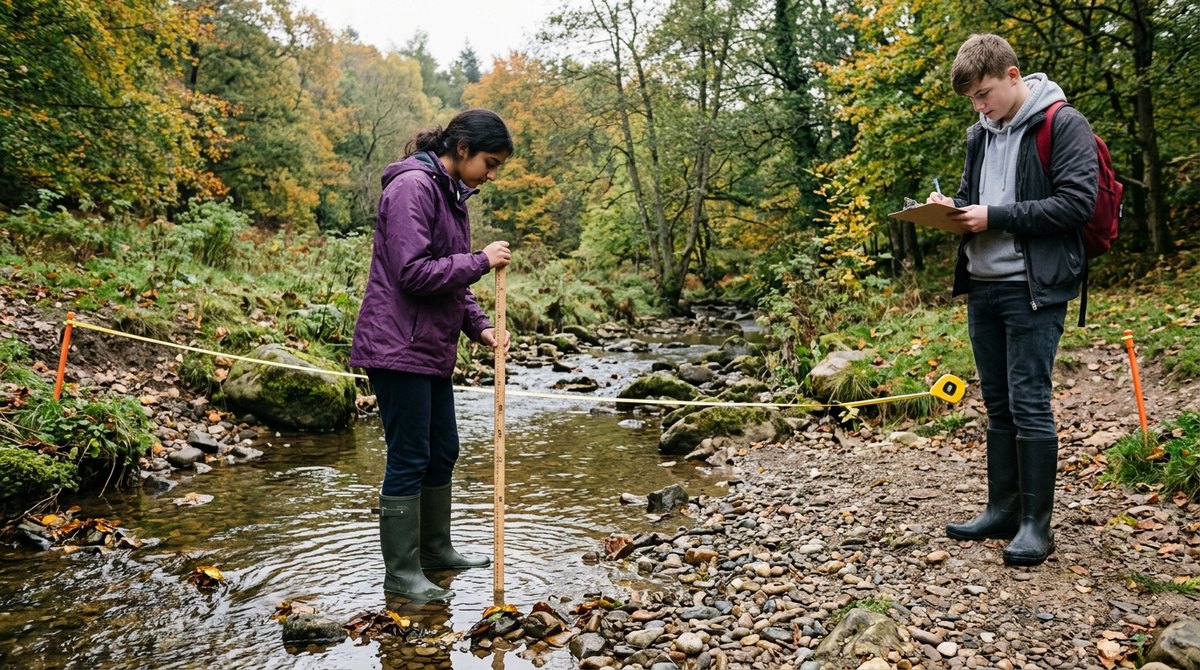
There’s no write-up to hand in, but you still have to do the fieldwork. You need one geographical enquiry in a natural environment (rivers, coasts or extreme weather) and one in a human environment (energy use, rural change or urban change). Each must use primary data, both numbers and descriptions, plus at least two different secondary sources.
Section B asks about your own enquiry and about unfamiliar data from the same kind of place. So know your method, your results and how reliable they were. Our lesson on planning a geographical enquiry walks you through it. There’s also a full enquiry lesson for each of the six fieldwork choices.
If you learn at home, this is very doable. A stream in a local park works for a river study. A land-use survey in your town centre works for an urban one. Run through this checklist before you start.
- Your two physical topics chosen (rivers, coasts or hazards)
- Your two human topics chosen (economic activity and energy, rural or urban)
- Your Section C global issue chosen
- A place near home for each fieldwork enquiry
- A scientific calculator, ruler and squared paper
- A folder for revision notes and four case studies
- An exam centre that takes private candidates, if you learn at home
Is IGCSE Geography hard?
It’s a big course with lots of case-study detail, but results are strong. Here’s how candidates outside the UK did in June 2025:
So 85.4% got a grade 4 (a standard pass) or better. Nearly half got a 7 or above. UK candidates did even better: the UK figures for the same exam show 34.3% at grade 9 and 95.9% at grade 4 or above.
It suits you if you like real places and current issues and don’t mind reading graphs and maps. It leads on to International AS and A Level courses, in geography or other subjects. It also leads to vocational courses such as BTEC Nationals.
Which topics should you choose?
If you learn at home, you usually get to pick. A good rule: choose topics where the fieldwork is easy to reach and the case studies interest you. Rivers and urban environments are practical picks, because a stream and a town centre are close to most homes. Hazardous environments suits you if you like big natural events and science. For Section C, pick the issue you’d happily argue about for 12 marks.
Choose early and stick to it, because learning two topics properly beats skimming all three.
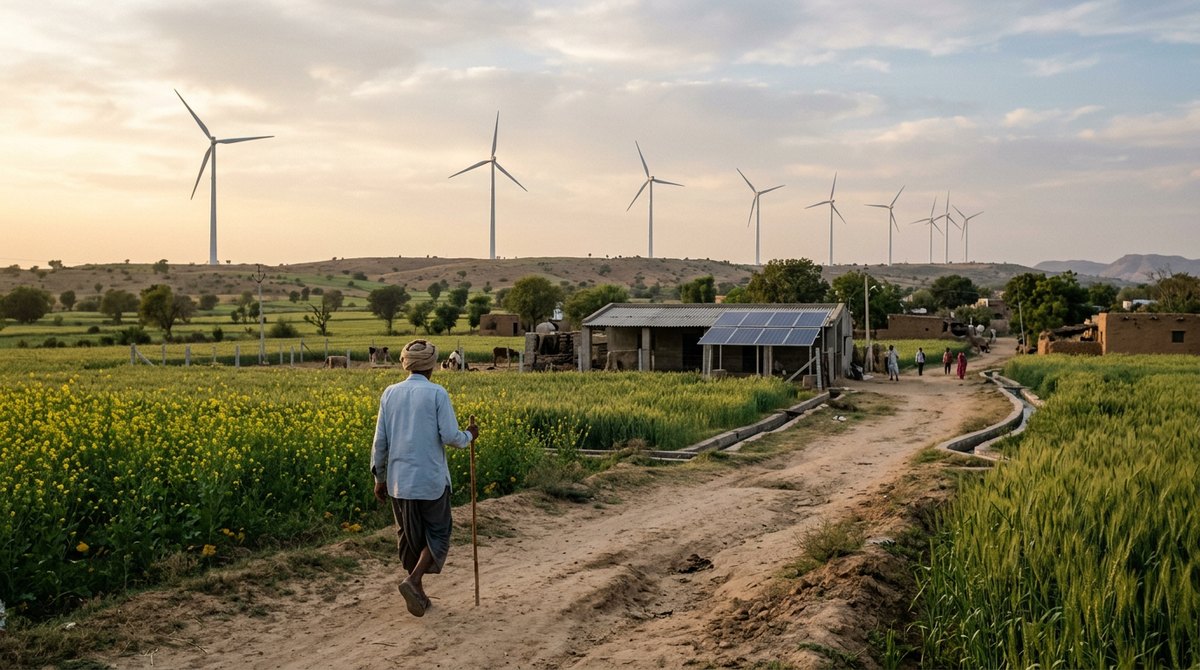
Farmland and wind turbines in Rajasthan, India. One view, two human geography topics: rural environments and economic activity and energy.
How to prepare: an IGCSE Geography revision plan
The board’s course planner says the content is designed to be taught in about 120 guided learning hours, at two hours a week. Here’s a simple way to split it:
- Autumn term: your two physical topics, plus your physical fieldwork while the weather is fine.
- Spring term: your two human topics and your human fieldwork enquiry.
- Summer term: your Section C global issue, then each case study on one page.
- Final months: past paper practice under timed conditions, marked with the mark scheme and the examiner reports.
Pick your exam year below to see how many lessons a week keeps you on track.
The 2027 dates are already fixed in the final summer 2027 timetable: the physical paper on the morning of Tuesday 18 May 2027 and the human paper on the afternoon of Wednesday 26 May 2027.
A little data practice often works best. One graph or map question a week, like our lesson on drawing and interpreting storm hydrographs, builds the skills that earn the most marks.

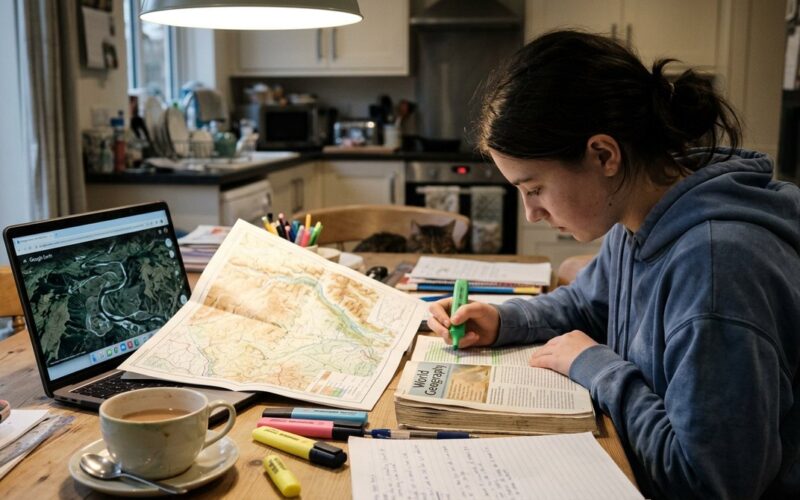
Studying online works anywhere: at home, in a library or on the move.
Studying Edexcel IGCSE Geography online with Brainy Lemons
Our Edexcel IGCSE Geography online course has 324 short lessons that follow the 4GE1 specification, covering all nine topics and fieldwork for all six enquiries. So whatever you choose, every lesson you need is there.
Every lesson has a quiz, a quiz show and a zombie defence game to make it stick. There are also 5,875 flash cards from easy to exam-hard. It works on a phone, tablet or laptop, so it fits around home education.
IGCSEs suit home educated students because there’s no coursework to be marked. Our guide to taking GCSEs as a private candidate explains how to book an exam centre. Still choosing? Read IGCSE vs GCSE or compare the Cambridge IGCSE Geography syllabus. Or see the full International GCSE Geography course.
Edexcel IGCSE Geography FAQs
What is the Edexcel IGCSE Geography code?
It’s 4GE1. The physical geography paper is 4GE1/01 and the human geography paper is 4GE1/02.
Is there coursework?
No. Your grade comes from two written exams. You still do two fieldwork enquiries, but you’re tested on them in Section B of each paper rather than handing in a report.
Is it tiered?
No. There’s one set of papers for everyone, graded 9 to 1, with 9 the highest. Anyone below a grade 1 gets a U (unclassified).
How many topics do you study for IGCSE Geography?
Five main topics plus fieldwork. You pick two of three physical topics, two of three human topics and one of three global issues, then do one fieldwork enquiry for each paper.
Is it the same as Edexcel GCSE Geography A or B?
No. GCSE Geography A and B are separate UK GCSEs with three exams and different topics. The International GCSE (4GE1) has two papers and its own topic choices. Make sure your past papers and revision notes are for 4GE1.
When are the exams in 2027?
The final timetable puts the physical paper on Tuesday 18 May 2027 (morning) and the human paper on Wednesday 26 May 2027 (afternoon). The specification also lists a November series, so ask your exam centre which series it runs.
Can I study it online at home?
Yes. All the content can be learned online. The fieldwork can be done near home. You then sit the two papers at an exam centre that takes private candidates.
Learn every IGCSE Geography topic at your own pace
Pick your topics, plan your fieldwork and build up your case studies with short lessons that follow the 4GE1 specification.
- 324 short lessons that follow the Pearson Edexcel 4GE1 specification
- A quiz, a quiz show and a zombie defence game on every lesson
- 5,875 flash cards, from easy to exam-hard
Works on any device.