 By the Brainy Lemons team

IGCSE vs GCSE: both are subject qualifications taken at about age 16 at the same level. Sixth forms and universities accept either one. GCSEs are set by UK boards like AQA and graded 9 to 1. IGCSEs are set by Cambridge or Pearson Edexcel, are taken worldwide and usually have fewer coursework parts.
So the real question isn’t “which is better?” It’s “which fits where you are and how you’ll sit the exams?” That’s what this guide helps you work out.
We’ll compare grading, exam dates, coursework, course content and how hard each one is, using real 2025 results. Then we’ll look at which suits a school student, a home educated student and a student outside the UK.
At a glance
- Level: GCSEs and IGCSEs are at the same level, usually studied over two years from age 14 to 16
- GCSE boards: AQA, OCR, Pearson Edexcel, WJEC Eduqas (and CCEA in Northern Ireland)
- IGCSE boards: Cambridge (Cambridge IGCSE) and Pearson Edexcel (International GCSE)
- Grades: GCSEs in England are 9 to 1. Edexcel IGCSEs are 9 to 1. Most Cambridge IGCSEs are A* to G
- Exam series: GCSEs in May and June. Most IGCSEs in June and November
- Coursework: some GCSEs need practicals or fieldwork. Many IGCSEs are written papers only
- Recognition: UK universities and sixth forms accept both
What are GCSEs and IGCSEs?
GCSE stands for General Certificate of Secondary Education. It’s the main qualification students in England, Wales and Northern Ireland take at the end of Year 11, when they’re about 16. Each GCSE is a separate qualification in one subject. In 2025, 16-year-olds took 7.8 GCSEs on average (JCQ).
GCSEs in England are set by exam boards such as AQA, OCR and Pearson Edexcel and are regulated by Ofqual, the government’s exams watchdog. Every board has to teach the same core content for a subject, so an AQA GCSE and an OCR GCSE in the same subject cover much the same ground.
IGCSE means International GCSE. It was made for international students outside the UK, so its curriculum avoids assuming you know British places, laws or history. Two boards set them:
- Cambridge International calls its version the Cambridge IGCSE. Its codes are four digits, like 0460 for Geography.
- Pearson Edexcel calls its version the International GCSE. Its codes look like 4BI1 for Biology.
Both are studied over about two years, usually Year 10 and Year 11. Both lead on to A Levels, the International Baccalaureate, college courses or an apprenticeship, so the progression pathway after 16 is the same.
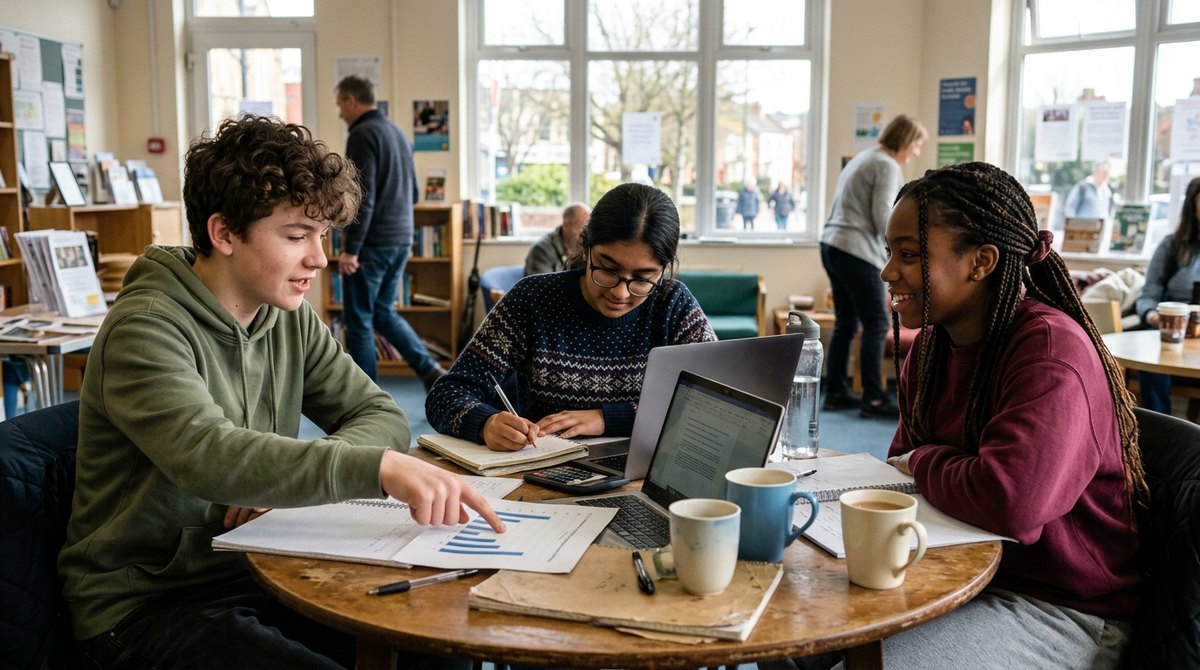
Home educated students can take GCSEs, IGCSEs or a mix of both, often studying together in local groups.
IGCSE vs GCSE: the main differences
Here are the differences that matter when you’re choosing. The table compares them side by side.
| GCSE | IGCSE | |
|---|---|---|
| Who sets it | AQA, OCR, Pearson Edexcel, WJEC Eduqas, CCEA | Cambridge, Pearson Edexcel |
| Where it’s taken | Mostly in the UK | The UK and schools in many countries around the world |
| Grades | 9 to 1 in England | Edexcel: 9 to 1. Cambridge: mostly A* to G, some subjects 9 to 1 |
| Exam months | May and June | June and November for most subjects (Cambridge also runs March in India) |
| Coursework and practicals | Some subjects need practicals or fieldwork run by your school or centre | Many subjects are written papers only |
| Content | Often UK examples (UK cities, British history, Shakespeare) | Global examples, chosen to suit students anywhere |
| School league tables | Count in England’s performance tables | Don’t count |
Grading: 9 to 1 or A* to G?
The grading system is the part that confuses most families. GCSEs in England switched from letters to numbers from 2017, subject by subject. A 9 is the top grade and 1 is the lowest pass.
Ofqual lined the new numbers up with the old letters at three points: the bottom of a grade 7 matches the bottom of an A, the bottom of a grade 4 matches the bottom of a C. The bottom of a 1 matches the bottom of a G. The Department for Education calls a 4 a “standard pass” and a 5 a “strong pass”.
- Pearson Edexcel IGCSEs use the same 9 to 1 scale as GCSEs in England.
- Cambridge IGCSEs are graded A* to G around the world. Schools in Cambridge’s administrative zone 3, which includes the UK, can also pick 9 to 1 versions of some subjects, such as Geography 0976 and Economics 0987.
Because a 7 lines up with an A and a 4 with a C, sixth forms and universities can read either kind of result. A Cambridge IGCSE grade C and a GCSE grade 4 both count as a pass at that level.
Exams, coursework and practicals
When the exams happen
GCSEs are sat in May/June, with every GCSE exam at the end of the course. A November series exists only for English language and maths.
Most IGCSEs can be sat in May/June or November, with both Cambridge and Pearson Edexcel. Cambridge runs a March series too, but only in India. A November sitting can give you a second chance in the same school year, or let you finish a course earlier.
Coursework, fieldwork and required practicals
Since the reforms, very few GCSEs have coursework, so the assessment is mostly written exams. But some still ask your school or exam centre to run parts of the course for you:
- AQA GCSE sciences have required practicals that you must carry out. You’re then asked about them in each GCSE exam.
- AQA GCSE Geography needs fieldwork on two separate occasions, which your centre has to confirm.
- GCSE English language has a spoken language part, reported separately from the grade.
Many IGCSEs skip all of that. Pearson Edexcel IGCSE Biology (4BI1) tests practical skills inside its two written papers. Cambridge IGCSE Geography (0460) lets you sit Paper 4, a 1 hour 30 minute written paper, instead of a coursework report. Cambridge IGCSE sciences offer a written Alternative to Practical paper.

For AQA GCSE Biology, your exam centre has to let you carry out the required practicals. Edexcel IGCSE Biology tests practical skills in its written papers, so there’s nothing extra to book.
This is the biggest practical difference for home educated students. If you’re sitting exams as a private candidate (someone who enters on their own, not through a school), an IGCSE with no practicals is usually simpler to arrange. Our guide to GCSEs for home educated students explains how entries work.
Need a course with no practicals to arrange? Our online IGCSE courses follow Cambridge and Pearson Edexcel syllabuses lesson by lesson.
Find your course →Course content: same subject, different focus
The big topics in each curriculum are mostly the same. Biology is still cells, enzymes, ecology and genetics. The differences are in the examples, the paper format and a few topics.
English literature shows it most clearly. Shakespeare is compulsory in GCSE English literature, but in IGCSE English literature you can study set texts from outside the UK instead. Geography is similar: a GCSE asks for UK case studies, while an IGCSE lets you use examples from your own country.
Here’s how four subjects we teach compare. All the details come from each board’s own specification.
| Subject | GCSE version | IGCSE version |
|---|---|---|
| Biology | AQA 8461: two papers, 1 hour 45 minutes each, Foundation or Higher tier, required practicals | Edexcel 4BI1: Paper 1B (2 hours, 61.1%) and Paper 2B (1 hour 15 minutes, 38.9%), no tiers, no practicals to arrange |
| Geography | AQA 8035: three papers, 1 hour 30 minutes each, fieldwork on two occasions | Cambridge 0460: Physical and Human papers (1 hour 45 minutes each, 36% each), then coursework or Paper 4 (28%) |
| Psychology | AQA 8182: two papers, 1 hour 45 minutes each, 50% each | Cambridge 0266: Paper 1 (1 hour 30 minutes, 53%) and Paper 2 (1 hour 20 minutes, 47%) |
| Sociology | AQA 8192: two papers, 1 hour 45 minutes each, 100 marks each | Cambridge 0495: graded A* to G, about 130 guided learning hours |
The first lessons show how close the content is. Both AQA GCSE Psychology and Cambridge IGCSE Psychology start with memory: compare encoding, storage and retrieval for AQA GCSE Psychology with the introduction to memory for Cambridge IGCSE Psychology.
Biology starts in different places. The AQA GCSE course opens with eukaryotes and prokaryotes, while the Edexcel IGCSE opens with the seven life processes. Geography differs more: AQA GCSE starts with what natural hazards are and Cambridge IGCSE with the river journey from source to mouth.
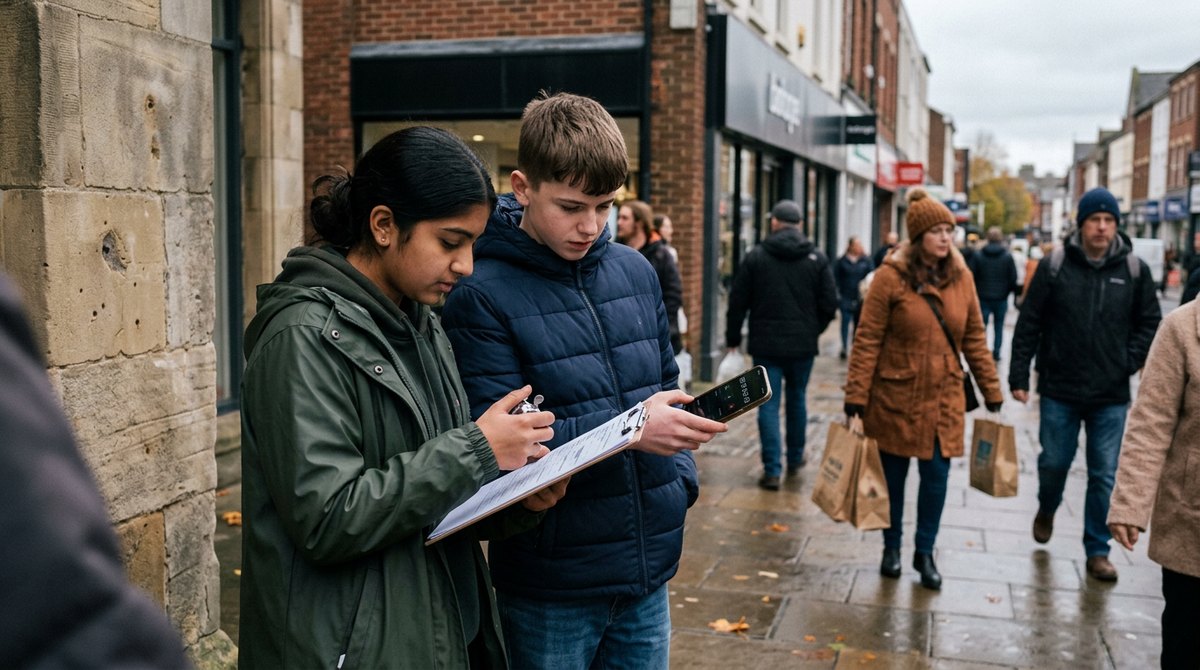
A pedestrian count on a high street: the kind of fieldwork AQA GCSE Geography asks for on two separate days.
Is IGCSE harder than GCSE?
No, not in any way you can measure fairly. Cambridge says it aligns its grade standards with GCSEs in England. UK NARIC (the UK agency that compares qualifications) found the Cambridge IGCSE comparable to the GCSE standard.
What changes is the style of assessment. Some students find IGCSE papers more predictable, with longer exams and no practicals to worry about. Others prefer GCSEs because their school teaches them and every past paper fits the UK course. Pick the one whose papers suit the way you work, because the difference in difficulty is small.
Here are the real 2025 results, straight from the boards’ own documents.
Many IGCSE subjects show higher pass rates, but that doesn’t make them easier. The GCSE figure covers every student in the UK, while many Cambridge IGCSE students are at selective international or independent schools. Cambridge itself warns that its figures shift with the schools and countries entering. Travel and Tourism shows it can go the other way too.
Do universities and sixth forms accept IGCSEs?
Yes. Cambridge says leading UK universities accept the Cambridge IGCSE as equivalent to the GCSE, based on that UK NARIC benchmarking study. The University of Cambridge is one of them. University admissions tutors look at your IGCSE grades just as they would GCSE grades, so both are recognised as equal.
Sixth forms and colleges work the same way. Their admissions teams set entry grades for A Levels, not a preference for one qualification. If a course asks for a grade 6 in biology, a 6 in Edexcel IGCSE Biology meets it. If your IGCSE qualification is a Cambridge one with letter grades, ask the sixth form how it reads A* to G. Ofqual’s alignment puts a C at about a 4 and an A at about a 7.
Employers and apprenticeship pathways that ask for “five GCSEs including English and maths” usually accept IGCSEs too. Check if a job or course names a specific qualification.
Why do some schools choose IGCSE?
Most state schools in England teach GCSEs. There’s a clear reason. IGCSEs don’t count in England’s school performance tables, often called league tables. The government announced in 2014 that they’d stop counting once the reformed GCSEs arrived in 2017. Cambridge confirms that neither its A* to G nor its 9 to 1 IGCSEs are included.
Independent schools don’t have to worry about league tables, so many use IGCSEs in some subjects. International schools mostly use them because the GCSE is designed for the UK. Cambridge IGCSE comes in over 70 subjects, including 30 languages. It is recognised by universities around the world.
GCSE or IGCSE: which should you choose?
If you’re at school in the UK
Your school will usually decide, since state schools mostly teach GCSEs. Some independent schools mix IGCSEs and GCSEs. Learn the exam board and code for each GCSE subject, because that’s what decides your past papers and revision.
If you’re home educated in the UK
IGCSEs are often the easier route. Many have no practicals, fieldwork or coursework, so any exam centre that accepts private candidates can enter you. They also tend to cost less to sit, as our guide to how much GCSEs cost for home educated students shows. GCSEs with no practical parts, like AQA GCSE Psychology and Sociology, work well for private candidates too.
If you live outside the UK
Choose IGCSEs. They’re built for international students with a global curriculum, examples aren’t all British and exam centres in many countries run them. Both Cambridge and Pearson Edexcel sit in June and November, so there are two chances a year.

Many IGCSE students outside the UK study online and sit their exams at a local centre.
- Write down the exam board and code for every subject you’re thinking about
- Download each specification from the board’s website and read the assessment section
- Check whether the subject has practicals, fieldwork, coursework or a speaking test
- Find an exam centre that accepts private candidates for that board, if you’re home educated
- Check the centre’s entry deadline and fee for June or November
- Look at the entry grades for the sixth form or college you want next
- Try one past paper from each board to see which question style suits you
Studying GCSE and IGCSE courses with Brainy Lemons
We teach IGCSEs and GCSEs. Every Brainy Lemons course follows one exam board’s specification, lesson by lesson, so you never waste time on topics that aren’t in your exam.
- GCSE courses: AQA Biology, Chemistry, Geography, Psychology and Sociology.
- Cambridge IGCSE courses: Geography (0460 and 0976), Economics (0987), Environmental Management, Marine Science, Psychology, Sociology (0495) and Travel and Tourism.
- Pearson Edexcel IGCSE courses: Biology, Business, Economics and Geography.
Each lesson is short and has a quiz, a quiz show and a zombie defence game to test what you’ve learned. There are flash cards to revise with, a study timetable that plans your lessons week by week and progress tracking. Everything works on a phone, tablet or laptop.
If you’ve settled on an IGCSE, our IGCSE Biology online course and Cambridge IGCSE Geography online course are good places to start. If you’ve chosen GCSEs, see our AQA GCSE Biology course or AQA GCSE Psychology course. For more on learning from home, read our guide to online IGCSE courses.
GCSE and IGCSE FAQs
Is an IGCSE the same as a GCSE?
They’re at the same level and are equivalent for university admissions and sixth forms. The differences are in who sets them, how they’re graded, when the exams happen and whether there are practicals or coursework.
Is IGCSE harder than GCSE?
No. Cambridge aligns its standards with GCSEs in England and UK NARIC found the Cambridge IGCSE comparable to the GCSE. The question style is different, so one may suit you better than the other.
Do universities prefer IGCSE or GCSE?
Neither. Cambridge says leading UK universities accept the IGCSE as equivalent to the GCSE, so what matters is the grade and the subject.
What is a grade C in IGCSE in the 9 to 1 system?
The bottom of a grade C lines up with the bottom of a grade 4. The bottom of an A lines up with the bottom of a 7. A 4 is called a standard pass and a 5 a strong pass. A 7 is the usual mark of a top grade.
Can you take GCSEs and IGCSEs together?
Yes. Many students take a mix of IGCSE and GCSE subjects, for example GCSE English and maths with IGCSE sciences. Each one is a separate qualification in one subject.
Which is better for home education?
IGCSEs are often easier to arrange because many have no practicals, fieldwork or coursework. You can also sit them in June or November. Check that your exam centre accepts private candidates for that board.
Why don’t state schools offer IGCSEs?
IGCSEs don’t count in England’s school performance tables, so most state schools teach GCSEs instead. Independent and international schools often use IGCSEs.
GCSE or IGCSE, learn the right course for your exam board
Online AQA GCSE, Cambridge IGCSE and Pearson Edexcel IGCSE courses that follow the specification, lesson by lesson.
- Short lessons written for one exam board and one specification
- A quiz, a quiz show and a zombie defence game on every lesson
- Study on any device: phone, tablet or laptop
GCSE and IGCSE courses for students aged 14 to 16.