 By the Brainy Lemons team
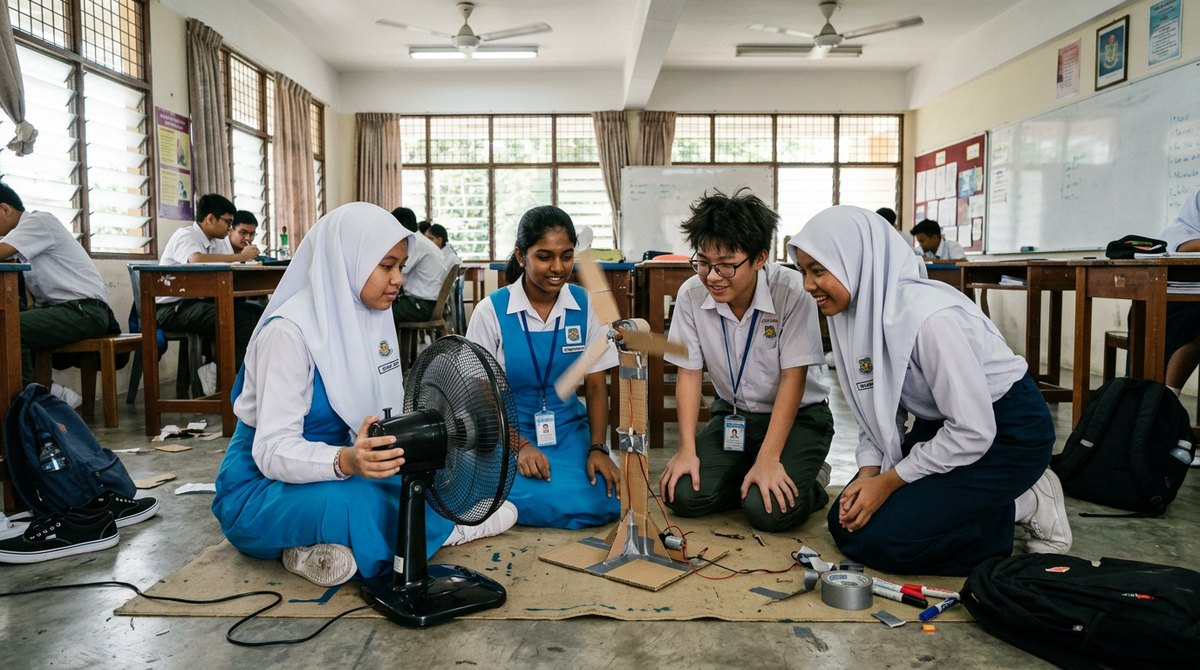
Online IGCSE courses let you study an IGCSE at home, anywhere in the world, with lessons, quizzes and revision tools on the internet. IGCSEs are set by Cambridge and Pearson Edexcel, are at the same level as GCSEs, and are sat on paper at an exam centre in June or November.
They’re popular with home educated students, families living abroad and international schools. They’re also a neat way to add a subject your school doesn’t teach.
This guide is for students aged 14 to 16 and their parents. We’ll cover what an IGCSE is, how it compares with a GCSE, Cambridge vs Pearson Edexcel, how online learning works and how you sit the exams. Then we’ll show you the IGCSE courses we run.
At a glance
- IGCSE means International General Certificate of Secondary Education
- Two exam boards: Cambridge and Pearson Edexcel
- Usually studied over two years, ages 14 to 16
- Same level as a GCSE, recognised by sixth forms, colleges and universities
- Exams in June and November (Cambridge also runs March in India)
- Many IGCSE subjects are written exams only, with no coursework
- You study online, but sit the exam on paper at an approved exam centre
What is an IGCSE?
An IGCSE is the international version of the GCSE. Cambridge calls it “the world’s most popular international qualification for 14 to 16 year olds”, with over 70 subjects you can take in any combination (Cambridge, checked October 2026). Pearson Edexcel runs its own version, which it calls the International GCSE.
Each subject has a code, like Cambridge IGCSE Geography (0460) or Pearson Edexcel IGCSE Biology (4BI1). The code tells you exactly which syllabus (Pearson says “specification”) you’re studying: the board’s list of the knowledge and skills you need.
IGCSE vs GCSE: what’s the difference?
They’re at the same level. Cambridge says it aligns its IGCSE standards with the GCSE taken in England, and a college won’t treat a grade 6 in one differently from a grade 6 in the other. Both lead on to A levels, the IB or a college course. The differences are about who sets them, where you sit them and how they’re marked.
| GCSE | IGCSE | |
|---|---|---|
| Who sets it | AQA, OCR, Pearson Edexcel, WJEC Eduqas | Cambridge, Pearson Edexcel |
| Where it’s taken | Mostly in the UK | The UK and centres around the world |
| Grades | 9 to 1 in England | A* to G or 9 to 1, depending on the syllabus |
| Exam months | May and June (November resits for English and maths only) | June and November for most subjects |
| Coursework | Some subjects need practicals or fieldwork run by the centre | Many subjects are written papers only |
| Who teaches it | Most state schools in England | Many independent and international schools |
That coursework row matters for home learners. With no practicals or coursework to run, you don’t need a school to supervise you, so an IGCSE is simpler to arrange.
A* to G or 9 to 1?
Pearson Edexcel IGCSEs are graded 9 to 1, like English GCSEs. Most Cambridge IGCSEs are graded A* to G, but some subjects come in a second version graded 9 to 1. Cambridge IGCSE (9-1) Geography (0976), for example, is otherwise the same as Geography (0460). Check which one your exam centre offers.
A few subjects also have two levels of paper. Cambridge uses Core and Extended in mathematics, biology, chemistry and physics, and Pearson uses Foundation and Higher in maths. Most humanities subjects have one set of papers for everyone.
Why families choose online IGCSE courses
We hear the same four reasons again and again.
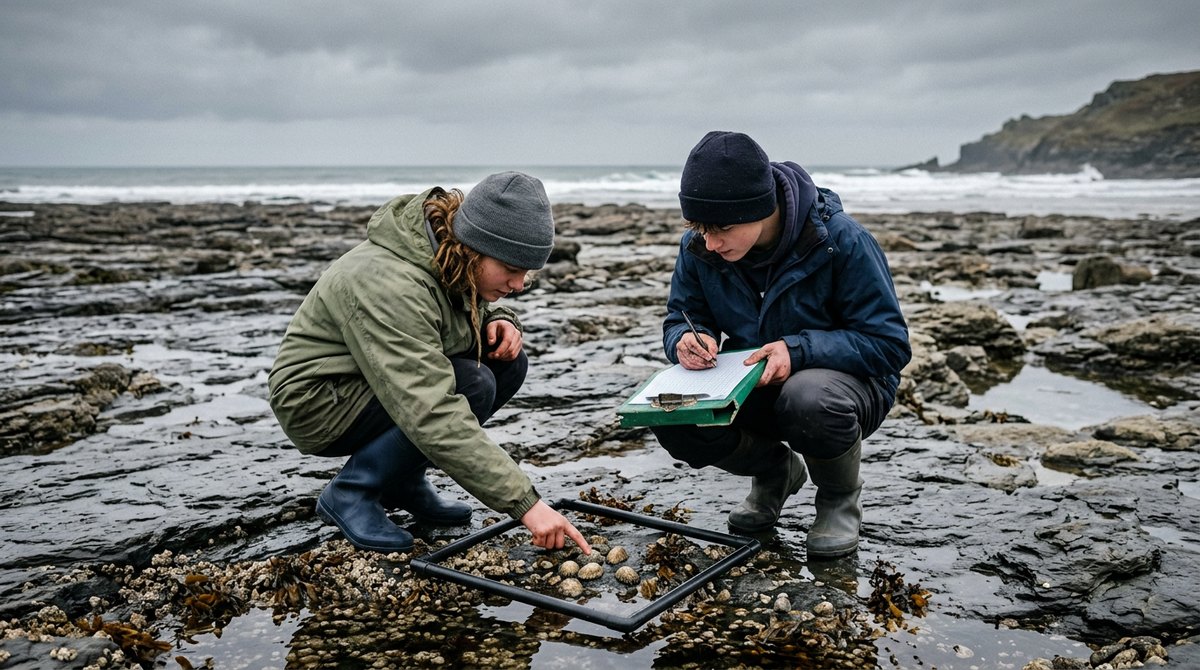
Most schools don’t teach IGCSE Marine Science. Studying online means you can still take it.
Home education
Home educated students often choose IGCSEs because so many are written papers only. A structured course that runs from the first topic to the last also takes a lot of planning off a parent. Our guide to GCSEs for home educated students explains how to find an exam centre.
Living abroad
IGCSEs travel with you. You can sit the same papers in Spain, Dubai or Kuala Lumpur as in London, so moving country halfway through doesn’t mean starting again. In many countries, the British Council runs exams for private candidates.
International schools
Plenty of international schools follow the IGCSE curriculum. IGCSE students there use an online course to catch up after a move, to get extra practice, or to fill gaps when a teacher leaves partway through the academic year.
A subject your school doesn’t offer
Cambridge has IGCSE subjects most schools never timetable: marine science, travel and tourism, sociology and environmental management. Love one of them? Study it online and sit it as a private candidate alongside your school exams.
Want to see what an online IGCSE lesson looks like? The first three lessons of every Brainy Lemons course are free, with no card needed.
Find your course →Cambridge or Pearson Edexcel?
Both are respected, and both lead to the same next steps. But a Cambridge IGCSE and a Pearson Edexcel IGCSE in the same subject are different syllabuses, with different topics and papers. So pick the board first, then the course.
| Cambridge | Pearson Edexcel | |
|---|---|---|
| Name | Cambridge IGCSE | International GCSE |
| Codes look like | 0460, 0495, 0697 | 4BI1, 4BS1, 4GE1 |
| Grades | Mostly A* to G, some 9 to 1 versions | 9 to 1 |
| Exam series | June and November (March in India too) | June and November (January ended in 2023) |
| Private candidates | Enter through a centre that accepts them | Enter through an approved centre |
| Our courses | Geography, Sociology, Economics, Psychology, Environmental Management, Marine Science, Travel and Tourism | Biology, Business, Geography |
Sources: Cambridge’s syllabus and private candidate pages, and the Pearson International GCSE information manual 2025/26, checked October 2026.
Already at a school? Use the board your teachers use. Studying at home? Ask your exam centre which boards and codes it runs before you choose.
How online IGCSE courses work
There are three main types, and they do very different jobs. Work out which one you’re looking at before you compare prices.
| Type | What you get | Best for |
|---|---|---|
| Online school | A full timetable of live classes with expert teachers, usually 5 to 10 subjects | Students who’ve left school and want classmates and a fixed day |
| Tutor-supported distance learning | Course materials plus a tutor who marks assignments and answers questions | Independent students who want feedback on their writing |
| Self-paced course | An online platform of lessons, quizzes and revision tools you work through at your own pace | Home learners on a budget, an extra subject, or revising alongside school |
Online schools cost the most and self-paced courses the least. None is “best”. It depends on how much support you need and what you can spend, and plenty of families mix two.
What a good course includes
- One board and one syllabus code, named clearly and up to date for your exam year.
- Short lessons in a sensible order. Bite-sized steps fit around a busy week far better than long chapters.
- Interactive quizzes with feedback that explain why the right answer is right, so you understand the concept, not just the fact.
- Progress tracking, so you can see what’s done and what’s left.
- Flexible access on the phone, tablet or laptop you’ll really use.
- A free trial before you pay anything.
Our guide to choosing online GCSE courses has a longer checklist, and most of it applies here too.
Sitting your IGCSE exams
Here’s the part that catches families out: the course doesn’t enter you for the exam. Neither board takes entries from students directly. Every entry goes through an approved exam centre.
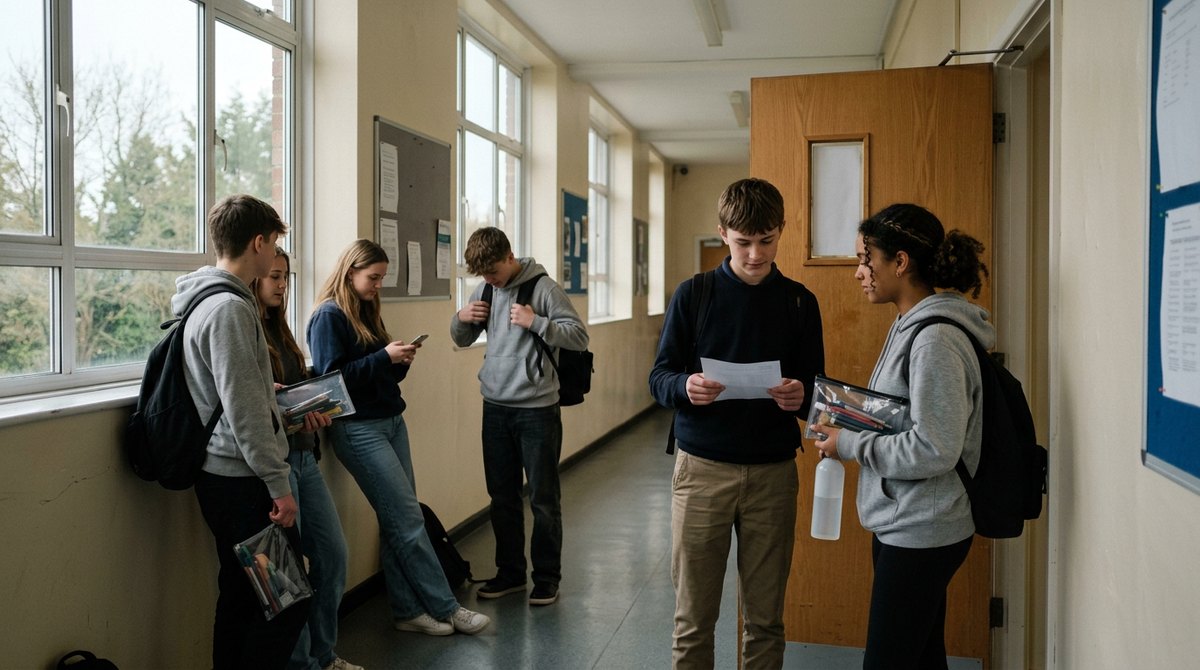
However you studied, exam day looks the same: a clear pencil case, your candidate number and a seat in the hall.
If you aren’t a student at that centre, you’re a private candidate. Cambridge tells private candidates to find a centre or approved exam provider in their country that accepts them, and to pay that centre directly (Cambridge, private candidates). Pearson’s rule is the same.
Each centre decides whether to take private candidates and sets its own fees. Not every centre runs every subject, so ask about your exact codes. Get in touch the autumn before, because entry deadlines come months before the exams and places fill up.
The centre also applies for access arrangements, like extra time. Mention them in your first email.
- I know my board: Cambridge or Pearson Edexcel
- I know the syllabus code for each subject
- I know whether it’s graded A* to G or 9 to 1
- I’ve checked the course covers that code and my exam year
- I’ve tried free lessons on the device I’ll use
- I’ve found an exam centre that accepts private candidates
- I know the centre’s fees and entry deadline
- I’ve picked June or November for my exams
- I’ve asked about access arrangements, if I need them
- I have a weekly plan that finishes before the exams
How hard are IGCSEs?
They’re a real step up from Year 9. You’ll learn a lot of content and then apply it in exam answers, including longer written ones. But with steady work, most students do well, as the results below show.
In most of these subjects, about seven in ten candidates got a C or above. The A* rate is far lower, though: 6.2% in Geography and 7.8% in Sociology. Top grades take real exam practice. (Biology and Business Studies here are the Cambridge versions, and our courses in those follow Pearson Edexcel.)
How to prepare
Cambridge plans each IGCSE syllabus around 130 guided learning hours, which is teaching time spread over two school years. At home, a simple routine works:
- Three short lessons a week, each followed by its quiz.
- Ten minutes of flash cards on key words, most days.
- One exam-style question at the weekend, marked with the board’s mark scheme.
- Finish new content by Easter of your exam year, then switch to past papers and a mock exam.
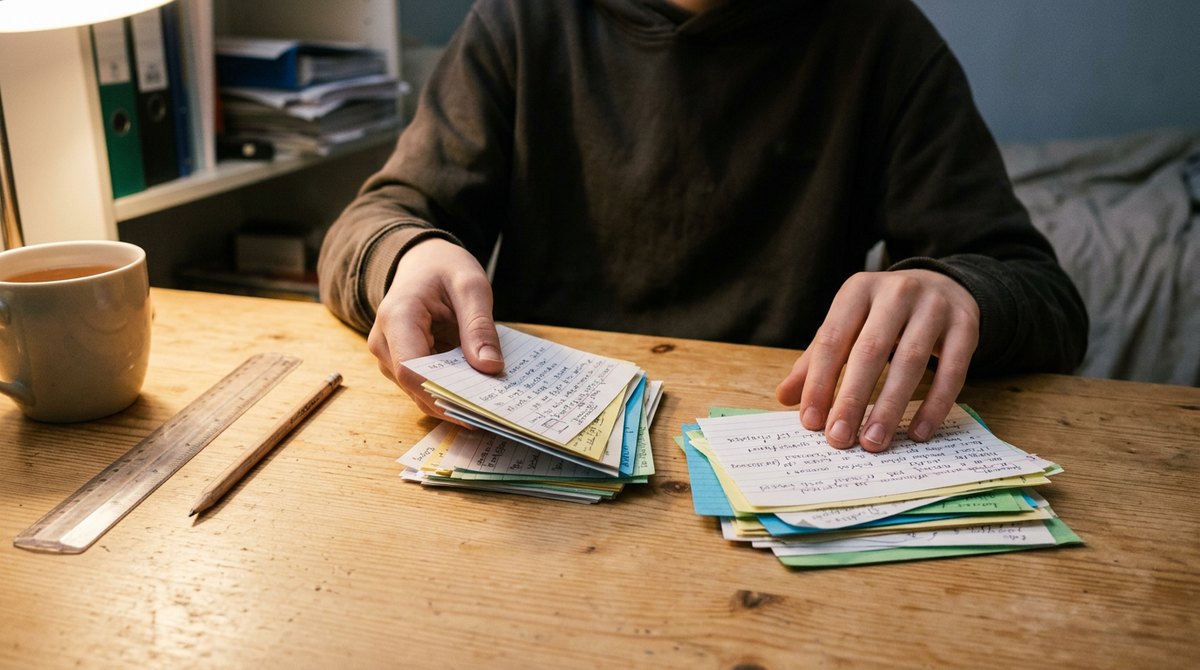
Sort flash cards into “know it” and “not yet”. Ten minutes most days beats one long session.
Past papers, mark schemes and examiner reports are free resources on the board websites. They show exactly what earns marks. Before the real thing, sit at least one full mock exam under timed conditions to practise your exam skills.
Online IGCSE courses with Brainy Lemons
Brainy Lemons is a self-paced course, the third type in the table above. Each course follows one syllabus in short lessons that work on a phone, tablet or laptop. Every lesson has a quiz, a TV-style quiz show called Lemonaire and a zombie defence game called Last Stand, all written from that lesson. You also get flash cards, a study timetable and progress tracking.
What we don’t do: there are no live classes or personal tutor, and we don’t enter you for exams. If you want someone to mark your essays each week, a tutor-supported course is a better fit. You can still use ours to revise.
On our pricing page in October 2026, one course costs £84, two cost £154 and three cost £210, or you can pay £10 a month for 12 months. You can try the first three lessons of any course free.
| Course | Code | Lessons | Exam years |
|---|---|---|---|
| Cambridge IGCSE Geography online course | 0460 | 247 | 2027 to 2029 |
| Cambridge IGCSE (9-1) Geography | 0976 | 128 | 2027 to 2029 |
| Cambridge IGCSE Sociology | 0495 | 88 | 2027 to 2030 |
| Cambridge IGCSE (9-1) Economics | 0987 | 92 | 2027 to 2029 |
| Cambridge IGCSE Psychology | 0266 | 260 | 2027 to 2029 |
| Cambridge IGCSE Environmental Management | 0680 | 281 | 2027 to 2029 |
| Cambridge IGCSE Marine Science | 0697 | 260 | 2027 to 2029 |
| Cambridge IGCSE Travel and Tourism | 0471 | 260 | 2027 to 2029 |
| IGCSE Biology online course (Pearson Edexcel) | 4BI1 | 260 | 2026 to 2029 |
| IGCSE Business online course (Pearson Edexcel) | 4BS1 | 260 | 2026 to 2029 |
| Pearson Edexcel IGCSE Geography | 4GE1 | 260 | 2026 to 2029 |
Want a taste first? Try the river journey from source to mouth in Geography, positivism and studying society like a scientist in Sociology, scarcity, the basic economic problem in Economics, or Earth as a planet in Marine Science. For Pearson, start with the seven life processes or business objectives.
Geography is our most popular choice. Our IGCSE Geography syllabus 2027 guide walks through every topic and paper, or go straight to the IGCSE Geography online course. Still deciding? See how it works.
Online IGCSE courses FAQs
Can you do IGCSEs online?
Yes. You can complete the whole course online, at home and at your own pace. The exams aren’t online: you sit them on paper at an approved exam centre in June or November.
Are there affordable options to complete IGCSEs online?
Yes. A full online school costs far more than a self-paced course. One Brainy Lemons course is £84, or £10 a month for 12 months (October 2026), and the first three lessons are free. Budget for exam centre fees too.
Is an IGCSE the same as a GCSE?
They’re at the same level, and sixth forms, colleges and universities accept both. The main differences are the boards, the grading and the exam months.
Can I take IGCSE exams as a private candidate?
Yes. Neither Cambridge nor Pearson accepts entries directly, so you book through a centre that takes private candidates. In many countries the British Council does this. Each centre sets its own fees and deadlines.
What’s the most complete self-paced IGCSE course?
Look for one that names the board and code, covers every topic for your exam year and tests you after each step. Ours follow the syllabus in order, from 88 lessons for Sociology to 281 for Environmental Management.
Do online courses suit students who learn differently?
Many individual students find short lessons and their own pace a big help, because you can pause, re-read and take breaks when you need to. Flexible study suits a lot of learners. If you need extra time or other help in the exam, ask your centre about access arrangements early, because the centre applies for them.
How long does an IGCSE take?
Most are designed to be taught over two school years. You can go faster with more time each week, but plan backwards from your exam date.
Study your IGCSE online, one short lesson at a time
Cambridge and Pearson Edexcel IGCSE courses that follow the syllabus step by step, with a quiz and two games on every lesson.
- Short lessons written for one exam board and one specification
- A quiz, a quiz show and a zombie defence game on every lesson
- Study on any device: phone, tablet or laptop
The first 3 lessons of every course are free. No card needed.