 By the Brainy Lemons team

The best GCSE revision websites in 2026 are BBC Bitesize for free notes and quizzes, Cognito for science and maths videos, Seneca for self-testing, Save My Exams for exam questions by topic, and exam board sites for past papers. Most are free, and Save My Exams starts at £4 a month, paid yearly.
There are hundreds of revision sites, and they don’t all do the same job. Some explain a topic, some test you on it and some give you real exam questions to practise. The trick is picking one of each, not ten that all do the same thing.
In this guide we go through the sites students actually use, what each one is good for, what it costs today, and how to fit them into a simple weekly plan. We’re a revision website ourselves, so we’ll say where we fit in and where another site will serve you better.
At a glance
- Best free all-rounder: BBC Bitesize (no account needed)
- Best for science and maths videos: Cognito
- Best for quick self-testing: Seneca Learning
- Best for exam-style questions by topic: Save My Exams (Essential plan £48 a year)
- Best for free past papers: your exam board’s website and Physics & Maths Tutor
- Best for maths practice: Corbettmaths, Maths Genie and Dr Frost Maths
- First GCSE exam of summer 2027: 10 May 2027 (JCQ)

Two of you on one laptop works well: one reads the question, the other answers without looking.
The best GCSE revision websites in 2026
Here are the revision resources that come up again and again when GCSE students and teachers share their favourites. We’ve checked what each one offers and what it costs as of October 2026.
1. BBC Bitesize
Bitesize costs nothing and you don’t need an account. It has short, clear notes, videos and interactive quizzes for most GCSE subjects, sorted by exam board for subjects like history, where AQA and Edexcel teach different topics. Its quizzes are based on past papers, and Bitesize says it has over 1,000 free exam questions for biology, chemistry, physics and combined science alone. There’s also a flashcard tool, revision podcasts and an app.
- Good for: a first look at a topic, or a quick check that you understand it.
- Watch out for: the explanations are short, so harder higher-tier topics may need a second source.
2. Seneca Learning
Seneca turns each topic into short chunks with a question after every few lines, so you can’t just skim. Anyone can sign up free, and Seneca says it has over 600 exam-board-specific courses for UK students. It also covers IGCSE for Cambridge and Edexcel International.
The paid Premium packages add things like Smart Learning Mode, which tells you what to revise and when, a Wrong Answer Mode, unlimited AI-marked exam-style questions and an AI assistant. You can pay monthly, by the season or yearly, and Seneca shows the price when you pick a package.
- Good for: 15 minutes of active revision on your phone, which builds knowledge that sticks.
- Watch out for: long sessions can feel repetitive.
3. Cognito
Cognito is best known for clear, short videos on GCSE science and maths, from GCSE biology and GCSE chemistry to physics and combined science, with notes and practice questions for each topic. Its videos and notes are free. Free users get a weekly cap on flashcards and exam questions, and Cognito Pro removes the cap for £9.99 a month (Cognito’s website, October 2026).
- Good for: a science topic you didn’t understand in class.
- Watch out for: less help for essay subjects like history or English literature.
4. Save My Exams
Save My Exams has revision notes, exam-style questions sorted by topic, past papers, mock exams and an AI marking tool called Smart Mark. It’s organised by subject and exam board for GCSE, IGCSE, A level and IB. Some content is free, but most of it sits behind a paid plan.
Today’s prices on its join page: Essential is £48 a year (£4 a month) or £12 month by month. Premium is £96 a year (£8 a month, with a 7-day free trial) or £25 month by month.
- Good for: exam practice once you know the key concepts.
- Watch out for: the monthly plans cost a lot more than the yearly ones.
5. Physics & Maths Tutor (PMT)
Despite the name, PMT covers maths, the sciences, economics, geography, English, psychology and computer science. It has free revision notes, past papers, and past paper questions sorted by topic, so you can do ten questions on one topic in a row.
- Good for: free topic questions with mark schemes.
- Watch out for: it’s plain to look at, and it’s a set of documents rather than lessons.
6. Your exam board’s website
AQA, Pearson Edexcel, OCR, WJEC, Eduqas and CCEA all publish past papers and mark schemes, and often examiner reports, which tell you where students lost marks. They also publish the specification, the official list of everything you can be asked. Find yours first and tick off each line as you revise it.
Not sure which board you’re on? Ask your teacher. Schools in Wales mostly use WJEC, and Eduqas is the name WJEC uses for its GCSEs in England. OCR papers look different from AQA ones, so practise with your own board’s papers.
- Good for: the real thing, free.
- Watch out for: check you’ve got the right board, subject code and tier (foundation or higher) before you start.
7. Corbettmaths, Maths Genie and Dr Frost Maths
These are free GCSE maths sites run by teachers. Corbettmaths is famous for its 5-a-day worksheets and short videos. Maths Genie sorts exam questions by topic and grade, with worked solutions. Dr Frost Maths has free interactive lessons and practice questions.
- Good for: GCSE maths revision little and often, from basic number work to the hardest higher questions.
- Watch out for: nothing much, they’re excellent.
8. Quizlet and Anki
These are flashcard tools. Quizlet has millions of sets made by other users, plus study modes like matching games, and a paid Quizlet Plus plan. Anki is a free flashcard app that uses spaced repetition, which means it shows you a card again just before you’d forget it.
- Good for: key words, definitions, English literature quotes and history dates.
- Watch out for: other people’s sets can have mistakes, so check them against your notes.
9. LitCharts and Mr Bruff for GCSE English
For GCSE English literature revision, LitCharts has summaries, themes and quotes for many set texts, and Mr Bruff’s YouTube videos break down exam skills for both English language and literature. Use them alongside your own copy of the text, not instead of it. Examiners want your own ideas about the book, backed up with quotes you know well, and no website can learn those for you.
10. Revision World
Revision World is a free revision resource with GCSE revision notes, quizzes and past paper links across more than 25 subjects, from biology to religious studies. It’s handy for subjects the bigger sites cover less well.
The revision sites compared side by side
Here’s the same list side by side, so you can see the gaps.
| Site | Best for | Free? | Paid plans |
|---|---|---|---|
| BBC Bitesize | Notes, videos, quizzes | Yes, all of it | None |
| Seneca Learning | Short active revision | Yes, free courses | Premium, monthly, seasonal or yearly |
| Cognito | Science and maths videos | Videos and notes | Pro £9.99 a month |
| Save My Exams | Exam-style questions by topic | Some content | From £48 a year |
| Physics & Maths Tutor | Topic questions, past papers | Yes | Tutoring and crash courses |
| Exam board sites | Past papers, mark schemes, spec | Yes | None |
| Corbettmaths, Maths Genie | GCSE maths practice | Yes | None |
| Quizlet | Flashcards | Basic version | Quizlet Plus |
| Brainy Lemons | Full courses with quizzes and games | First 3 lessons | £84 per course, or £10 a month for 12 months |
Free or paid: do you need to pay?
For most students, no. You can get a long way with Bitesize to learn a topic, Seneca or flashcards to test yourself, and exam board past papers to practise. All of that is free.
Paying makes sense when it saves you time. If you keep running out of practice questions sorted by topic, a yearly plan on a site like Save My Exams can fill that gap. If you don’t have a teacher for a subject, a full course that takes you through the specification in order is worth more than any number of free notes.
Before you pay, check three things: the site covers your exam board, there’s a free trial or free lessons, and you know how to cancel a monthly plan.
Want a full course instead of loose notes? The first 3 lessons of every Brainy Lemons course are free, with no card needed.
Find your course →What the 2026 GCSE results tell you
Revising well is worth the effort. Grade 4 is the standard pass, and in summer 2026 about 3 in 10 GCSE results for 16-year-olds landed below it.
Maths and English matter most, because many sixth forms, colleges and apprenticeships ask for a 4 in both. If either is a worry, give it a free maths or English site every week, not just in the spring.

Ten minutes of questions on the bus counts. Short, regular tests beat one long cram.
What makes a good revision website?
The best sites make you answer things, not just read them. A large 2013 review of study methods by Dunlosky and colleagues rated practice testing and spreading revision out over time as the two most useful study techniques. Rereading and highlighting came out as low value.
So when you look at any site, ask:
- Does it match my exam board and specification? AQA and Edexcel courses can teach different topics under the same subject name.
- Does it test me? Quizzes, flashcards and exam-style questions, with the right answer shown straight away.
- Does it bring old topics back? This is spaced repetition, and it’s how facts stay in your memory until May.
- Does it show me how marks are given? Mark schemes and model answers teach exam technique.
- Will I actually use it? A site you open every day beats a better one you never visit.
How to use revision sites together in one week
You don’t need ten sites. You need one for each step: learn it, test it, practise it, fix it. Here’s a simple weekly plan for one subject.
| Day | Step | What to use | Time |
|---|---|---|---|
| Monday | Learn one topic | Bitesize, Cognito or a course lesson | 30 minutes |
| Tuesday | Test yourself | Seneca, a quiz or flashcards | 15 minutes |
| Thursday | Exam questions | PMT, Save My Exams or Maths Genie | 30 minutes |
| Saturday | Mark and fix | Exam board mark scheme, then redo what you got wrong | 30 minutes |
| Sunday | Quick review | Flashcards from earlier topics | 10 minutes |
From January of Year 11, add one full past paper under timed conditions every couple of weeks, like a mini mock. Mark it with the real mark scheme, then spend as long on the mistakes as you did on the paper.
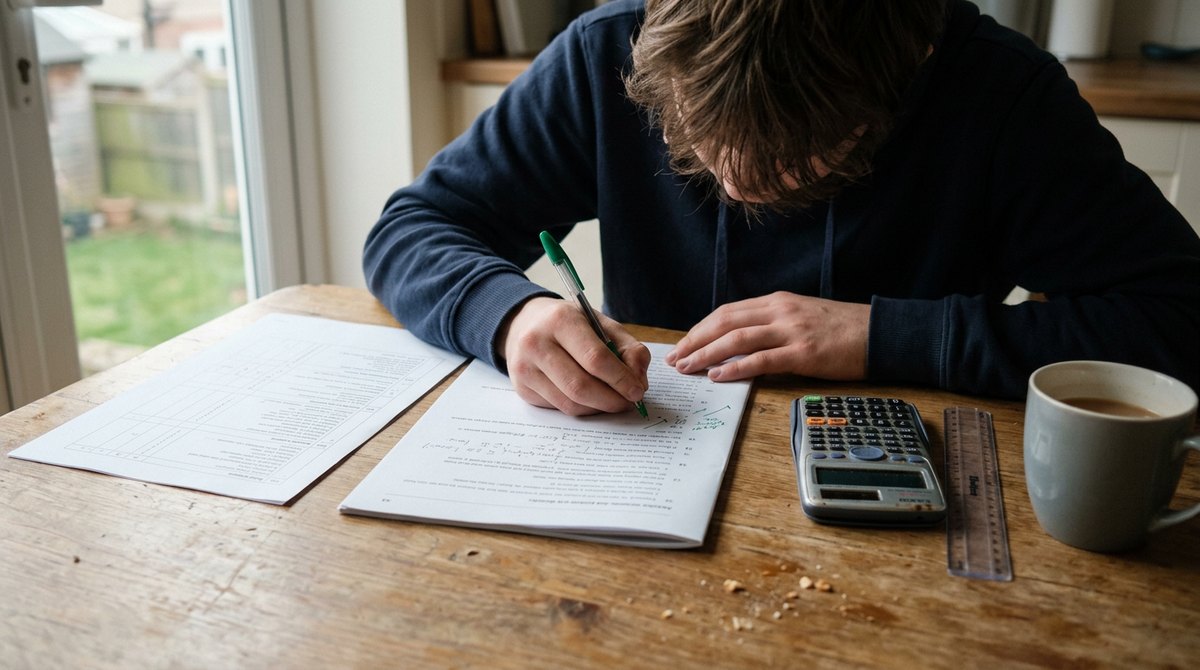
Marking your own paper in a different colour shows you exactly where the marks went.
The JCQ key dates put the first GCSE exam of summer 2027 on 10 May 2027. Here’s how long you’ve got.
- Write down your exam board, subject code and tier for every GCSE
- Download the specification for each subject from the exam board
- Bookmark the past papers and mark schemes page for each subject
- Pick one site to learn from and one to test yourself with
- Sign up where it helps (Seneca, Cognito, a flashcard app)
- Put your revision slots in a weekly timetable
- Keep your phone in another room for the learn and exam question sessions
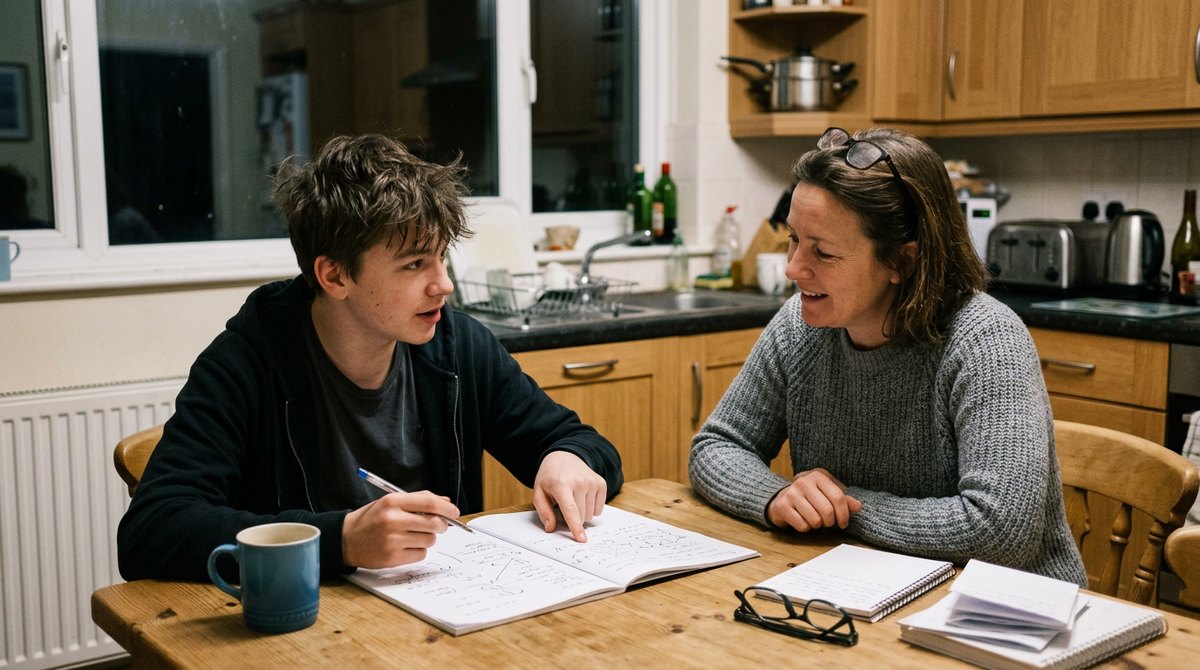
Explaining a topic out loud to someone at home is a free test: the bits you can’t explain are the bits to revise.
Revision sites for psychology, sociology and other subjects
The big revision sites are strongest on GCSE maths, GCSE English and GCSE science. If you take psychology, sociology, business or travel and tourism, there’s less out there, and much of it isn’t written for your exam board.
That’s the gap we built our courses for. Our AQA GCSE Psychology revision course starts with how memory encodes, stores and retrieves information and goes right through to research methods, such as quantitative and qualitative data. For sociology, the AQA GCSE Sociology course opens with what sociology is and how sociologists think.
We also cover IGCSE subjects, such as business objectives for Edexcel IGCSE Business and types of tourism for Cambridge IGCSE Travel and Tourism. If you’re choosing a course rather than just revising, our guide to what to look for in an online GCSE course goes through the questions to ask.
Revising with Brainy Lemons
Brainy Lemons is a set of online GCSE and IGCSE courses, each written for one exam board and one specification.
It’s not a free notes site, and it doesn’t host past papers, so you’ll still want your exam board’s website for those.
What it does do is take you through the whole specification in short lessons, then make you use what you’ve just read. Every lesson has its own quiz, a TV-style quiz show called Lemonaire and a zombie defence game called Last Stand, all written from that lesson. Many lessons also have flash cards, and the trickiest topics have 3D games, like the titration practical in AQA GCSE Chemistry.
- 3,227 lessons across our courses
- 58,883 quiz questions and 67,167 flash cards
- 61 3D games, most of them free to play
- One course costs £84, paid once, with access through to your exams, or £10 a month for 12 months
- The first 3 lessons of every course are free, with no card needed
We teach AQA GCSE Biology, Chemistry, Geography, Psychology and Sociology, plus Cambridge and Edexcel IGCSE subjects. You can see them all on the courses page, start with a free first lesson on atoms, elements and compounds, or play the free revision games first. You can also read our complete AQA GCSE Psychology course guide, or go straight to the GCSE psychology revision page.
GCSE revision websites FAQs
What is the best free GCSE revision website?
BBC Bitesize is the best free all-rounder because it covers most subjects and needs no account. Pair it with your exam board’s past papers and a free self-testing site like Seneca, and you’ve got everything you need without paying.
Is Save My Exams worth paying for?
It can be if you want lots of exam questions sorted by topic. The Essential plan is £48 a year, which works out at £4 a month. The monthly plans cost much more, so if you do pay, the yearly plan is better value.
Is Seneca free?
Yes, you can sign up free and use its exam-board courses. You only pay if you want extras. Premium packages add features such as Smart Learning Mode, Wrong Answer Mode and unlimited AI-marked questions.
Is Revision World good for GCSE revision?
Revision World is a useful free site with notes, quizzes and past paper links across more than 25 GCSE subjects. Check that the notes match your exam board, and use it alongside a site that tests you.
How many revision websites should I use?
Two or three is plenty: one to learn from, one to test yourself with, and your exam board’s site for past papers. Using lots of sites usually means reading the same thing several times instead of practising. Pick yours in September and stick with them.
What’s the best revision website for GCSE psychology or sociology?
Look for one written for your exam board, because the big revision sites have less for these subjects. Our AQA GCSE Psychology and AQA GCSE Sociology courses follow the specification lesson by lesson, with quizzes and games on every lesson, and the first 3 lessons are free.
Are there revision websites for IGCSE?
Yes. Save My Exams and Seneca both cover IGCSE subjects, and Physics & Maths Tutor has IGCSE past papers. Brainy Lemons has Cambridge and Pearson Edexcel IGCSE courses too, such as Business, Geography, Biology and Travel and Tourism.
Add a full course to your revision websites
Online GCSE and IGCSE courses that follow the exam board specification, lesson by lesson, so you know you’ve covered everything.
- Short lessons written for one exam board and one specification
- A quiz, a quiz show and a zombie defence game on every lesson
- Study on any device: phone, tablet or laptop
The first 3 lessons of every course are free. No card needed.