 By the Brainy Lemons team
AQA GCSE Biology (8461) is a separate science GCSE with seven topics, from cell biology to ecology. You sit two written papers, each 1 hour 45 minutes and worth 100 marks, at Foundation or Higher tier. There’s no coursework, but ten required practicals are tested in the exams. The next exams are in May and June 2027.
This guide covers what’s in each topic, how the two papers work, the required practicals, the maths you’ll need and how separate Biology compares with the double award. Every fact about the papers comes from the board’s own spec and timetable.
At a glance
- Board: AQA
- Code: 8461, one of the three separate sciences (often called triple science)
- Papers: two, each 1 hour 45 minutes, 100 marks and 50% of the grade
- Tiers: Foundation (grades 1 to 5) or Higher (grades 4 to 9)
- Coursework: none, but you must do ten required practicals
- Next dates: 11 May and 10 June 2027
What is AQA GCSE Biology?
It’s the study of living things, from microscopic structures to whole ecosystems. AQA is the exam board, the organisation that writes and marks the papers. You’ll see the code 8461 on every past paper, mark scheme and set of revision notes.
The course is linear. You sit both papers at the end of the course in one summer. Nothing earlier counts towards the grade. It’s designed to be taught over two years, usually Years 10 and 11. If you’re comparing courses, our guide to Edexcel IGCSE Biology covers the international version, which has no required practicals.
Separate Biology or Combined Science?
Combined Science: Trilogy (8464) teaches biology, chemistry and physics together and gives two grades. Its biology comes from the same topics, but there’s less of it.
| Separate (8461) | Trilogy (8464), biology part | |
|---|---|---|
| Papers | 2, each 1 hour 45 minutes | 2, each 1 hour 15 minutes |
| Marks per paper | 100 | 70 |
| Weighting | 50% each of one GCSE | 16.7% each of a double award |
| Required practicals | 10 | 7 (all but numbers 2, 8 and 10) |
| Extra content | Yes, marked “biology only” | No |
The extra content includes culturing microorganisms, plant disease, the brain and the eye, the kidneys, plant hormones, DNA structure, cloning, speciation, decomposition, trophic levels and food production. Most of it is tested on Paper 2. Both routes can lead on to A-level Biology.
AQA GCSE Biology topics
The specification (the official list of everything you need to learn) has seven topics. Paper 1 tests the first four and Paper 2 tests the last three.
| Topic | Paper | Big ideas |
|---|---|---|
| 1. Cell biology | Paper 1 | Prokaryotic and eukaryotic cells, microscopy, mitosis, stem cells, diffusion, osmosis, active transport |
| 2. Organisation | Paper 1 | Enzymes, the digestive system, the heart, non-communicable diseases, xylem and phloem |
| 3. Infection and response | Paper 1 | Communicable disease, the immune system, vaccination, new drugs, monoclonal antibodies |
| 4. Bioenergetics | Paper 1 | Photosynthesis, limiting factors, aerobic and anaerobic respiration, metabolism |
| 5. Homeostasis and response | Paper 2 | The nervous system, reflexes, insulin and diabetes, the kidneys, plant responses |
| 6. Inheritance, variation and evolution | Paper 2 | Meiosis, DNA, genetic crosses, natural selection, selective breeding, genetic engineering |
| 7. Ecology | Paper 2 | Ecosystems, adaptations, sampling, the carbon and water cycles, biodiversity, food production |
Paper 1: cells, organs, disease and energy
- Topic 1 compares animal, plant and bacterial cells, covers magnification and shows how substances move in and out of cells. Our first lesson on eukaryotes and prokaryotes mixes biology with standard form and units.
- Topic 2 shows how tissues, organs and organ systems fit together. Start with cells, tissues, organs and systems.
- Topic 3 covers the viruses, bacteria, fungi and protists that cause disease, how your body fights back and how new drugs are tested. It opens with pathogens and how disease spreads.
- Topic 4 is about energy: how plants make glucose, what limits the rate and how respiration releases energy, with and without oxygen.
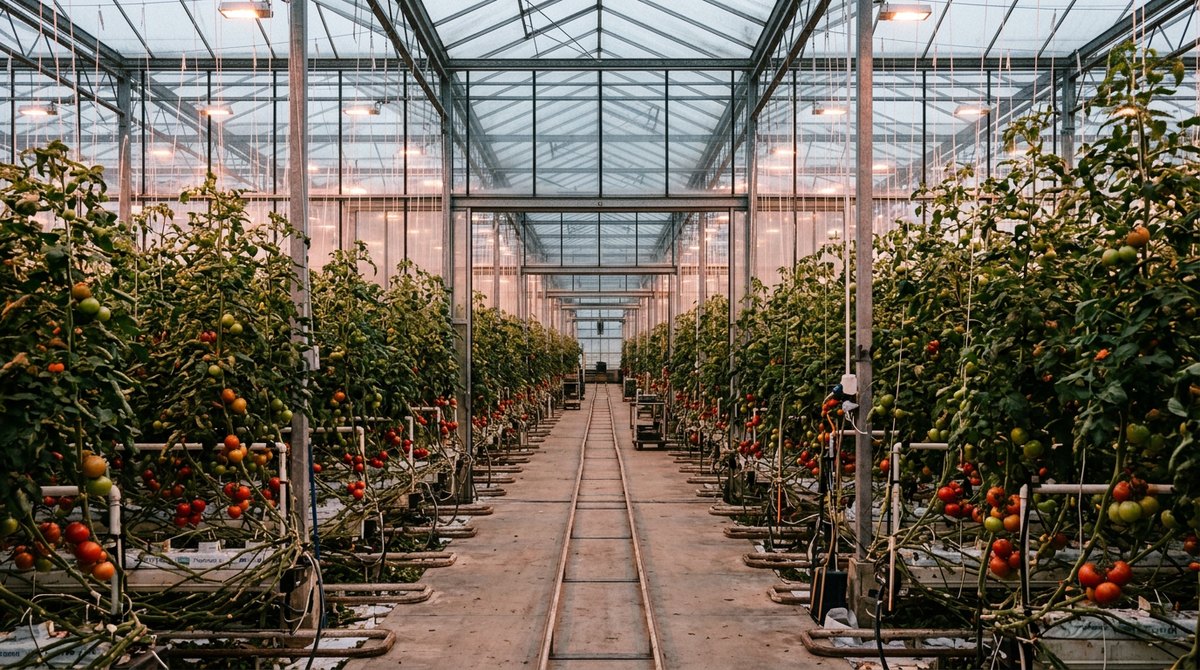
Growers add light, heat and carbon dioxide to speed up photosynthesis, which you’ll study for Paper 1.
Paper 2: control, genetics and ecosystems
- Topic 5 explains how nerves and hormones keep conditions in your body steady, from blood glucose to body temperature. Start with homeostasis and control systems.
- Topic 6 covers genetics and evolution, the way species change over time. You’ll draw Punnett squares and genetic crosses, grids that predict the chance of a child inheriting a feature.
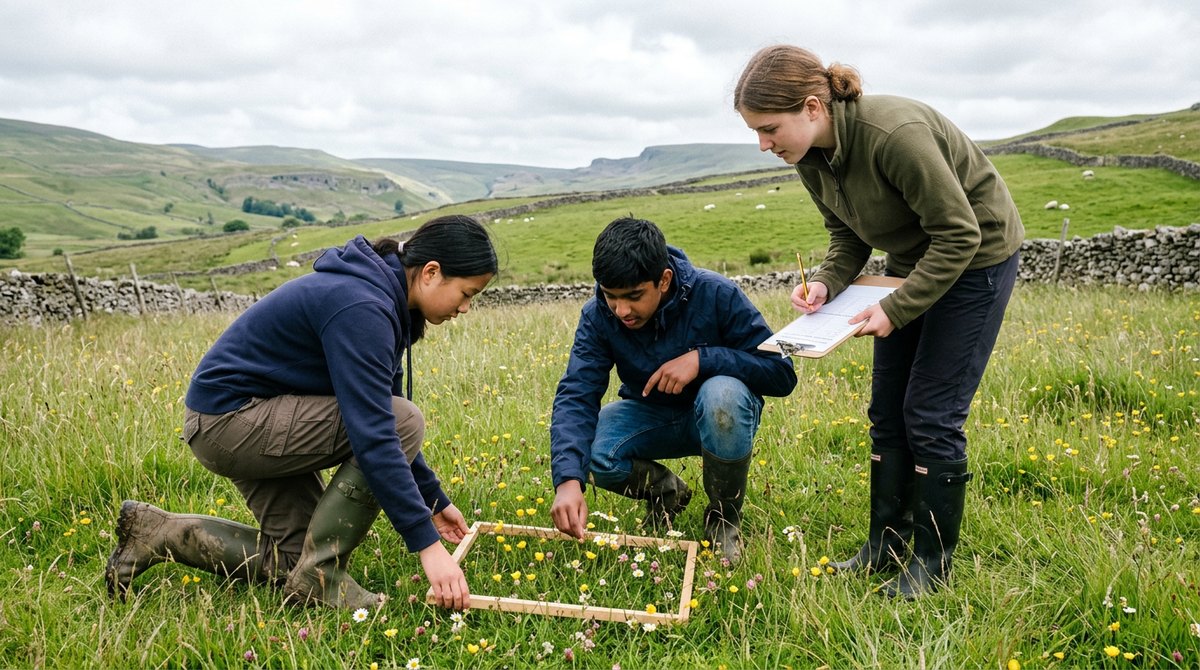
- Topic 7 looks at how living things depend on each other. You’ll sample plants with quadrats (square frames placed on the ground) and learn how people affect wildlife. It begins with ecosystems, communities and competition.
Working scientifically skills, like planning experiments and judging data, run through all seven.
All seven topics, in 106 short lessons. Our course follows the 8461 spec in order.
See the course →How the exams work
Both papers are the same length and worth the same. You sit both at Foundation or both at Higher.
| Paper | Topics | Time | Marks | Share | Summer 2027 |
|---|---|---|---|---|---|
| Paper 1 | 1 to 4 | 1h 45m | 100 | 50% | Tuesday 11 May, morning |
| Paper 2 | 5 to 7 | 1h 45m | 100 | 50% | Thursday 10 June, morning |
Dates are from the board’s May/June 2027 GCSE timetable (version 1.2). Each paper mixes multiple choice, short structured questions and longer open answers. The marks split roughly like this, so learning facts gets you less than half of them:
- 40% for knowing ideas and techniques
- 40% for applying them, often to something new
- 20% for analysing data, drawing conclusions and improving experiments
What a question looks like
“Describe” means say what happens. “Explain” means say why. “Evaluate” means weigh up both sides and reach a judgement. Here’s a question in the style of a six-marker:
A student investigated how pH affects the rate at which amylase breaks down starch. Describe a method the student could use. [6 marks]
A strong answer gives the steps in order: keep the temperature steady with a water bath, mix amylase and starch with a buffer of one pH, test a drop with iodine every 30 seconds, time how long until the iodine stays orange, then repeat at other pH values. It’s one of the ten set experiments, so you’d be expected to know it well.
Foundation or Higher tier?
Foundation gives grades 1 to 5. Higher gives grades 4 to 9. Just miss a 4 on Higher and you can get an allowed grade 3, but below that it’s a U (unclassified). If you’re aiming for a 6 or above, you need Higher. Paper 1 and Paper 2 each come in a Foundation version (1F, 2F) and a Higher version (1H, 2H). Try a timed past paper at each tier to see which suits you.
Maths skills
Some marks need numbers. The spec lists the maths it can test, including:
- standard form, ratios, fractions and percentages
- means and significant figures
- bar charts, histograms and scatter graphs
- plotting data and finding the slope of a straight line
- simple probability, for genetic crosses
- surface area and volume
Our lesson on units, prefixes and significant figures covers the trickiest bits.
The 10 required practicals
You don’t do them in the exam hall, but questions on your practical skills are worth at least 15% of your marks. For each one, know the method, the variables (what you change, measure and keep the same) and what the results show.
- 1. Microscopy: observe, draw and label plant and animal cells
- 2. Antiseptics or antibiotics on bacterial growth*
- 3. Osmosis: salt or sugar solutions on plant tissue
- 4. Food tests for sugars, starch, lipids and protein
- 5. The effect of pH on amylase
- 6. Light intensity and the rate of photosynthesis
- 7. A factor that affects human reaction time
- 8. Light or gravity on seedling growth*
- 9. Measuring population size by sampling
- 10. Temperature and the rate of decay of milk*
* Not in Trilogy.
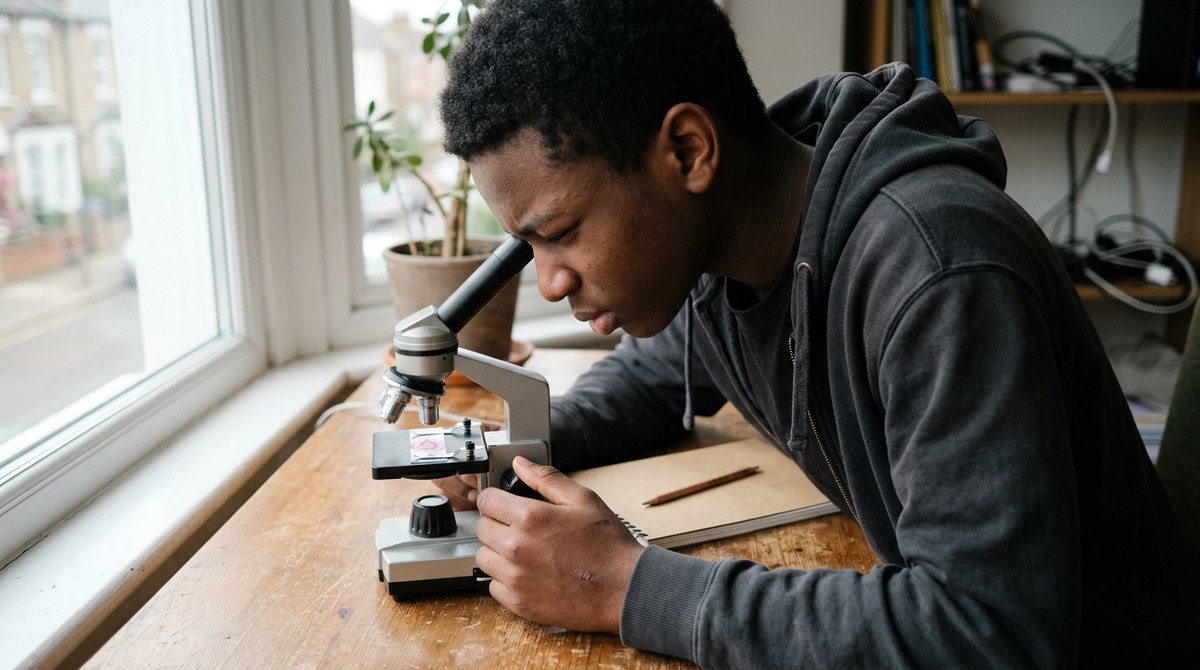
Using a microscope is the first of the ten. You’ll draw what you see and add a magnification scale.
Our course teaches each one step by step, starting with looking at cells under a microscope. It can’t replace doing the experiments yourself, though.
Learning at home? Plan the practicals early
The spec says private candidates (students who sit papers at a centre without being enrolled there) must be based in the UK. They also need a school or college that will let them do the required practicals, which is likely to cost extra. The board advises contacting centres as early as you can.
Our guide to GCSEs for home educated students explains how to find a centre. If lab sessions aren’t possible, IGCSE vs GCSE explains the international route, which has none.
Is it hard?
There’s a lot to learn. Applying facts to new situations takes practice too. But results are strong. Here’s how everyone who sat this paper did in summer 2026:
Almost nine in ten got a 4 or above. 43% got a 7 or above. These are students who chose separate Biology, so the figures aren’t a promise: steady work matters more than averages. It suits you if you like knowing how your body and the natural world work. It’s a good base for A-level Biology, medicine, nursing, sport science, vet science and environmental work.
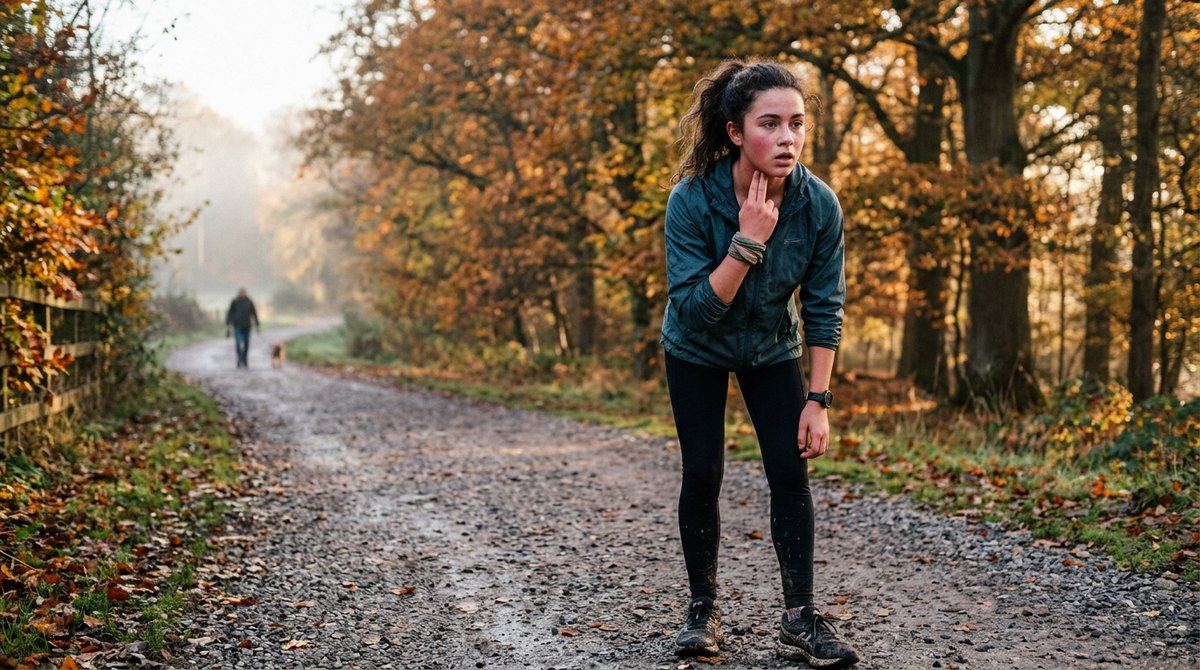
Why do you keep breathing hard after a run? Oxygen debt is part of Paper 1.
AQA GCSE Biology revision: how to prepare
A steady plan beats cramming the week before your GCSE Biology exam. Ofqual’s register gives the course 120 guided learning hours, the teaching time it expects. Over two years, you could cover:
- Year 1: all the Paper 1 content in autumn and spring, then homeostasis in summer
- Year 2, autumn: genetics and evolution
- Year 2, spring: ecosystems, then your first full Paper 1 and Paper 2
- Year 2, summer term: past papers, mark schemes and your weakest topics
Put in your exam date and how many days a week you can study. This planner works out your pace:
Revision habits that work
- Test yourself. Close the book and write down what you remember, or use a flashcard app. It sticks far better than rereading your notes.
- Learn the practicals as questions. Know the variables and how to make each one more accurate.
- Practise six-markers. An exam question like this rewards a clear order, so plan your points in a quick list first.
- Use GCSE Biology past papers to find gaps. The board puts its biology past papers and mark schemes on its 8461 page. Mark each one honestly, then revise what you dropped marks on.
- A copy of the 8461 specification
- A centre that takes private candidates, if you learn at home
- A plan for all ten lab experiments
- A calculator, ruler and pencil for charts and drawings
- Somewhere to keep flash cards
- A rough idea of your tier
- A weekly time slot for biology
Studying GCSE Biology online with Brainy Lemons
Our AQA GCSE Biology online course has 106 lessons of about 30 minutes each, written from the 8461 spec for exams in 2027 to 2029. Each lesson lists the spec points it covers, then teaches them with key terms, common mistakes and an exam-style question with a model answer.
Every lesson has a quiz with instant feedback, a quiz show game called Who Wants to Be a Lemonaire? and Last Stand, a zombie defence game. There are 1,460 flash cards, from easy to exam-hard. A study timetable plans your lessons week by week. A dashboard shows your quiz scores and what to go back over.
You can start with lesson 1 to see how a lesson works. When you’re ready, the full GCSE Biology course covers the whole spec.
FAQs
What are the AQA biology topics?
There are seven. Paper 1 tests the first four, from cells to energy. Paper 2 tests the last three, from homeostasis to ecology.
How many papers are there?
Two, each lasting 1 hour 45 minutes with 100 marks and 50% of the grade. In 2027 they’re on 11 May and 10 June, both in the morning.
How many required practicals are there?
Ten. Seven are shared with Combined Science. Three (bacterial growth, seedling growth and decay) are for separate Biology only.
Is it the same as triple science?
It’s one third of it. Triple science means taking Biology, Chemistry and Physics as three separate GCSEs.
Can I study it at home?
Yes, you can learn the whole course online. To sit the papers as a private candidate you’ll need to be in the UK and find a centre that will run the lab work for you, usually for a fee.
Where can I find AQA GCSE Biology past papers?
On the board’s 8461 page, with mark schemes and examiners’ reports. There are Foundation and Higher versions of Paper 1 and Paper 2 for each year. Do them under timed conditions, then mark them honestly.
Learn every biology topic at your own pace
From microscopes to ecosystems and all ten required practicals, in short lessons that follow the spec.
- 106 short lessons that follow the 8461 specification
- A quiz, a quiz show and a zombie defence game on every lesson
- 1,460 flash cards, from easy to exam-hard