 By the Brainy Lemons team
GCSE home education works like this: you study at home, then sit each exam as a private candidate at an approved exam centre. Choose your subjects and exam boards, book entries before the deadline (21 February 2027 for most June 2027 GCSEs), pay the fees yourself, then sit the papers in May and June.
It sounds like a lot of admin, but it breaks down into eight clear steps. Plenty of families across the UK have done it before you. Many mix IGCSEs in with their GCSEs to make the booking easier.
This guide walks you through each step in order, from deciding if GCSEs are right for you to collecting your results in August. It’s written for young people aged 14 to 16 and the parents helping them.
At a glance
- Home educated students sit GCSEs and IGCSEs as private candidates
- You study anywhere, but every paper is sat at an approved exam centre
- June 2027 GCSE entry deadline: 21 February 2027
- Pearson Edexcel International GCSE deadline: 21 March 2027
- First GCSE exams: Monday 10 May 2027. Results: Thursday 19 August 2027
- Families pay the exam fees, which each centre sets
- Written-exam subjects with no coursework are the simplest to book
Do home educated students have to take GCSEs?
No, not by law. In England your child must get a suitable, full-time education, but you don’t have to follow the national curriculum or sit any exams. The Department for Education’s elective home education guidance for parents asks families to think early about whether they expect to sit public exams such as GCSEs.
Most families decide yes, at least for English and maths. Sixth forms, apprenticeships and employers all look for them, whatever career you have in mind. And if you start a post-16 course without grade 4 in English or maths, the government’s funding rules mean you’ll usually keep studying it alongside your course.
So GCSEs aren’t a legal requirement, but they open doors. Plenty of students take five or six, while others take fewer and add more later.
The numbers climb steeply towards the exam years. Over 45,000 children in Years 10 and 11 were being taught at home on census day in autumn 2025, so if you’re planning GCSEs this way you’re in very good company.
GCSE home education in eight steps
Here’s the whole process, then we’ll go through each part in turn. Most families start about two years before the exams, in the autumn of Year 10, though starting in Year 9 gives you more breathing space.
- Step 1. Decide when you’ll sit your exams
- Step 2. Choose your subjects
- Step 3. Pick GCSE or IGCSE and the exact exam board
- Step 4. Choose how you’ll learn
- Step 5. Find an exam centre
- Step 6. Book your entries and any access arrangements
- Step 7. Study, practise and revise
- Step 8. Sit the exams and collect your results
Step 1: decide when to sit your exams
At school, most students sit all their GCSEs in the summer of Year 11. You can do that too, but you don’t have to. Learning at home gives you the flexibility to sit a subject when you’re ready, or to spread your exams over two or three summers.
Spreading them out has real advantages. You revise for two or three at a time instead of eight. An early pass can be a big confidence boost too. It also spreads the cost across more than one year.
Think about the November series too. Pearson Edexcel and Cambridge both run International GCSEs in November as well as June, so you get a second go each year. GCSE English Language and maths have a November series as well, though it’s only open to students aged 16 or over.
Step 2: choose your subjects
Start with English and maths, because almost every next step asks for them. Add a science if you might want science A levels or a career in medicine or engineering, then two or three subjects you genuinely enjoy.
Before choosing a final list, look up the entry requirements for the sixth forms and colleges you might apply to. Each one sets its own, usually a number of GCSEs at a certain grade. Some A level courses want a higher grade in the subject itself. It’s far easier to plan from those now than to find a gap at 16.
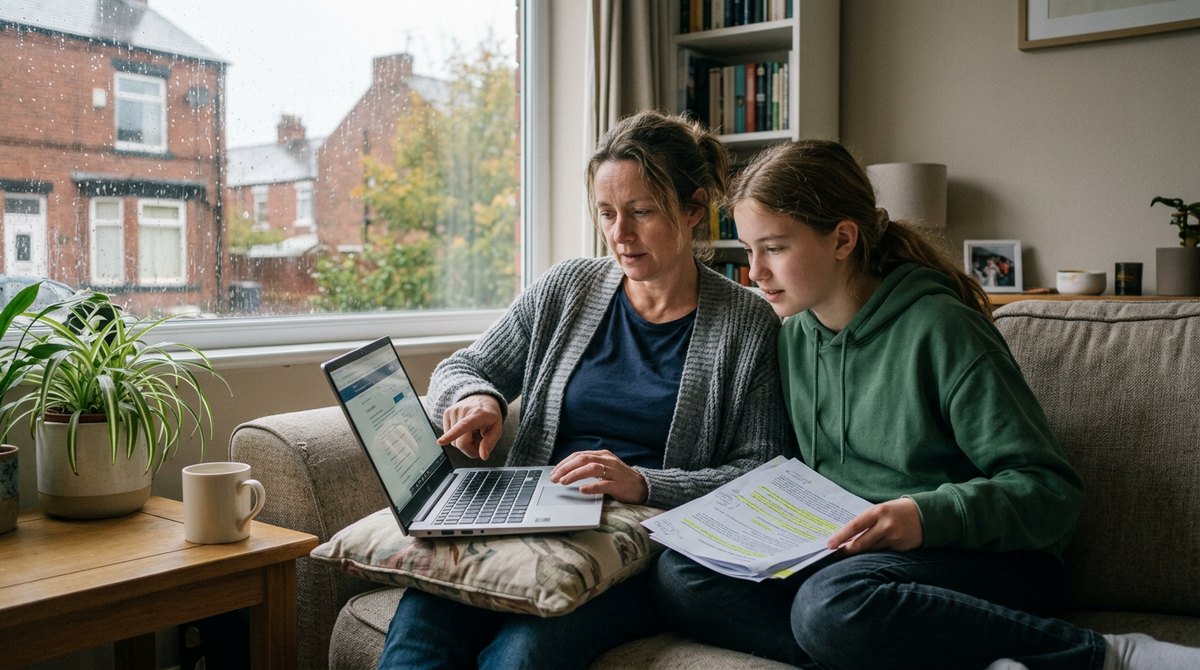
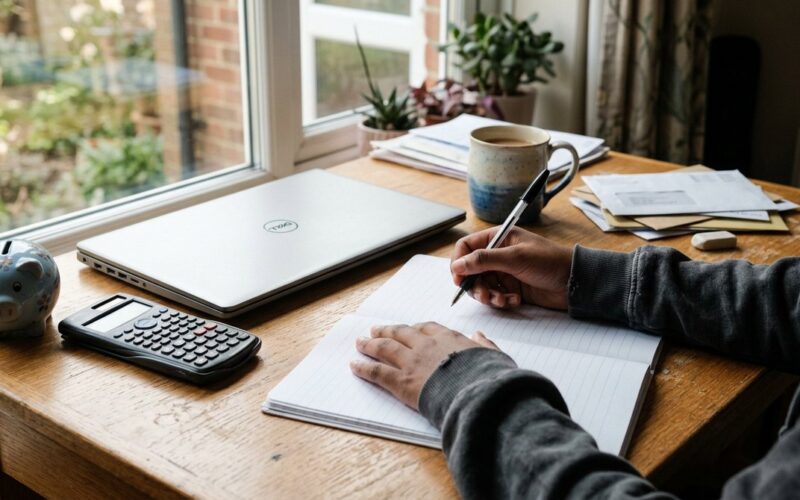
Choosing subjects together at home. Check what local sixth forms ask for before you finalise the list.
Which subjects are easiest to sit from home?
Subjects marked only by written exams are by far the simplest. Some GCSEs also include coursework or tasks a centre has to run or sign off, such as experiments, a speaking test or fieldwork. A centre that doesn’t know you may not offer that. Here’s what AQA asks for in some popular choices.
| AQA GCSE | What you need from the centre |
|---|---|
| Sociology, Psychology, History, Business, Computer Science, English Literature | Nothing extra: written exams only |
| Biology, Chemistry, Physics, Combined Science | The chance to carry out all the required practicals |
| English Language | The spoken language task (or a result carried forward from June 2017 onwards) |
| Geography | Sign-off for fieldwork done on two separate occasions |
| French, German, Spanish and other languages | A supervised speaking test |
You’ll find the rules for every GCSE on the exam board’s private candidates page. Lab work and speaking tests aren’t impossible, but they cut down the number of centres you can use and usually cost more.
GCSE Sociology and Psychology at home
These two are popular with families teaching GCSEs at home. It’s easy to see why. Few schools teach them before Year 10, so nobody starts behind. There are no extra conditions for either. Try the free first lessons on what sociology is and how sociologists study society and on how memory encodes, stores and retrieves information.
Step 3: pick GCSE or IGCSE and your exam board
An International GCSE (IGCSE) is at the same level as a GCSE and it’s recognised by colleges and sixth forms across the UK. Pearson Edexcel and Cambridge set them. Many IGCSEs are assessed only by written papers, so there’s nothing extra for a centre to supervise.
Pearson Edexcel International GCSE Biology, for example, tests practical skills inside its written papers. That’s a big reason families like IGCSE Biology, Chemistry and Physics. Our guide to IGCSE vs GCSE and which to choose goes through the differences one by one.
Whichever you pick, write down the exact board and code, such as AQA GCSE Sociology 8192 or Pearson Edexcel International GCSE Biology 4BI1. Every book and past paper you use should match that code, because the topics and question styles change from one board to the next.
Picked your exam boards? Our online courses follow one board’s syllabus lesson by lesson. The first three lessons are free.
Find your course →Step 4: choose how you’ll learn
Families mix and match here. There’s no single right way. Most use a few of these together.
- Parent-led study with a matching textbook and past papers. It’s cheap, but it takes a lot of a home educator’s time, especially in topics they never studied themselves.
- A tutor for extra support where you need someone to explain it face to face, often maths.
- An online course that teaches everything on the syllabus, so you can work at your own pace while a parent checks progress.
- A local college. Some further education colleges take 14 to 16 year olds part-time for certain GCSEs. They don’t have to, so ask near you.
- A home education group for company, shared trips and the odd hands-on session.
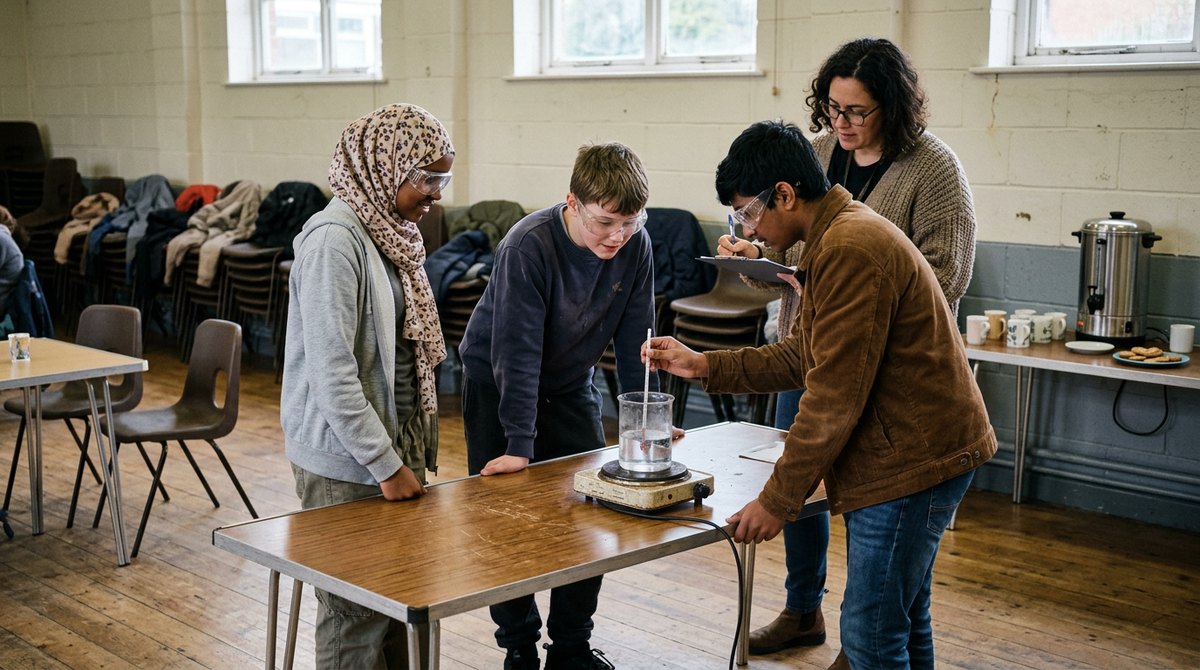
A home education group meeting in a community hall gives teenagers company and a chance to try hands-on science together.
A good online course saves a parent from becoming the teacher in eight subjects at once. Look for one written for a single board, broken into short lessons, with a quiz after each one so you know it’s gone in. Our GCSE and IGCSE courses for home educating families are built that way. The guide to GCSEs for home educated students has more on fitting a course round the exams.
Step 5: find an exam centre
You can study anywhere, but every paper is sat at an approved exam centre. Start with the JCQ private candidates page, which has a search of centres that say they take private candidates. JCQ is the Joint Council for Qualifications, which sets the exam rules for all the boards in the UK.
That list isn’t complete, so phone local schools, colleges and specialist private exam centres too. Each one decides whether to take you, which boards it offers and what it charges. Ask every centre the same questions.
- Which exam boards and subjects do you offer?
- What’s the total fee per subject, including any admin charge?
- When’s your own entry deadline?
- Can you run practicals, speaking tests or fieldwork sign-off if I need them?
- How do I apply for access arrangements such as extra time?
Our page on sitting GCSEs as a private candidate covers centres in more detail, from the JCQ search to exam day.
Step 6: book your entries and pay
For the June 2027 exams, AQA and Pearson Edexcel set 21 February 2027 as the GCSE entry deadline. Pearson’s International GCSEs close a month later, on 21 March 2027. Centres set earlier dates of their own, so aim to book everything before Christmas.
Late entries cost far more. AQA adds a late fee worth the whole entry fee again from 22 February 2027. Centres usually add their own charge on top. Our guide to how much GCSEs cost compares real centre prices for 2027.
The DfE is clear that families who teach at home pay for their own exams. Some councils offer support with the cost, but it’s up to each one. It’s worth a call to your local authority.
If you have special educational needs and need extra time, a reader or another access arrangement, tell the centre when you first get in touch. It has to apply for you and will usually ask for evidence, which can take a while to gather.
Step 7: study, practise and revise
Most GCSE courses are designed for two years. Here’s a curriculum plan you can adapt for sitting everything at once or a couple of subjects a year.
| When | What to do |
|---|---|
| Year 1, autumn | Choose subjects and boards, download each syllabus, start the first topics and contact exam centres |
| Year 1, spring | Work steadily through the content and test yourself at the end of every topic |
| Year 1, summer | Reach roughly halfway and try a few past paper questions |
| Year 2, autumn | Book every entry and access arrangement, then aim to finish new content by Christmas |
| Year 2, spring | Revise weak topics and sit full past papers under timed conditions |
| Year 2, summer | Final revision, then sit your exams in May and June |
Little and often beats one long session a week. A short lesson on three or four days, followed by a quick quiz, keeps every subject moving without burning out. Short, regular sessions also fit neatly round the rest of your week, which is part of the flexibility learning at home gives you.
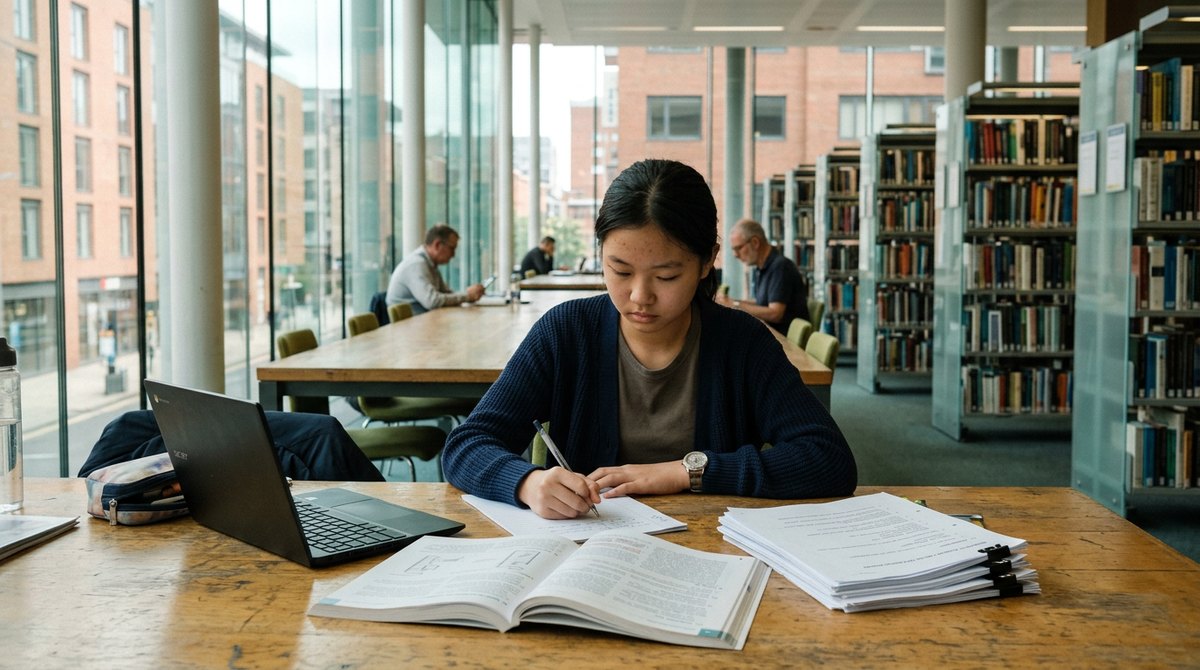
A library makes a calm change of scene for timed past papers in the final spring before the exams.
Past papers are where marks are won. Every board puts its past papers, mark schemes and examiner reports online for free. The mark schemes show exactly what examiners reward, so do at least two full papers under timed conditions before the real thing.
- I know the exam board and code for every subject
- I’ve found at least two exam centres that take private candidates
- I know each centre’s own entry deadline and total fee
- I’ve checked if anything needs lab work, a speaking test or fieldwork
- I’ve asked about access arrangements, if I need them
- I have a weekly study plan that covers the whole syllabus
- I’ve got photo ID ready for exam days
Step 8: exam day and results
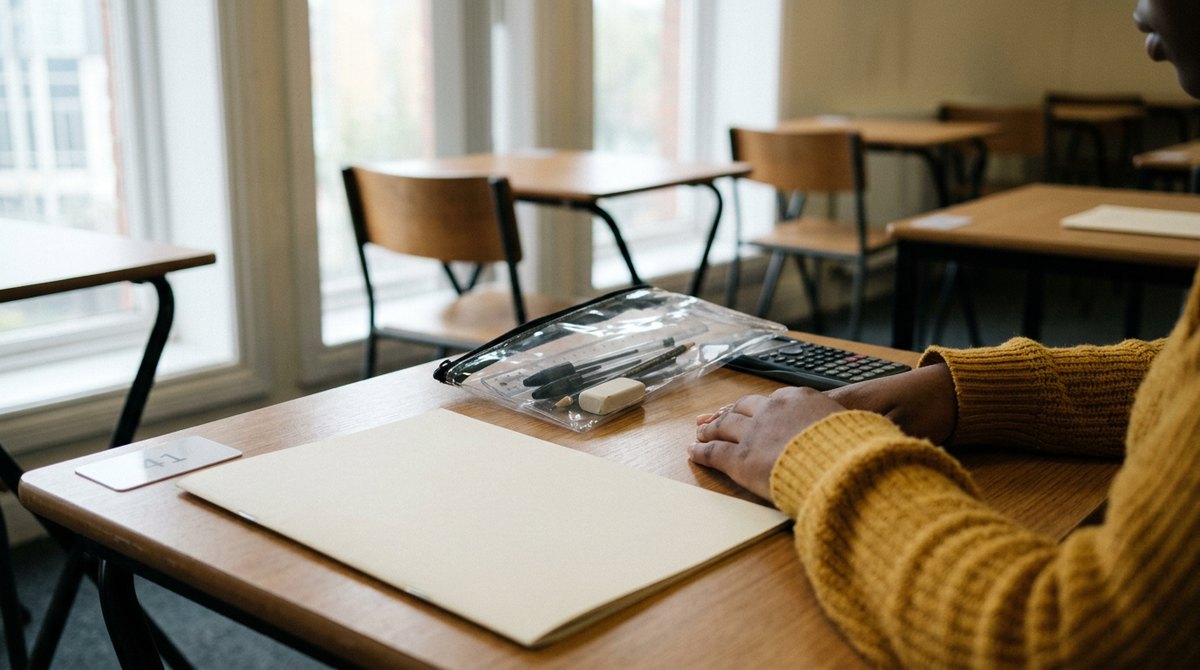
You’ll sit your papers in the centre’s exam room alongside its own students, under exactly the same rules. Take photo ID, a clear pencil case and any equipment the paper allows, then arrive in good time. Papers start at 9am or 1:30pm, though a centre can move the start by up to half an hour.
Keep yourself free until Wednesday 23 June 2027, the contingency day the boards have set aside in case of national disruption. GCSE results come out on Thursday 19 August 2027 and your centre will tell you how to collect them.
Results day in August. Your exam centre will tell you how it sends results out.
A grade earned this way is the same qualification as one earned at school, so colleges and employers across the UK treat it just the same.
Studying GCSEs at home with Brainy Lemons
Brainy Lemons is an online GCSE and IGCSE course built for students learning on their own, away from school. Every course follows one exam board’s specification from start to finish.
Each lesson takes about 30 minutes and ends with a quiz. Get one wrong and you see the right answer and why straight away. Every lesson also has Lemonaire (a TV-style quiz show) and Last Stand (a zombie defence game you only win by knowing the answers). Flash cards come back just before you’d forget them. A timetable plans every lesson week by week up to your exam date.
Parents can see quiz scores and lessons done at a glance, without needing to know the topic. These suit private candidates well:
- Pearson Edexcel IGCSE Biology online course, starting with the seven life processes
- AQA GCSE Sociology online course
- AQA GCSE Psychology online course
- Cambridge IGCSE Geography online course, beginning with a river’s journey from source to mouth
- Pearson Edexcel IGCSE Business online course, starting with business objectives
One course costs £84, or £10 a month for 12 months. You can try the first Cambridge IGCSE Marine Science lesson or the first three lessons of any course free, with no card needed. We don’t enter you for exams, so you’ll still book those through a centre.
GCSE home education FAQs
Do home educated children have to do GCSEs?
No. The law requires a suitable, full-time education, not exams. Most still take at least English and maths because sixth forms, apprenticeships and employers ask for them.
How do you take GCSEs if you’re home educated?
You study at home, online or with a tutor, then register as a private candidate at an approved exam centre. The centre enters you with the exam board and you sit the papers there in May and June.
How much does GCSE home education cost?
Each exam centre sets its own fee per subject and families pay it, along with any books, courses or tutors. Subjects with lab work or speaking tests usually cost more. Some councils help, so ask your local authority.
Can you sit GCSE exams at home?
No. You can study at home, but every GCSE and IGCSE paper is taken at an approved exam centre under exam conditions.
Is an IGCSE as good as a GCSE?
An IGCSE is at the same level and widely recognised by colleges and sixth forms. Many have no coursework, which makes them simpler to book. Check with the colleges you might apply to.
Can you take GCSEs early when you’re home educated?
Yes. You can sit a subject in Year 9 or Year 10 once you’re ready. Lots of families spread their GCSEs over two or three summers.
When should I book my GCSE exams for June 2027?
The board deadline for most GCSEs is 21 February 2027, but centres close sooner and places fill up. Book in the autumn term, before Christmas if you can.
Study your GCSEs at home, one short lesson at a time
Online GCSE and IGCSE courses built for home educated students, following the exam board specification lesson by lesson.
- Short lessons written for one exam board and one specification
- A quiz, a quiz show and a zombie defence game on every lesson
- Study on any device: phone, tablet or laptop
The first 3 lessons of every course are free. No card needed.