 By the Brainy Lemons team
There’s no marine biology GCSE from the English exam boards. The closest match is Cambridge IGCSE Marine Science (0697), which UK ENIC rates as comparable to a GCSE. It covers the oceans, marine organisms and marine ecology in six topics, assessed by two written papers of 1 hour 45 minutes each.
If you’ve typed “marine biology GCSE” into Google, you’re not alone. Lots of teenagers who love the ocean go looking for it and find nothing on the AQA or Edexcel websites. Don’t worry. The qualification you want just has a different name.
This guide explains that route: what you learn, how the papers work, how tough it can be (with real results) and how to sit it as a private candidate. Then we’ll look at which subjects help if you want to work with marine life one day.
At a glance
- No GCSE: AQA, Pearson Edexcel and OCR don’t offer one in marine biology
- The route: Cambridge IGCSE Marine Science, code 0697
- Exam years: the current version runs for 2027, 2028 and 2029, in June and November
- Papers: two, each 1 hour 45 minutes and 80 marks (50% each)
- Tiers: none
- Coursework: none
- Grades: A* to G
- Private candidates: allowed
Is there a marine biology GCSE in the UK?
No. The English boards offer Biology, Combined Science and Geography, but no marine biology GCSE. Some tutors sell a “GCSE marine biology” course, but read the small print and they’re teaching the 0697 IGCSE.
An IGCSE (International GCSE) is designed for 14 to 16 year olds. The official 0697 document says UK ENIC, the UK agency that compares international qualifications, found these IGCSEs comparable to the standard of the GCSE, so sixth forms, colleges and universities treat a good grade like a GCSE pass.
What makes it different
It’s built around the ocean. You’ll do some physics (density, pressure, tides), some chemistry (pH and salinity) and lots of biology. You’ll sometimes hear it called “marine biology IGCSE”, but Marine Science is the name on your certificate.
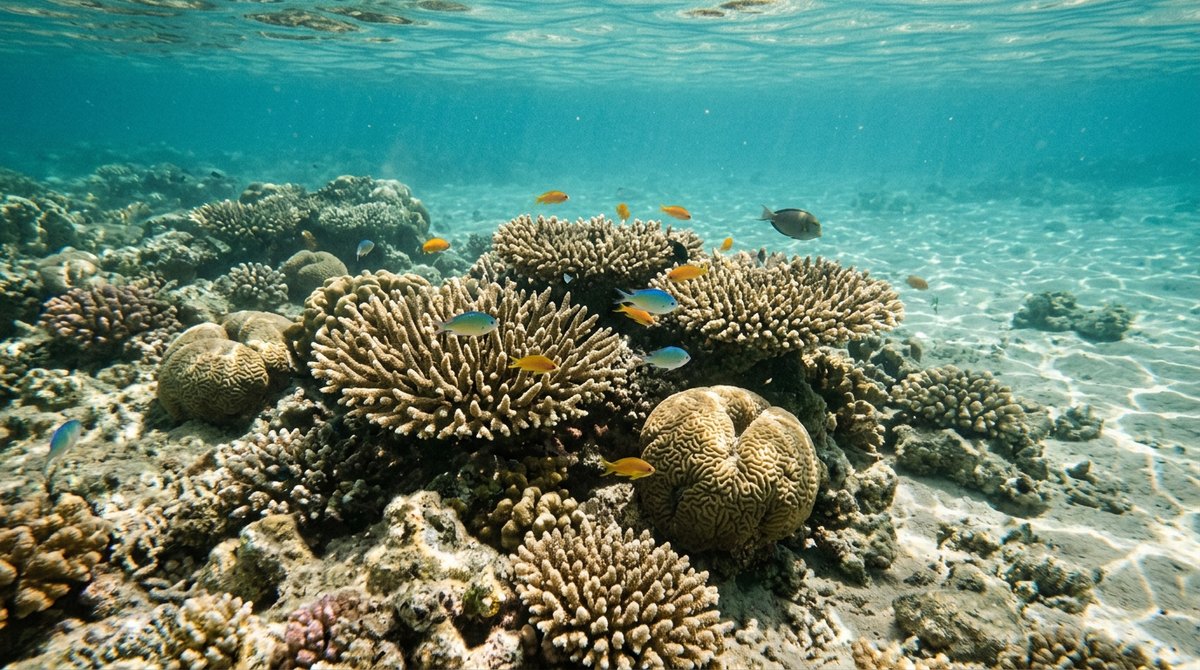
Tropical coral reefs are one of the coastal ecosystems in the marine ecology topic.
How it compares with GCSE Biology
| Marine Science (0697) | GCSE Biology | |
|---|---|---|
| Board | Cambridge International | AQA, Pearson Edexcel or OCR |
| What it covers | The oceans: Earth processes, sea water, marine organisms, ecology, people and the ocean | All of biology: humans, plants, cells, genetics, ecology |
| Assessment | Two papers, 1 hour 45 minutes each | Two papers (length depends on the board) |
| Tiers | None | Foundation and Higher |
| Grading | A* to G | 9 to 1 |
| When you sit it | June or November | May/June |
It isn’t a replacement for Biology. Lots of teenagers take both, because a marine biology course at university will want strong biology too.
What you learn
We’ve written a full guide to the IGCSE Marine Science syllabus, so here’s a short version of its six topics.
1. The Earth and its oceans
The Earth and its oceans covers the planet’s structure, plate tectonics, tsunamis, tides and currents. It opens with an introduction to Earth as a planet and soon reaches the five major oceans.
2. Sea water
The water cycle, pH, salinity (how salty the water is), dissolved gases, density and upwelling, starting with particle theory and states of matter.
3. Marine organisms
Cells, reproduction, fish, seagrass and kelp, turtle and coral life cycles plus migration. It begins with plant cell structure, then how marine organisms are classified.
4. Nutrients and energy
Nutrients and energy covers food tests, respiration and photosynthesis, then how to build marine food chains and food webs.
5. Marine ecology
Marine ecology is the closest thing to “marine biology” here. You learn how marine organisms are adapted to the open ocean, rocky and sandy shores, mangrove forests and tropical coral reefs. You also learn how scientists survey a shore. Our lesson on quadrat sampling methods shows how this is taught.
6. Human influences on the marine environment
Tourism, fishing, fish farming, oil, ocean energy, plastic pollution, climate change and conservation, including Marine Protected Areas. Start with why marine ecosystems matter to humans and finish with conservation strategies.
How the papers work
Assessment is by two written papers that everyone sits at the end. There’s no coursework. Both papers use short-answer and structured questions (questions split into parts, a), b), c) and so on).
| Paper | Time | Marks | Weighting | What it tests |
|---|---|---|---|---|
| Paper 1: Theory and Data Handling | 1 hour 45 minutes | 80 | 50% | Knowledge (65%) and handling information (35%) |
| Paper 2: Theory and Practical Skills | 1 hour 45 minutes | 80 | 50% | Knowledge (35%), handling information (25%) and experimental work (40%) |
Source: 0697 syllabus for 2027, 2028 and 2029 (version 1, published September 2024).
Paper 1: Theory and Data Handling
Paper 1 is mostly about what you know, in structured questions that build up step by step. About a third of its marks are for reading graphs and tables, doing calculations and applying ideas to new situations. Calculators are allowed.
Paper 2: Theory and Practical Skills
Paper 2 asks about experiments in writing, so there’s no lab test. You might plan an investigation, name the variables, spot an odd result or suggest an improvement. The course lists practical activities to do as a minimum, such as testing the pH of sea water, fresh water and rain water with universal indicator, using a Secchi disc to measure how clear water is and sampling with quadrats.
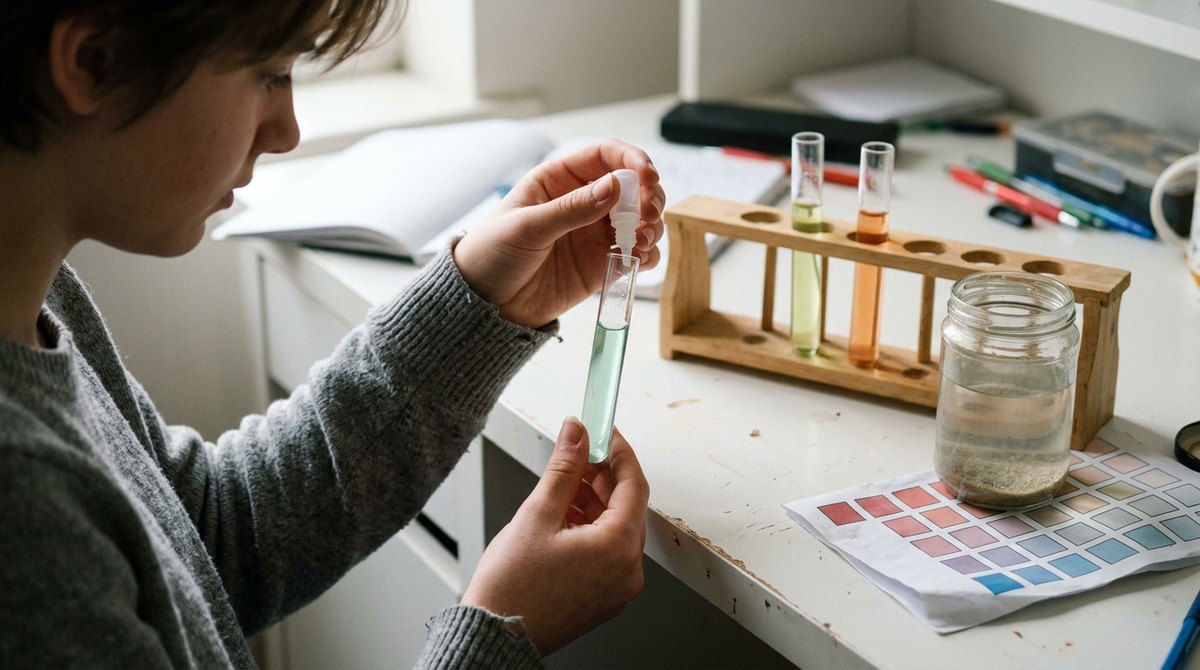
Testing water with universal indicator is a practical you can do with simple kit on a desk.
Command words and a sample question
Each question starts with a command word. “Describe” means give the main features. “Explain” means say why or how. Others include state, outline, compare, calculate, suggest and evaluate.
Here’s a question in the style of Paper 1: Explain why warm water in the ocean usually holds less dissolved oxygen than cold water. [2 marks] A 2-mark answer: gases are less soluble in water as the temperature rises (1 mark), so warmer water holds less oxygen before it escapes to the air (1 mark).
Every 0697 topic, one short lesson at a time. Our course follows it from plate tectonics to coral reefs.
See the course →Is it hard?
It takes steady work. There’s no advanced maths and no tiers, though, so everyone can aim for the top. Here’s how candidates did worldwide in the most recent June results.
About two in three got a C or above. One in four got an A or A*. That’s below IGCSE Biology in the same series (75.2% at C or above), so don’t treat it as the easy choice. Experimental work alone is worth 20% of the total, so practise Paper 2 style questions from the start.
Taking it as a private candidate
Few schools teach this subject, so many of the teenagers who take it study online. That’s fine: private candidates can enter for 0697. A private candidate is someone who sits exams at a centre without being enrolled there.
Four steps to sitting the papers
- Find a centre. The private candidates page explains how to find a school or approved centre that accepts private candidates.
- Book early. Centres set their own entry deadlines and fees, often months ahead.
- Check the year. Make sure you’re following the version for the year you’ll sit.
- Do the practicals yourself. There’s no practical test, so you don’t need a lab. Many activities, like the pH test, work with simple kit.
Our guide to GCSEs for home educated students walks through the whole process. IGCSE vs GCSE shows why IGCSEs suit independent learners.
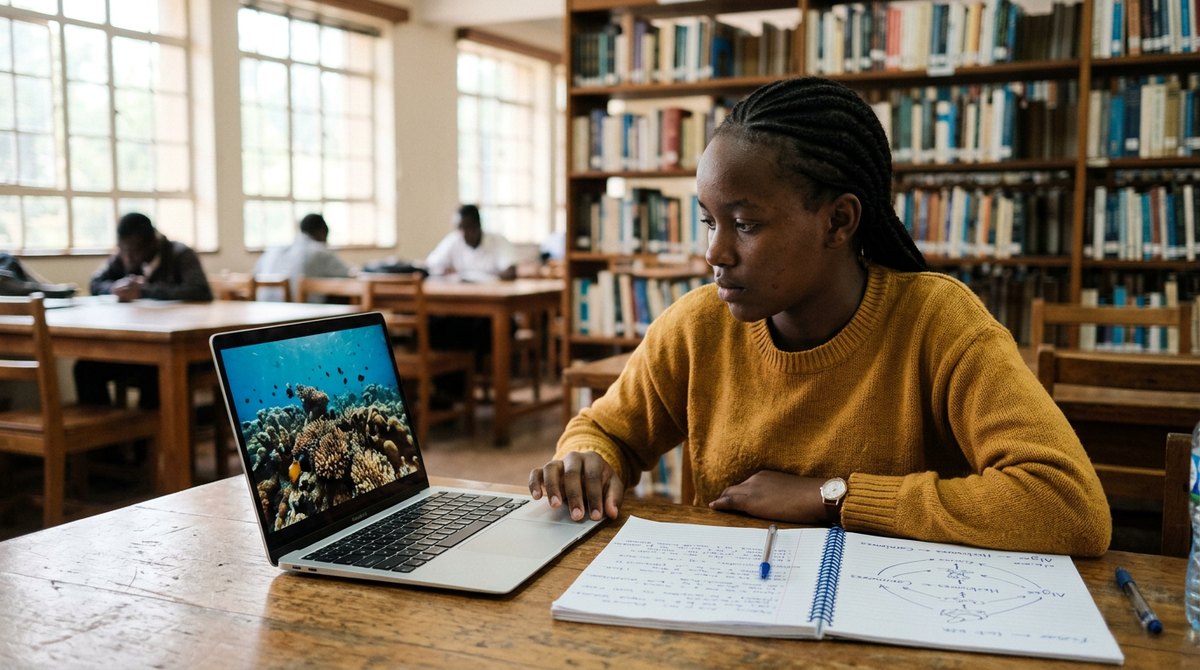
Learning online means you can take Marine Science wherever you live, even if no school near you teaches it.
Which GCSEs do you need for marine biology?
If you’d like to become a marine biologist, the subjects you take at 14 to 16 matter more than any one course name. There are no fixed marine biology GCSE requirements, but these help most:
- Biology (or Combined Science), the most important one for later
- Chemistry and Physics, for water, density and pressure
- Maths and English, which most sixth forms and universities ask for
- Geography, useful for coasts and fieldwork
- Marine Science, to show a real interest and get a head start
After your IGCSEs
There’s also an AS and A Level Marine Science (9693). The 0697 document says those with A* to C are well prepared for it. Universities usually want A level Biology, often with another science or maths. The University of St Andrews Marine Biology BSc, for example, asks for AAB at A level (its standard offer), including Biology and one of Chemistry, Maths or Physics.
According to Prospects, you’ll need a marine-focused course at university, such as marine biology or oceanography. Postgraduate study is common too.
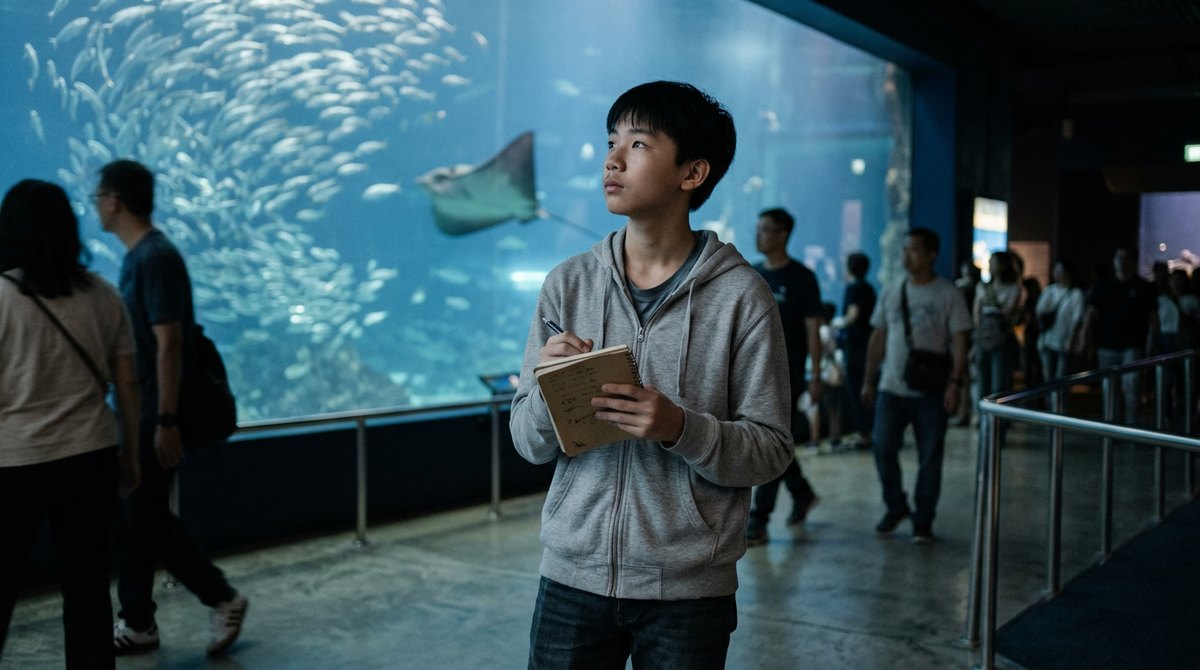
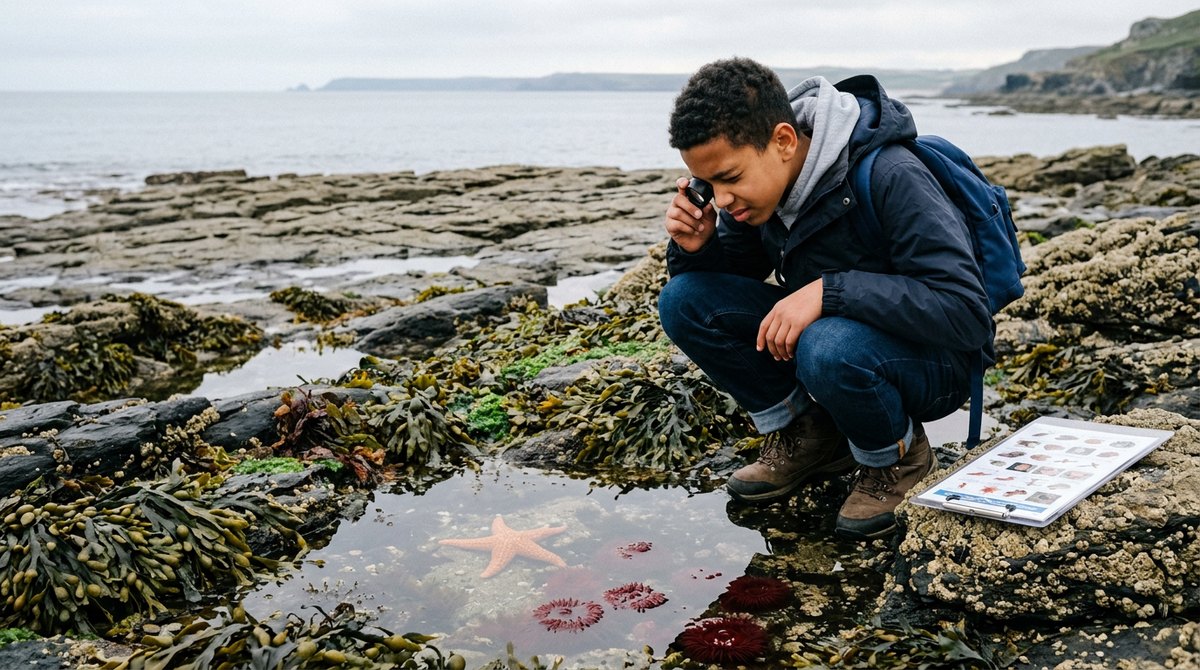
Aquarium visits, rock pooling and beach cleans are good ways to build your interest alongside the course.
How to prepare
Each IGCSE is designed to take about 130 guided learning hours. Most people spread that over two years, though you can go faster. A simple plan:
- Year 1, autumn: The Earth and its oceans
- Year 1, spring: Sea water, plus the pH and density practicals
- Year 1, summer: Marine organisms
- Year 2, autumn: Nutrients and energy, then marine ecology
- Year 2, spring: Human influences, then past papers and revision
Use the planner to see how many lessons a week you’d need for your exam date.
- Download the 0697 document for your exam year
- Pick your series (June or November)
- Find a centre that takes private candidates
- Get a scientific calculator, a ruler and graph paper
- Gather simple kit: universal indicator, test tubes, a measuring cylinder
- Set a weekly time you can stick to
Learning it with Brainy Lemons
Our IGCSE Marine Science online course follows 0697 in order, so it’s a straightforward way to take the marine biology GCSE alternative wherever you live. It includes:
- 260 short lessons, from The Earth and its oceans to conservation
- A quiz, a quiz show and a zombie defence game on every lesson
- 4,761 flash cards, from easy to exam-hard
- 11 3D games for the hardest topics, from tides to atolls
Shore Thing
Survey a rocky shore before the tide comes in: lay a transect, count with a quadrat, then turn your own data into a kite diagram of the zonation. It’s good practice for Paper 2’s fieldwork questions.
Play free →See what’s included in the Cambridge IGCSE Marine Science course, or start with lesson 1.
Marine biology GCSE FAQs
Can you do marine biology at GCSE?
Not with AQA, Pearson Edexcel or OCR. The closest match is the 0697 Marine Science IGCSE, at the same standard as a GCSE.
Is marine biology IGCSE the same as Marine Science?
Yes. People often call it that, but the official name is Marine Science, code 0697.
Can I take it as a home educated student?
Yes. Private candidates can enter. You book your papers through a school or approved centre that accepts private candidates.
How many papers are there?
Two: Paper 1 Theory and Data Handling and Paper 2 Theory and Practical Skills. Each is 1 hour 45 minutes, 80 marks and half of the total.
What GCSEs do I need to become a marine biologist?
Aim high in Biology (or Combined Science), Maths and English, plus other sciences. Marine Science and Geography help too.
Is there coursework?
No, practical work is tested in writing in Paper 2, so there’s no coursework or lab test.
Take the marine biology GCSE route, wherever you learn
Cover every topic in short lessons, from plate tectonics to coral reefs. Then practise what both papers test.
- 260 short lessons that follow the Cambridge 0697 syllabus
- A quiz, a quiz show and a zombie defence game on every lesson
- 4,761 flash cards, from easy to exam-hard
- 11 3D Marine Science games for the hardest topics
Works on any device.