 By the Brainy Lemons team
The IGCSE Environmental Management syllabus is Cambridge’s 0680 course for exams in 2027, 2028 and 2029. It has seven topics, from natural resources to human population, and two written papers of 1 hour 45 minutes and 80 marks each. There’s no coursework and no tiers, so everyone can aim for A* to G.
Choosing your options, or just starting the course? This guide walks you through every topic, how the two papers work, a real exam question and what changed for 2027.
Then there’s the real grade data, a study plan you can set to your own exam date, and how to learn it all online.
At a glance
- Board and code: Cambridge IGCSE Environmental Management 0680
- Exam years: this syllabus is for exams in 2027, 2028 and 2029
- Exam series: June and November (and March in India)
- Papers: Paper 1 and Paper 2, each 1 hour 45 minutes, 80 marks and 50% of the grade
- Tiers: none. Everyone sits the same papers and can get A* to G
- Coursework: none. Fieldwork skills are tested in the written exams
- Study time: about 130 guided learning hours
- Private candidates: allowed, through an exam centre
What is IGCSE Environmental Management?
It’s the study of how the Earth’s natural systems work, how people use them, and how we can manage them so they last. Think energy, farming, oceans and rivers, the air, wildlife, hazards and population. It’s a science subject, built on handling data, fieldwork and the scientific method.
But it also asks you to weigh up real choices, like whether a dam or a fracking site is worth it.
Almost every part of the syllabus ends with “Discuss the benefits and limitations of…”. You learn the science, then you judge the strategy.
You don’t need to have studied environmental management before, as the official 0680 syllabus for 2027-2029 only expects a broad lower secondary education.
The IGCSE Environmental Management syllabus: the seven topics
The syllabus is split into seven topics. Here’s the full list, with the smaller sections inside each one.
| Topic | Sub-topics |
|---|---|
| 1 Natural resources | Formation of rocks; extraction of rocks, ores and minerals; sustainable management of rocks, ores and minerals; energy resources; conservation and management of energy resources; fracking |
| 2 Land | Soils and crop growth; food production and crop yield; soil erosion |
| 3 Water | Water sources and supply; water pollution; water-related diseases; marine aquaculture; oil pollution; plastic pollution |
| 4 The atmosphere and human activities | The atmosphere; climate change; acid rain; ozone depletion |
| 5 Ecosystems, biodiversity and fieldwork | Ecosystems; forest ecosystems; managing biodiversity; fieldwork investigations |
| 6 Natural hazards | Earthquakes and volcanoes; tropical cyclones; flooding; drought |
| 7 Human population | Population density, distribution and structure; population size; managing population size |
1 Natural resources
You start with how granite and basalt (igneous), limestone, sandstone and shale (sedimentary), and marble and slate (metamorphic) form. Then you learn how we mine ores and minerals, even using plants (phytomining).
The energy part covers fossil fuels, renewables, nuclear power and newer ideas like green hydrogen and heat pumps. Fracking, getting gas or oil out of shale by hydraulic fracturing, now has its own section. Our lesson on fracking and its impacts shows how it works.
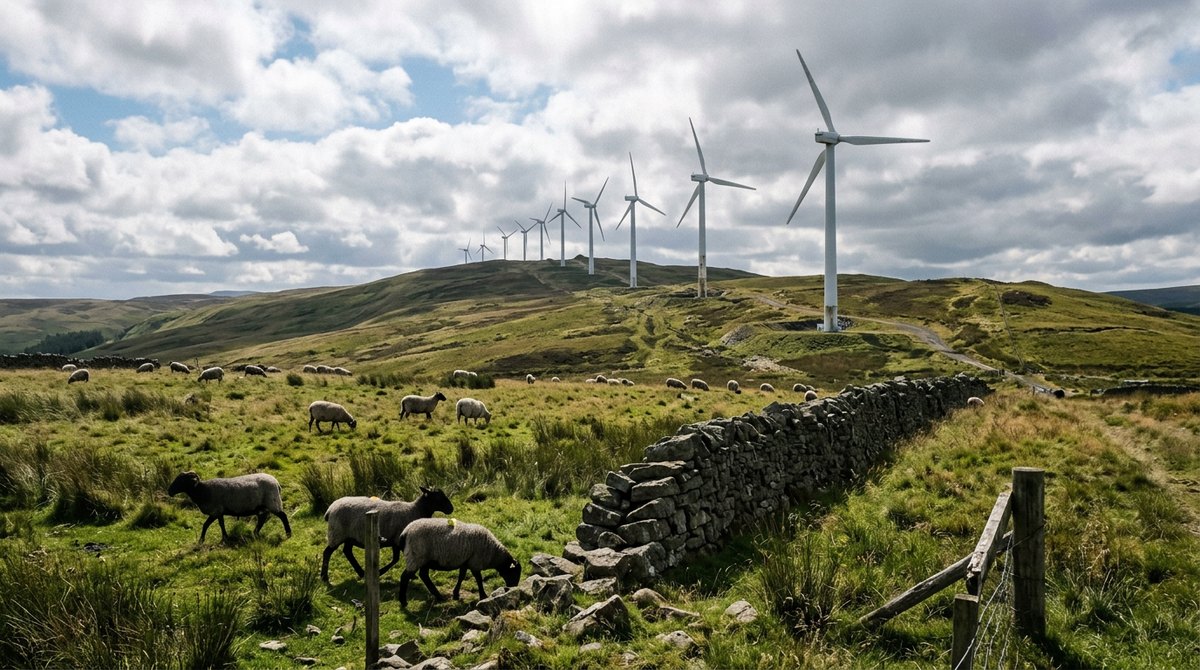
Wind power is one of the renewable energy resources you weigh up in Topic 1, alongside fossil fuels and nuclear power.
Rock Factory
Follow a chunk of mountain on its 90-million-year journey through weathering, erosion, deposition, compaction and cementation, and watch a sedimentary rock being made.
Play free →2 Land
This one covers agriculture and what crops need from the ground. You learn why loam is so good for growing food, starting with our lesson on mineral particles in soil. Then it’s ways to grow more food, from crop rotation to hydroponics, and what goes wrong when farming isn’t sustainable: salinisation, eutrophication and erosion.
3 Water
This is the biggest one. It covers the water cycle, safe drinking supplies, desalination, dams, pollution, malaria and cholera, fish farming, oil spills and plastic pollution.
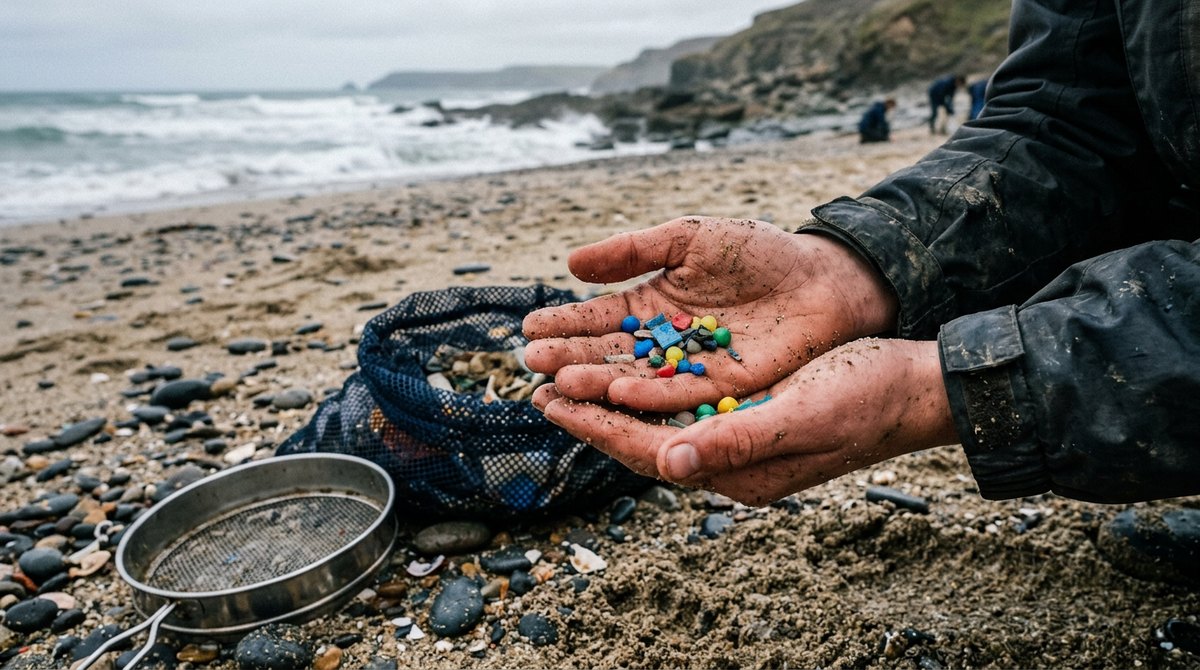
Plastic pollution, right down to tiny pieces like these, is new in Topic 3 for 2027.
Plastic pollution is brand new. You’ll need to tell conventional plastics, bioplastics and microplastics apart, which our lesson on conventional plastics and bioplastics explains.
4 The atmosphere and human activities
You study the layers of the atmosphere and the natural greenhouse effect. Then come climate change, acid rain and ozone depletion: the causes, the impacts and the strategies to manage each one, including how people adapt to a warmer world.
5 Ecosystems, biodiversity and fieldwork
This is the most science-heavy part. It covers food chains, ecological pyramids, photosynthesis, respiration and the carbon cycle. Our lesson on what makes up an ecosystem is a good taster.
It also covers deforestation and conservation. And it’s where you learn the fieldwork you need for the exam, which we’ll come back to.
6 Natural hazards
Earthquakes, volcanoes, tropical cyclones, flooding and drought. You learn where and why they happen, their impacts, and how to manage them before, during and after. It begins with the structure of the Earth.
7 Human population
The last topic looks at where people live, population pyramids, why populations grow or shrink, and policies to manage their size. You’ll compare low-income and high-income countries using the World Bank’s income groups.
Seven topics, 281 short lessons, all in one place. Start with lesson 1 for free.
Try 3 lessons free →How the IGCSE Environmental Management exam works
Everyone takes two written papers and answers every question.
| Paper | Time | Marks | % of grade | Question types |
|---|---|---|---|---|
| Paper 1: Principles of Environmental Management | 1 hour 45 minutes | 80 | 50% | Short-answer and structured questions, plus extended response questions based on source material |
| Paper 2: Environmental Management in Context | 1 hour 45 minutes | 80 | 50% | Short-answer, data processing and analysis, and extended response questions based on source material, including fieldwork |
Source material means graphs, maps, tables and photos you’ve never seen before. You use them along with what you know.
The marks are split between three skills:
- Knowledge with understanding: 43%
- Handling information and problem-solving: 30%
- Investigation skills and making judgements: 27%
That last skill is 40% of the second paper but only 15% of the first. So the second paper is where fieldwork really counts, and where careful reading of data pays off most. Either paper can test any part of the syllabus.
A real question from the specimen paper
Here’s how one question on the 2027 specimen Paper 1 builds up. It’s about desalination, turning sea water into drinking water:
- Define potable water. [1 mark]
- Describe the process of distillation. [3 marks]
- Name one other type of desalination. [1 mark]
- Discuss the benefits and limitations of desalination. [6 marks]
It climbs from a one-line definition to a 6-mark discussion.
The mark scheme gives at most 5 marks for benefits or for limitations, so you must cover both sides to get all 6. Our lesson on desalination plants covers exactly this.
Command words
The first word of each question tells you what to do. “Describe” and “Explain” sound alike but aren’t. Here are six you’ll meet a lot, with the meanings from the official list.
| Command word | What it means |
|---|---|
| Define | Give the precise meaning. |
| Describe | State the points of a topic, or give its characteristics and main features. |
| Explain | Set out purposes or reasons. Say why and/or how, and support it with relevant evidence. |
| Discuss | Write about the issue or topic in depth, in a structured way. |
| Suggest | Apply what you know to a situation where there’s more than one valid answer, and put forward ideas. |
| Calculate | Work out from given facts, figures or information. |
What changed in the IGCSE Environmental Management syllabus for 2027
The syllabus was reviewed for first exams in 2027. If you’re using older notes or a past paper from before then, check it against this list:
- The topics were renamed and reorganised into seven.
- Added: sustainable management of rocks, ores and minerals, fracking, plastic pollution and fieldwork investigations. Climate change got its own sub-topic heading.
- Removed: oceans as a resource, world fisheries, ecosystems under threat, and selective breeding.
- Recommended case study examples were taken out. Your teacher, or your course, picks detailed examples instead.
- Paper 1 used to be called Theory. Paper 2 used to be Management in context, and it no longer uses a single-country context.
- Practical method-based questions now only appear on the second paper.
- A list of command words replaces the old glossary.
Fieldwork, without the coursework
There’s no coursework in 0680, which is good news if you’re studying at home or online. Fieldwork still matters, though, because the exam asks about it. You need to plan an investigation, write a hypothesis, choose between random and systematic sampling, spot anomalies and suggest improvements.
You should also know the kit:
- quadrats and transects for plants
- pitfall traps, pooters and sweep nets for small animals
- light, moisture and pH meters for conditions
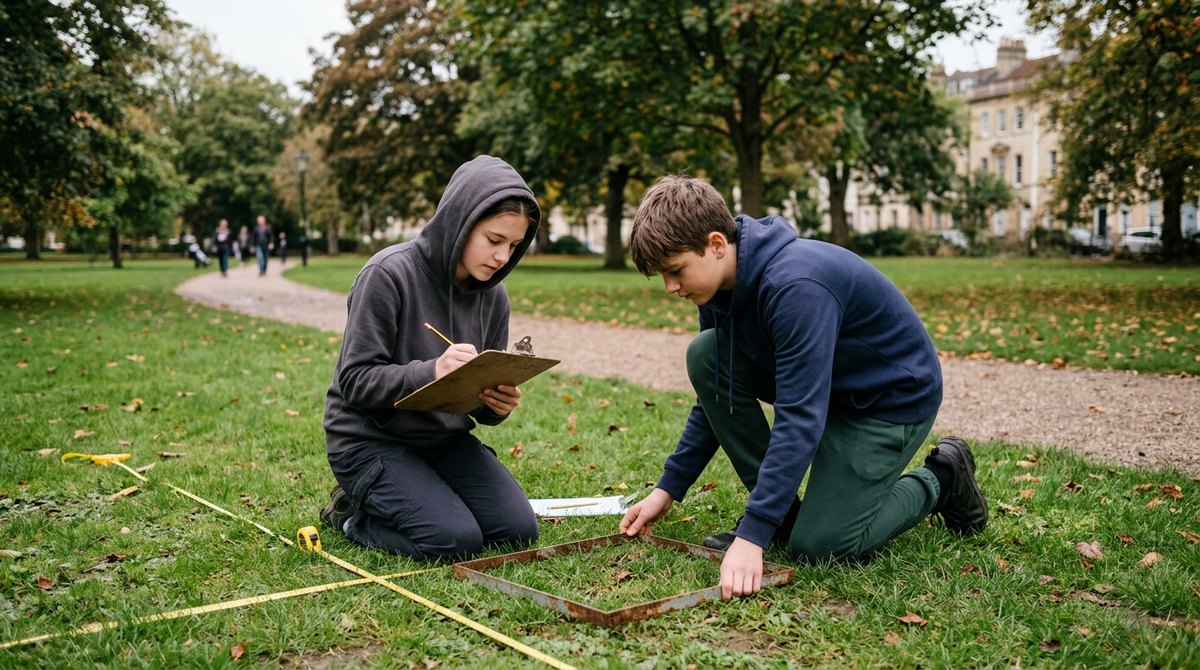
You don’t need a big field trip to practise: a quadrat and a tape measure in a local park teach the same sampling skills.
The syllabus expects you to use this kit during the course. Learn the methods, then try them in a park or garden. Start with our lesson on the scientific method in fieldwork.
Is IGCSE Environmental Management hard?
It’s a big course, but most of it is easy to picture because it’s about the real world. The tricky parts are the 6-mark “discuss” answers and the maths. The maths is light, and you can use a calculator in both papers, but you can’t skip it: percentages, percentage change, means, standard form, population pyramids and graphs all come up.
What grades do students get?
Want to know how students actually do? Here are the real June 2025 results, straight from the exam board.
About three in four candidates got a C or better, and roughly one in six got an A*. That’s close to IGCSE Biology (75.2% C or above) and a bit higher than Geography (71.9%), so it’s very passable with steady work.
How it compares with Geography and Biology
It overlaps with both. Hazards and population will feel familiar from the first, food chains and photosynthesis from the second.
The difference is the focus. Environmental Management IGCSE keeps asking how we manage a problem and whether the strategy works. Taking both? Our guide to the IGCSE Geography syllabus 2027 shows where the two cross over.
Who it suits, and what it leads to
It suits you if you care about the planet and like a subject that mixes science with real decisions.
The syllabus says students with A* to C are well prepared for courses like Cambridge International AS Level Environmental Management. UK ENIC, the UK agency that compares qualifications, found Cambridge IGCSE comparable to the standard of a UK GCSE. So it counts just like your other GCSE-level subjects.
How to prepare: a two-year revision plan
IGCSE courses are planned around 130 guided learning hours. Over two school years, a steady plan looks like this:
- Term 1: Topic 1 Natural resources
- Term 2: Topic 2, then start Topic 3
- Term 3: finish Topic 3, then Topic 4
- Term 4: Topic 5, with some real sampling outside
- Term 5: Topic 6 Natural hazards and Topic 7 Human population
- Term 6: revision, specimen papers and a timed past paper every week, marked with the mark scheme
Each week, learn something new, quiz yourself on last week and practise one exam question from a past paper. That little bit of revision as you go adds up, and it means Term 6 is for polishing, not panicking.
For every strategy you meet, write one benefit and one limitation.
Want a plan set to your own start date? Pick your exam series below and see how many lessons and hours a week you’d need.
- Download the 2027-2029 syllabus (not an older version) from the official 0680 page
- Save the specimen papers and mark schemes for 2027 to practise with later
- A calculator you’re allowed in the exam, plus a ruler and a pencil for graphs
- A notebook page for each topic with a “benefits and limitations” column
- A local park, garden or green space where you can try sampling
- If you’re studying at home: an exam centre that accepts private candidates for 0680
- A weekly study slot that you’ll keep, even in busy weeks
Studying IGCSE Environmental Management online with Brainy Lemons
Our Cambridge IGCSE Environmental Management online course follows the 0680 syllabus for exams in 2027-2029, topic by topic, in 281 short lessons of about 30 minutes each.
- A quiz after every lesson, with the right answer shown the moment you get one wrong
- Who Wants to Be a Lemonaire? and the Last Stand zombie game on every lesson
- 5,631 flash cards, from easy to exam-hard
- Two 3D Environmental Management games, including Rock Factory
- A study timetable with one-year or two-year plans, built around your finish date
- A progress dashboard that shows weak topics, handy for parents too
It works on a phone, tablet or laptop and fits around school or home education. Start with lesson 1 free, then see the full IGCSE Environmental Management course. New to the site? Our quick start guide shows how it all works.
IGCSE Environmental Management syllabus FAQs
Is there a GCSE in Environmental Management?
If you’ve searched for an environmental management GCSE, the qualification you’ll find is this IGCSE (0680). UK ENIC found the IGCSE comparable to the standard of a UK GCSE.
Where can I download the official syllabus?
It’s free on the IGCSE Environmental Management 0680 page, along with specimen papers. Make sure you pick the version for your exam year.
I’m sitting the exam in 2026. Which syllabus do I use?
Use the 2025-2026 syllabus. Its papers are called Theory and Management in context, and the topics are arranged differently. The 2027-2029 syllabus in this guide starts with the 2027 exams.
Can I study IGCSE Environmental Management online or at home?
Yes. There’s no coursework, so you can learn it all online and sit both papers at an exam centre. Private candidates can enter for this syllabus.
Do I need a tutor?
Not necessarily: many students do well with a structured course, a study plan and plenty of past paper practice. Our online course gives you all three, and you can try the first 3 lessons free.
What’s the difference between IGCSE 0680 and O Level 5014?
O Level Environmental Management (5014) is a separate qualification. O Level and IGCSE are at the same level, but you can’t take the O Level and IGCSE 0680 in the same exam series. Each O Level past paper is separate from the IGCSE ones, so check which qualification your exam centre offers before you enter.
Are there past papers for the new syllabus?
Specimen papers and mark schemes for 2027 are already out. Older past papers are still useful revision for topics that didn’t change, but check each past paper question against the 2027 syllabus.
Learn every topic in the 0680 syllabus, one short lesson at a time
From rocks to population pyramids, every lesson follows the syllabus for exams in 2027-2029, with a quiz and games to make it stick.
- 281 short lessons that follow the Cambridge 0680 syllabus
- A quiz, a quiz show and a zombie defence game on every lesson
- 5,631 flash cards, from easy to exam-hard
- 2 3D Environmental Management games for the hardest topics
No card needed. Works on any device.