 By the Brainy Lemons team
The best online GCSE courses for home education follow one exam board’s specification exactly, teach every topic, check your learning as you go and show the full cost up front. The course is only half of it, though. You’ll still book your GCSE or IGCSE exams yourself, as a private candidate at an exam centre.
If you’re home educated and starting your GCSEs, there are lots of ways to study each GCSE subject online. Some providers are live online schools with timetabled classes. Others offer courses you work through when it suits you. Both can work well.
We’ll walk you through the main kinds of online learning, the checks that matter before you pay and the questions to ask. Then we’ll show you how our own courses work. That way, you and your child can compare them fairly.
At a glance
- Who it’s for: home educated students aged 14 to 16 taking GCSEs or IGCSEs
- Course and exam: separate. You buy the course, then book exams yourself as a private candidate
- Study time: about 120 to 130 guided learning hours per subject
- Popular route: exam-only IGCSEs, with no coursework to supervise
- June 2027 entry deadlines: 21 February 2027 for AQA and Pearson GCSEs, 21 March 2027 for Pearson International GCSEs (centres often set earlier dates)
- Try first: look for free lessons before you pay
Why more families are learning online
Home education in England has grown quickly. The Department for Education’s latest count found 126,000 children being home educated on census day in autumn 2025, up from 80,900 three years earlier.
That’s a lot of teenagers reaching Year 10 without a school to teach their GCSEs. Most parents can’t teach biology, geography and business to exam level on their own. That’s fine. A good course does the teaching, so you can support your child rather than become a subject expert.
The DfE also found that mental health was the most common reason families gave in autumn 2025 (16%). So a flexible way of learning that lets your child work calmly at home, in their own time, can matter just as much as the content.
The three kinds of online GCSE course
Most providers fall into one of three groups. They work in very different ways, so it helps to know which one you’re looking at.
| Type of course | How you learn | Feedback | Who it suits |
|---|---|---|---|
| Self-paced online course | Lessons, quizzes and tools you open any time | Instant quiz marking, progress tracking | Students who like to set their own pace and families on a budget |
| Distance learning with a tutor | Course notes plus assignments you send in | A tutor marks written work, often by email | Students who want tutor support and written answers marked by a person |
| Live online school | Live lessons with a teacher, often recorded | Teachers set and mark work | Families who want a full school day, classmates and lots of support |
Learning at your own pace
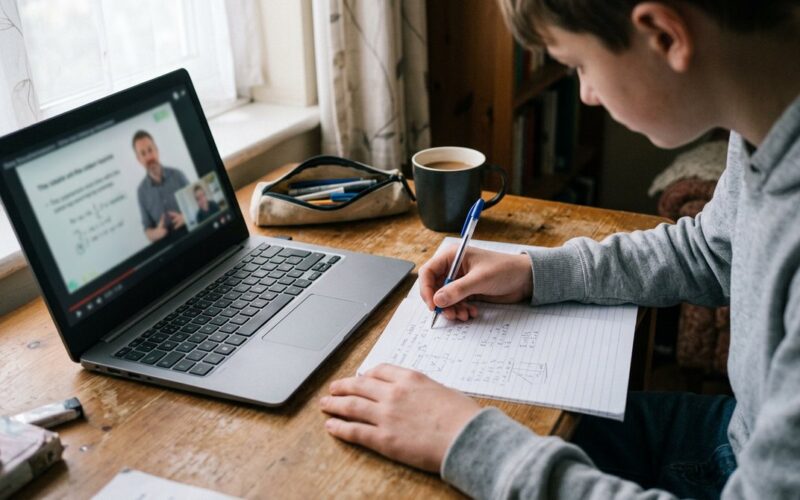
You work through short lessons on a phone, tablet or laptop. Quizzes are marked straight away and the course remembers where you got to. This is usually the cheapest choice and the most flexible, which suits home education well. The trade-off is that there’s no teacher to ask, so the lessons need to be very clear.
Distance learning with a tutor
Here you study from course resources and send assignments to a tutor for marking. Tutor support is a good fit if you want someone to read your longer answers. Check how many assignments are included and how quickly the feedback comes back, as it varies a lot between providers.
Live online schools
Live schools run a set programme of live lessons, much like a school day on screen. Students get teachers, classmates and a shared experience of learning. Fees are often charged by the term, though. You’ll also need to be free at set times.
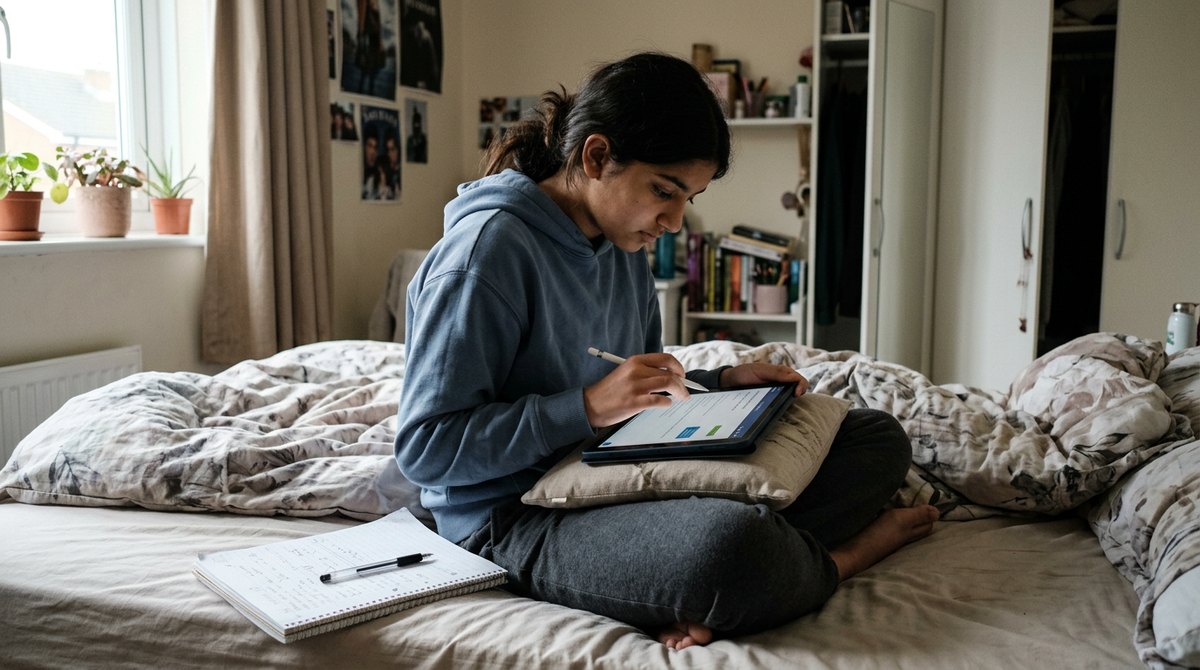
A short lesson and a quiz before lunch leaves the afternoon free for the rest of home education.
How to choose an online GCSE course for home education
Whichever type you lean towards, run each one through the same checks. These are the ones that save families money and stress later on.
Match the exam board and specification code
Every GCSE and IGCSE belongs to one exam board, such as AQA, Pearson Edexcel or Cambridge. Each has a specification, the official list of everything you can be tested on. It comes with its own code, like 8461 for AQA GCSE Biology.
A good course names the board and the code on its page, so if it just says “GCSE Biology”, ask which one. Learning the wrong board’s course means studying topics that won’t come up and missing ones that will.
Check it teaches every topic
Some providers only cover the “big” topics or only help with revision. Look for one built lesson by lesson from the specification, so all the knowledge and skills in it are taught. A list of lessons or a free preview makes this easy to check.
Want to see a course built from the spec? Every Brainy Lemons course follows one board’s specification lesson by lesson. The first three lessons are free.
Find your course →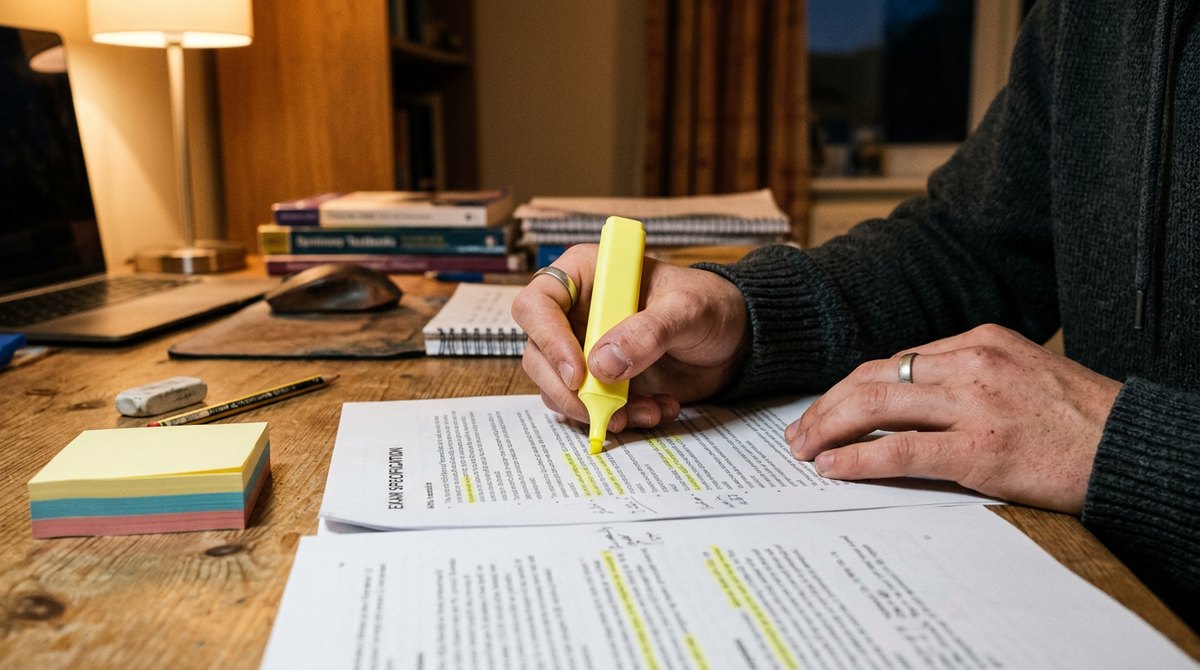
The specification is the list examiners write from, so a course that follows it closely won’t miss anything.
See how it checks your learning
Reading a page isn’t the same as remembering it. Look for quizzes after each topic, feedback that explains wrong answers and some way of coming back to old material.
Testing yourself often is one of the best ways to make learning stick. For essay subjects, ask whether tutor support is included for marking longer written answers. If not, you can still add a few sessions with a tutor before the GCSE exams, just for the papers that need it.
Check it works for private candidates
As a home educated student you’ll sit your exams as a private candidate, which means you enter through an exam centre rather than a school of your own. Most written papers are fine, but some GCSE subjects have parts a centre has to run for you.
- Sciences: AQA says the entering centre must give private candidates the chance to carry out all the required practicals.
- Geography: AQA GCSE Geography needs two fieldwork trips outside school grounds. The centre also has to sign a fieldwork declaration.
- English Language: the GCSE has a spoken language part that the centre must give you the chance to complete.
- Practical subjects: AQA says not every qualification is open to private candidates, especially practical ones such as Art and Design.
This is why so many families choose IGCSEs. Most are assessed by written exams only, so there’s nothing extra for a centre to supervise. You can read AQA’s own rules on its private candidates page.
Think about the support your child needs
Every teenager is different. Some love working alone and need little more than a plan. Others need a parent nearby, or a teacher’s voice, to keep going.
Think honestly about your child’s study skills and past experience of learning on their own. Students new to independent study do best with clear structure and lots of short checks, building up from there. As a parent, your support matters more than your subject knowledge. You don’t need to know the answers, just ask what they learned today.
Look at the structure and your week
Home education doesn’t have to follow the national curriculum (the one schools in England use), which gives you a flexible curriculum built around your child. GCSEs still need steady work over about two years, though. A built-in planner helps you spread the work out, so you’re not cramming in May. As a parent you’ll want to see progress too, without checking every page yourself.
Count the full cost
Prices are easy to compare online. The exam fees are the part families often forget. Add up the full cost for each subject before you decide:
- the course itself, paid in full or monthly
- the exam entry fee, paid to the exam centre
- any admin charge the centre adds on top
- tutor sessions, if your child needs extra help with one paper
Centre fees change from one centre to the next, so ask two or three for a quote.
Check how long access lasts too. If it runs out before your exams, you could be left without revision resources when you need them most. Our breakdown of how much GCSEs cost for home educated students lists real exam fees for 2027.
Try it before you pay
The best test is a lesson or two. Free lessons show you how clear the teaching is, how long each one takes and whether the quizzes actually help. If a provider won’t let you try anything first, that’s worth noting.
GCSE or IGCSE?
Both qualifications sit at the same level and are widely accepted by colleges and universities. GCSEs are graded 9 to 1. IGCSEs are graded either 9 to 1 or A* to G, depending on the syllabus. For home education, the big difference is assessment. Many GCSEs include practicals, fieldwork or speaking tests that need a centre’s help. Most IGCSE subjects are exam only.
You don’t have to pick one for everything. Plenty of students take a mix, choosing the version that’s easiest to sit as a private candidate in each subject. Our IGCSE vs GCSE comparison goes through the differences in more detail.
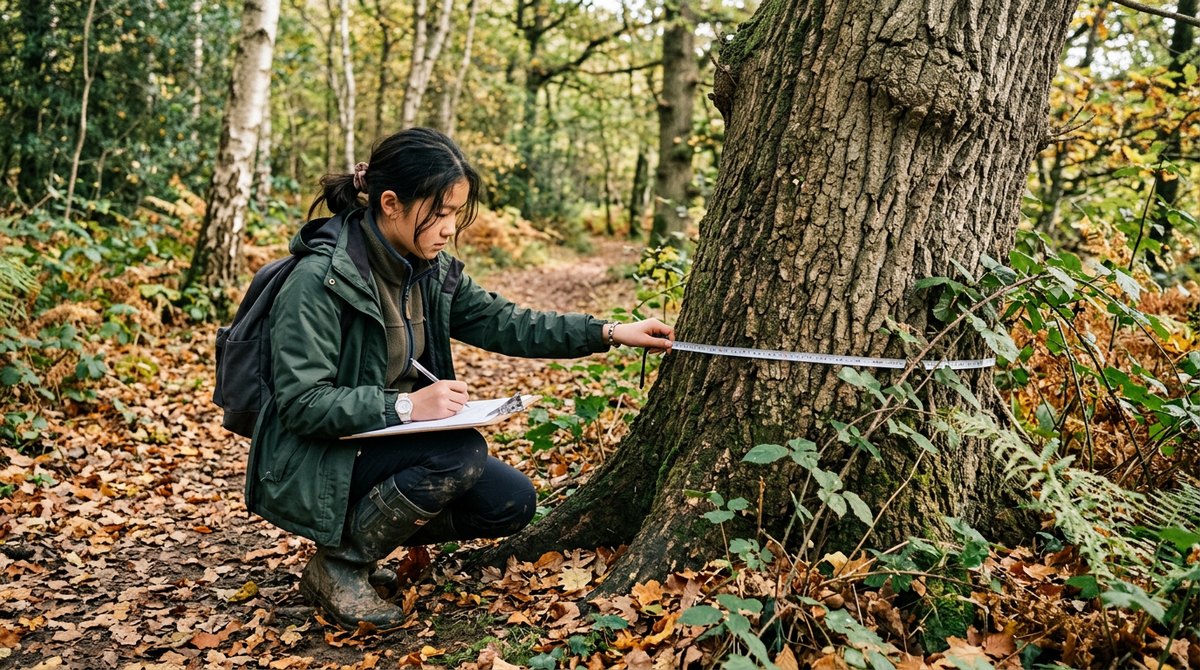
Some GCSEs need fieldwork or practicals run through an exam centre, so check before you choose a course.
Questions to ask before you pay
Before you sign up for anything, it helps to have the answers to these. Tick them off as you go.
- The course names the exam board and specification code
- It teaches every part of the specification, not just revision
- There’s a quiz or check after each lesson
- I know who marks longer written answers, if anyone
- I’ve checked the subject has no practicals, fieldwork or speaking test I can’t arrange
- Access lasts until after my exams
- I know the total cost, including exam centre fees
- I’ve tried a free lesson
Watch out for a few warning signs as well. A “guaranteed pass” can’t be promised, because the exam board marks the papers, not the course. And no provider awards your GCSE. The qualification always comes from the exam board, so an “accredited” label tells you less than the board’s code does.
How many subjects and how much time?
There’s no rule on how many GCSEs a home educated student should take. Some take fewer than a school would enter them for, which is fine. What matters is doing each one well.
Which GCSE subjects to start with
A simple order helps when you’re building a plan with your child:
- English and maths first. Sixth forms and colleges usually look for both at grade 4 or above.
- Subjects needed for A levels. If your child has A levels in mind, check what each sixth form or college asks for in those subjects.
- Subjects they enjoy. Interest keeps a teenager working through the winter months, so leave room for one or two favourites.
Thinking further ahead? If university is the long-term goal, GCSE results count there too, especially English and maths. A strong core is worth more than a long list of subjects.
How much time each week
Each GCSE is designed around a set number of guided learning hours (teaching time). Ofqual lists AQA GCSE Psychology at 120 hours. Cambridge designs its IGCSEs around about 130. Over two years, that’s roughly one to two hours a week per subject, plus revision.
So five subjects might mean a lesson most weekdays for each, or a couple of longer sessions. You can start any time of year. If you’re aiming for the summer 2027 exams, starting now gives you plenty of time to finish and revise.
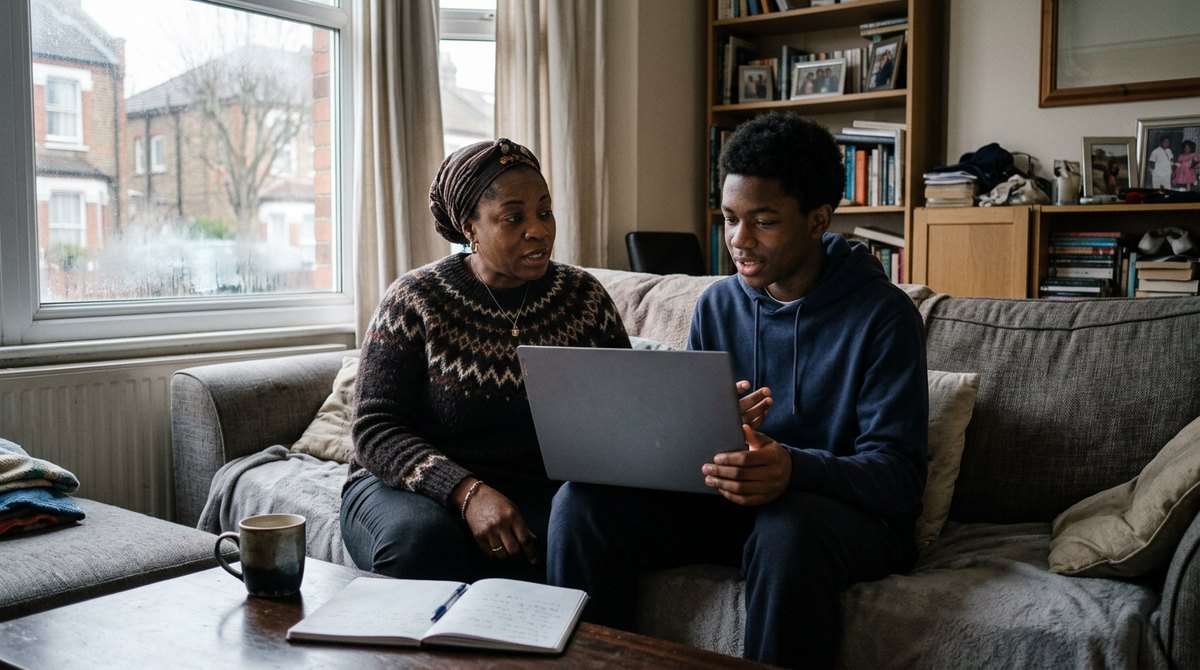
Choosing together works best, with your child trying the free lessons while you check the exam board and the cost.
Online GCSE courses with Brainy Lemons
Our online GCSE courses for home education are self-paced and built for students working at home. Each one follows a single exam board’s specification, from the first topic to the last, across AQA GCSE, Cambridge IGCSE and Pearson Edexcel IGCSE subjects.
What you get
- Short lessons: about 30 minutes each, with clear explanations, diagrams and key words picked out
- A quiz after every lesson: get one wrong and the right answer appears with the reason
- Games on every lesson: the Lemonaire quiz show and the Last Stand zombie defence game use the same questions
- Flash cards: Daily Recap brings each card back just before you’d forget it
- A timetable to exam day: pick your finish date and the lessons are planned week by week
- Progress for parents: quiz scores and lessons done are saved, so you can see what needs another look
You can see the whole method on our how it works page. You can also try the flash cards to see how Daily Recap works.
Price and what isn’t included
A whole course costs £84, or £10 a month for 12 months. Two subjects are £154 and three are £210, as our pricing page shows. The price doesn’t include exams, which you book separately with a centre that takes private candidates. Our page on sitting exams as a private candidate explains how.
We don’t include tutor support either. If you’d like essays marked by a person, add a few tutor sessions near the exams. That keeps the cost low for the bulk of the learning.
Where to start
The first three lessons of every course are free, with their quizzes and games. Try the opening of Edexcel IGCSE Biology, Cambridge IGCSE Geography or Edexcel IGCSE Business. If social sciences appeal, start with AQA GCSE Psychology or AQA GCSE Sociology. And for something different, the first IGCSE Marine Science lesson is a good place to begin.
Each subject has its own page with the full lesson count. Have a look at IGCSE Biology online, IGCSE Geography online, IGCSE Business online, GCSE Psychology online, GCSE Sociology online and IGCSE Marine Science online.
Not sure which subject to start with? Browse all our GCSE and IGCSE courses for home educated students and try a free lesson in each.
For a wider look at studying at home, read how home educated students do GCSEs, step by step, or our general guide to what to look for before you choose a course.
Online GCSE courses for home education: FAQs
Can my child do GCSEs online?
Yes, your child can study the whole course online, at home. The exams themselves are taken in person at an exam centre, where your child sits them as a private candidate.
Do online GCSE courses include the exam?
Most don’t. The course teaches the subject and the exam is booked separately, with a centre near you. Some providers help you book, but you’ll usually still pay the centre’s fee.
How do I find an exam centre?
JCQ, the body that represents the exam boards, has a search tool for centres that accept private candidates. Call a few early, because each one sets its own deadlines and fees.
Are online GCSEs the same as school GCSEs?
Yes, they’re the same. The qualification comes from the exam board, so the certificate is the same whether you studied in a classroom or at home. Colleges and universities treat them the same way.
Is an IGCSE better than a GCSE for home education?
Not better, but often easier to sit. Most IGCSEs are written exams only, with no practicals, fieldwork or speaking tests for a centre to run, which is why many home educating families choose them.
How many GCSEs should a home educated student take?
There’s no set number. Start with English and maths, which colleges usually ask for, then add subjects you enjoy or need for the A levels you’re planning. Choose what you can study well alongside everything else you do.
When should we start a GCSE course?
Most courses are designed for two years, so Year 10 is a common start. You can begin at any time, though. Just leave enough weeks before the exams to finish the lessons and revise.
Ready to look at courses? You can search JCQ’s list of exam centres near you while you try our free lessons.
Online GCSE and IGCSE courses made for home education
Short lessons that follow one exam board’s specification, with a quiz, games and a timetable to exam day, all at home and at your own pace.
- Short lessons written for one exam board and one specification
- A quiz, a quiz show and a zombie defence game on every lesson
- Study on any device: phone, tablet or laptop
The first 3 lessons of every course are free. No card needed.