 By the Brainy Lemons team
An AQA private candidate is a student who sits AQA exams at an approved school, college or exam centre without being enrolled there. You book and pay for your own entries, usually by 21 February for the summer series. Most AQA GCSEs are open to you, but only in the UK.
If you’re home educated, studying with a tutor or learning online, this is how you get real GCSE exams and grades on your certificate. You sit exactly the same papers as students at school.
We’ll go through which AQA GCSEs you can take, what each one needs from your exam centre, what it costs for summer 2027 and how to book.
At a glance
- Who: anyone entered by a school or college they don’t attend, such as home educated students
- Where: an approved school, college or exam centre in the UK (not abroad)
- Main series: May and June, with results in August
- Summer 2027 deadline: AQA must have your entry by 21 February 2027
- Entry fee: £48.15 to £56.50 for most of the single GCSEs in this guide, plus the centre’s own charges
- Hardest to book: sciences, Geography, English Language and languages, as the centre has extra work to do
What is an AQA private candidate?
The exam board’s own definition is simple. A private candidate is someone who is entered for exams through an approved school or college but isn’t a student there. You might be home educated, self-taught or learning with a tutor or a distance learning course. You can read the rules for yourself on AQA’s private candidates pages.
The big difference from school is who does the admin. At school the exams officer books everything. As a private candidate you find somewhere to sit, hand over your details and pay the fees yourself. Once you’re entered, they look after you just like their own students.
A few rules are worth knowing early.
- You can only sit AQA exams privately in the UK, never overseas.
- You can’t be an internal and a private candidate at the same place in the same exam series.
- It’s up to each school or college whether it takes you. AQA can’t make one accept your entry.
- Not every qualification is open to private candidates, so check yours before you start the course.
That third point matters most. AQA says that in most cases a centre will only accept you for subjects it already enters its own students for. So a college that teaches AQA Psychology is a much better bet for it than one that uses another exam board.
Is it the same with other exam boards?
Mostly, yes, because Pearson Edexcel and OCR follow the same JCQ rules, though each keeps its own list of subjects and conditions. The same process also covers AS and A-level exams if you go on to take them later. If you live abroad, an international GCSE (IGCSE) from Pearson Edexcel or Cambridge is usually the way in, as those boards let you sit exams at centres overseas.
Which AQA GCSEs can private candidates take?
The board publishes a list of the GCSEs open to private candidates, with any special conditions next to each one. Those conditions decide how easy a subject is to book and they fall into three groups.
Written exams only: the easiest to book
These have no practical tasks, no fieldwork and no speaking test. You simply turn up and sit the papers, so almost anywhere that teaches the subject can take you.
- Psychology (8182) and Sociology (8192)
- Mathematics (8300) and Statistics (8382)
- English Literature (8702), where the exams officer gives you a copy of the poetry anthology
- History (8145), Religious Studies A and B (8062, 8063) and the short course (8061)
- Business (8132), Economics (8136) and Computer Science (8525)
Subjects with practicals or non-exam assessment
These are all open to you, but the school or college has to do more than book you a desk. Some of this work is non-exam assessment (NEA), which they must supervise and sign off. That’s why fewer places offer these subjects and why they often cost more.
- Biology, Chemistry, Physics and Combined Science: you must be able to carry out every required practical in the specification. You’re then tested on them in the written papers. Our lessons on looking at cells under a microscope and food tests show the kind of task you’d do.
- Geography: they must send AQA a fieldwork declaration. Your fieldwork has to happen outside school grounds on two separate occasions. Then a teacher either supervises it or questions you about your evidence.
- English Language: they must give you the chance to do the spoken language endorsement, a short presentation that’s graded on its own and doesn’t change your 9 to 1 grade. If you’re doing a resit and already have this result from June 2017 or later with any board, you can carry it forward.
- Languages such as French, Spanish and German: they run and authenticate your speaking test as NEA. The list still shows the older language codes, so check the new ones with your centre.
- Music and Dance: they supervise and assess your performance or composition NEA.
- Citizenship Studies: the head signs a statement saying you’ve completed your investigation.
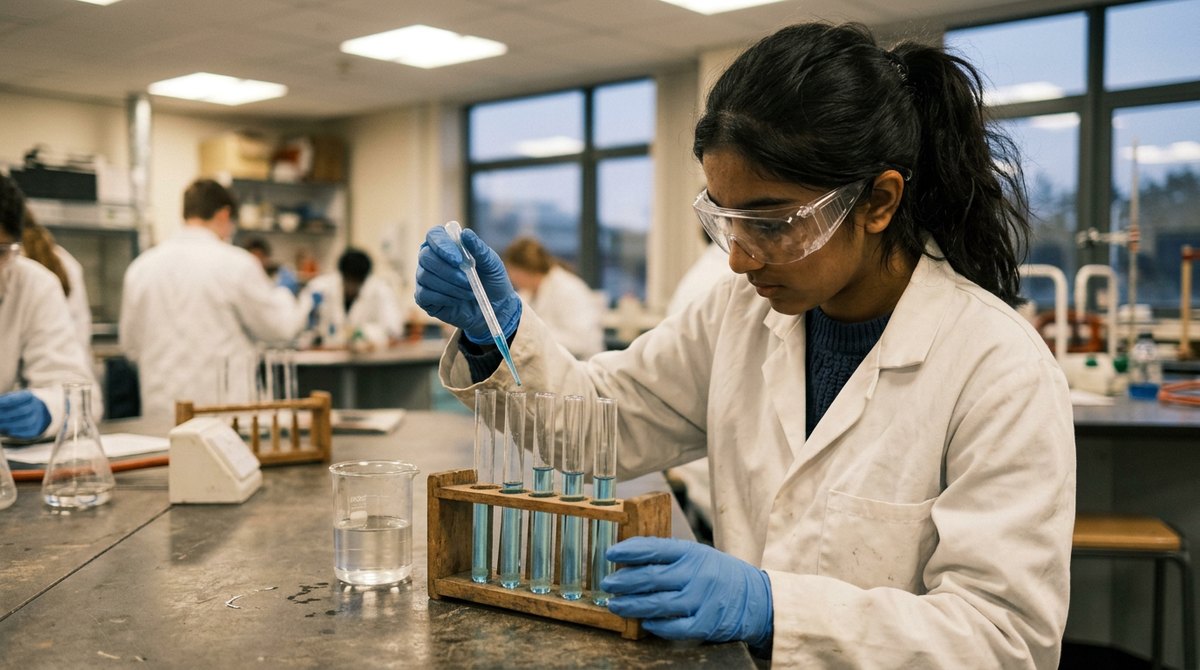
Science GCSEs need somewhere that can run every required practical with you, like this food test at an evening college session.
Which AQA GCSEs aren’t on the list?
Some subjects don’t appear on the private candidate list at all. They include Art and Design, Design and Technology, Drama, Food Preparation and Nutrition, Physical Education and Media Studies. These lean heavily on coursework that a teacher marks over many months. If you’re keen on one of them, ask a college directly or look at another exam board.
| AQA GCSE | Code | What the centre must do for you | How easy to book |
|---|---|---|---|
| Psychology | 8182 | Nothing extra | Easy |
| Sociology | 8192 | Nothing extra | Easy |
| Mathematics | 8300 | Nothing extra | Easy |
| English Literature | 8702 | Give you the anthology | Easy |
| English Language | 8700 | Run the spoken language endorsement | Usually fine |
| Geography | 8035 | Sign a fieldwork declaration | Harder |
| Biology | 8461 | Run all the required practicals | Harder |
| Chemistry | 8462 | Run all the required practicals | Harder |
Looking for an AQA GCSE that’s easy to sit privately? Try the first lessons of our AQA GCSE Psychology online course free.
What AQA GCSEs cost in 2027
Every entry has two parts. The exam board charges an entry fee for each qualification, then the school or college adds its own charge for the room, the invigilators and the admin. You pay at the time you make your entry.
So the board’s part is around £50 a subject. The centre’s charge is usually the bigger number, especially for sciences where someone has to staff a lab. Our guide to finding a private GCSE exam centre shows what real centres charge on top.
Booking late costs far more, with a late fee of 100% of the entry fee from 22 February 2027 and a very late fee of 150% after 21 April. Neither is refunded and many colleges set their own cut-off weeks earlier.
How to enter as an AQA private candidate
Here’s the whole process for the summer 2027 GCSE exams. Most families start in the autumn, which gives plenty of time to find a place before the rush. It also leaves room to try a second centre if the first one says no.
- Pick your subjects and the exact codes. Check each one is on the list and note any conditions. Sciences have separate Foundation and Higher codes, so decide your tier first.
- Find a centre. Start with the JCQ search, then ring local schools and colleges. A place that isn’t listed may still take you.
- Ask what they can do. Practicals, fieldwork sign-off and speaking tests need checking before you pay.
- Make your entry. Hand over your contact details, your name and date of birth, your ID, the entry codes and your UCI or ULN if you’ve sat exams before.
- Pay the fees. If you don’t pay, they may not let you sit the exams.
- Check your statement of entry. This confirms your candidate number, your details and every paper’s date, session and length. Report any mistake straight away.
The JCQ private candidates page is the best place to begin step 2. For more detail on the booking itself, our step-by-step guide on how to book a GCSE exam privately takes you through the calls and forms.
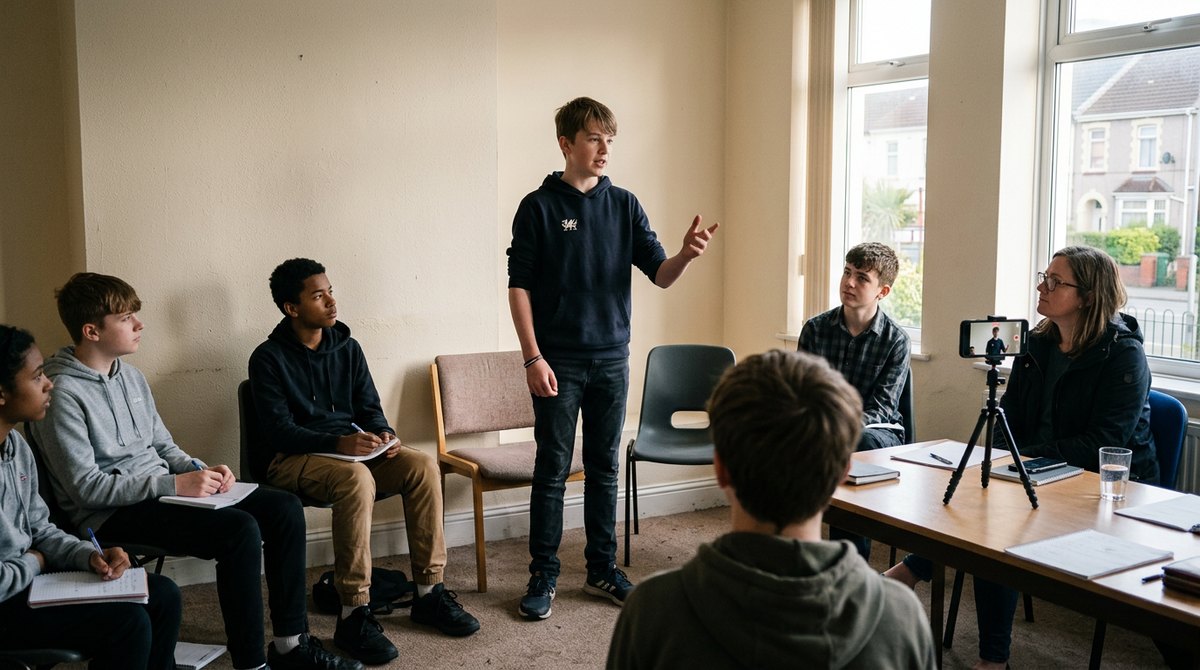
If you’re taking AQA English Language, ask early how your centre will run the spoken language presentation.
The ID you’ll need
Identity checks matter more for private candidates because the staff don’t know you.
With a passport or driving licence
If you’re new to the staff, show a current passport or photo driving licence when you make your entry. Then take it to every exam, practical and speaking test.
With no photo ID
Most 15 year olds don’t have a driving licence, so this comes up a lot. Instead you fill in AQA’s identification form and bring two passport photos taken in the last 12 months. A witness who knows you signs the form and the back of one photo. AQA only accepts certain people as witnesses.
- the head of an educational institution
- a doctor
- a minister of religion
- a magistrate or solicitor
- a bank manager or your employer
Exam day, extra help and results
On the day
You sit the same papers under the same exam conditions as everyone else. Morning exams start at 9.00am and afternoon ones at 1.30pm, unless you’re told otherwise. If a paper has pre-release material, it goes to the exams officer rather than to you, so chase them if it hasn’t arrived.
Extra time and special consideration
Access arrangements such as extra time, a reader or a scribe must be requested when you make your entry, with evidence. If you’re ill on the day, tell the exams officer quickly, as special consideration has to be applied for within seven days of your last exam.
Getting your results
Results day is the same August day for everyone and you’ll be told how to collect your results. Your certificate follows later in the year. It looks exactly like a school student’s, with nothing to show you were a private candidate.
The easiest AQA GCSEs to study at home
If you’re planning to sit your GCSE exams as a private candidate, it makes sense to mix subjects that are simple to book with ones that need a bit more planning. Here are the five AQA GCSEs we teach and what each one asks of you.
| AQA GCSE | Exams | Extra work for the centre | Our lessons |
|---|---|---|---|
| Psychology (8182) | Two papers, 1 hour 45 minutes each | None | 279 |
| Sociology (8192) | Two papers, 1 hour 45 minutes each | None | 260 |
| Geography (8035) | Three papers, 1 hour 30 minutes each | Fieldwork declaration | 94 |
| Biology (8461) | Two papers, 1 hour 45 minutes each, Foundation or Higher | Ten required practicals | 106 |
| Chemistry (8462) | Two papers, 1 hour 45 minutes each, Foundation or Higher | Eight required practicals | 111 |
Psychology and Sociology are the simplest to sit privately. Both are written exams only, so any centre that runs them can usually fit you in. You can try what sociology is or how memory encodes, stores and retrieves information free before you decide.
Geography needs a little more organising, as you’ll do fieldwork on two separate days and talk it through with the centre. Our lessons on planning a geographical enquiry and collecting fieldwork data show how to set one up properly. The sciences need the most help. Lessons such as the titration required practical walk you through the method, so you go into the lab knowing what to do.
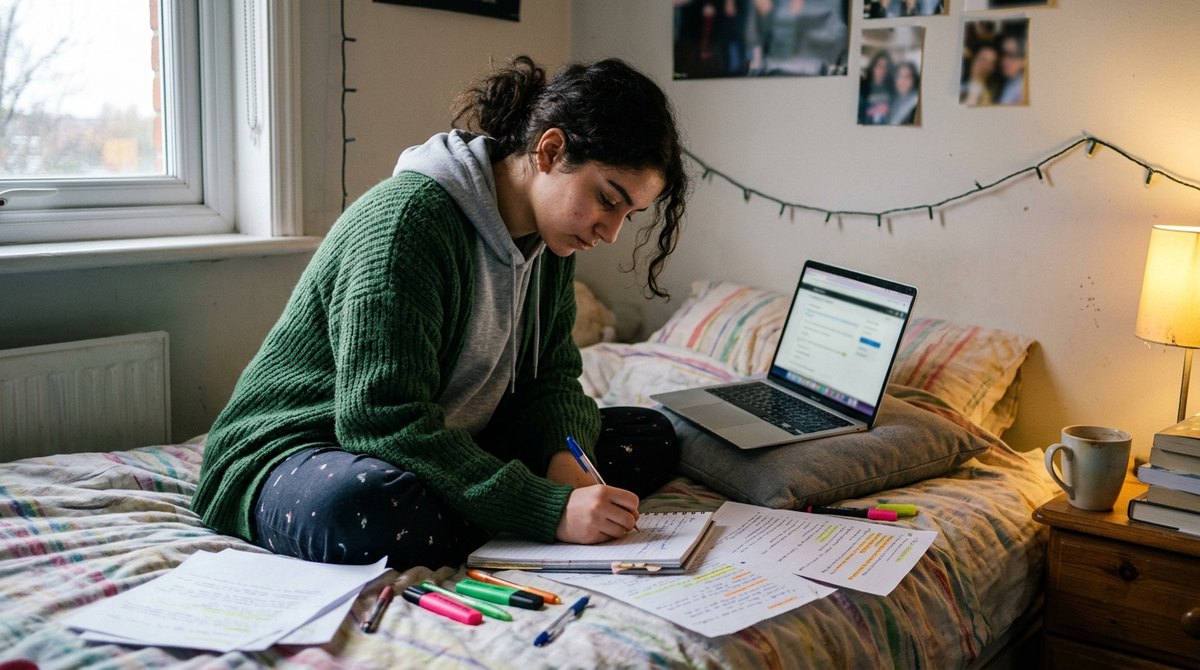
Most of your GCSE work happens at home, with short lessons, notes and plenty of revision before exam season.
- My subjects are on AQA’s private candidate list
- I know each specification code and, for sciences, my tier
- I have photo ID, or a plan for the ID form
- I have my UCI or ULN if I’ve sat exams before
- I know if I need practicals, fieldwork sign-off or a speaking test
- I know if I need any access arrangements and have the evidence
- I have money set aside for AQA’s fee and the centre’s charge
Studying AQA GCSEs with Brainy Lemons
Booking your exams is the admin. Learning the whole specification is the real work and that’s where we come in.
Brainy Lemons runs online courses for students who learn at home, each one following a single specification lesson by lesson. Every lesson ends with a quiz, the Lemonaire quiz show and the Last Stand zombie game, so your revision happens as you go. You can learn on whatever screen you have at home and you can see how our online courses work before you start.
For the written-only subjects, choose the AQA GCSE Psychology course or the AQA GCSE Sociology online course. Then there’s the AQA GCSE Geography online course, the AQA GCSE Biology online course and the AQA GCSE Chemistry online course. If you’re taking Biology, our guide to AQA GCSE Biology topics and required practicals lists every practical you’ll need your centre to run.
The first lessons of every course are free, so you can see how it works first. Many home educated students start with the two written-only subjects, then add a science once they’ve found a centre with a lab, so our AQA GCSE Sociology course is a good place to begin.
AQA private candidate FAQs
Can I sit AQA GCSEs without going to school?
Yes, home educated students sit AQA GCSEs as private candidates at an approved school, college or exam centre. You sit the same papers on the same days as school students. You also get the same certificate at the end.
What is the difference between a private candidate and an external candidate?
They mean the same thing, as some centres say external candidate while AQA and JCQ use private candidate.
Can I take AQA science GCSEs as a private candidate?
Yes, as long as your centre lets you carry out all the required practicals in the specification. Fewer centres can do this, so start looking early and expect a higher centre charge.
Can I sit AQA exams abroad as a private candidate?
No, AQA only accepts private candidates in the UK. If you live overseas, an IGCSE from another board is usually the way to go. Pearson Edexcel and Cambridge both run exams at centres around the world.
When is the AQA entry deadline for summer 2027?
AQA must receive entries by 21 February 2027. Late fees apply from 22 February and very late fees after 21 April. Your centre’s own deadline is often earlier, so ask them.
How much does an AQA GCSE cost as a private candidate?
AQA charges a UK centre £48.15 to £56.50 for single GCSEs such as Biology, Psychology and Geography in summer 2027, then the centre adds its own charge on top.
Can I sit AQA GCSEs in November?
Only Maths and English Language run in November and only for students who were 16 or over on the 31 August before. It’s mainly a resit series, so most students sit their exams in May and June.
Does a private candidate GCSE count the same as a school one?
Yes, colleges, sixth forms and employers can’t tell the difference, because the grade and certificate are exactly the same. It counts just the same when you apply for A-level courses.
Get ready for your AQA GCSEs at home
Online AQA GCSE courses in Psychology, Sociology, Geography, Biology and Chemistry, each following the specification lesson by lesson.
- Short lessons written for one exam board and one specification
- A quiz, a quiz show and a zombie defence game on every lesson
- Study on any device: phone, tablet or laptop
The first 3 lessons of every course are free. No card needed.