 By the Brainy Lemons team
Private GCSE exam centres are schools, colleges and specialist centres that let students from outside sit their exams there. To find one, search the JCQ list by postcode, then ring each one to check your exam board, subjects, fees and its own deadline. For June 2027, aim to be booked by Christmas.
If you’re learning at home, nobody books your exams for you. You can study wherever suits you. But every paper has to be sat at an approved exam centre and finding one that will take you is up to your family.
It can feel like a bit of a hunt at first. Read on for where to look, who’s most likely to say yes and the dates that keep you clear of late fees.
At a glance
- Home educated students sit their exams as private candidates (also called external candidates)
- The official search lists 190 centres that have confirmed they take private candidates
- Each one sets its own fees and cut-off dates, often earlier than the exam board’s
- June 2027 GCSE entry deadline: 21 February 2027 (AQA and Pearson Edexcel)
- First exams: Monday 10 May 2027. Results day: Thursday 19 August 2027
- Lab work, speaking tests and fieldwork need somewhere willing to run them
Where to find private GCSE exam centres
Start with the official list, then widen the net. If the whole idea is new to you, our page on taking GCSEs as a private candidate explains how it all fits together.
Search the official list
The Joint Council for Qualifications (JCQ) sets the exam rules for AQA, Pearson Edexcel, OCR and WJEC. Its private candidates page has a search tool where you type in your postcode, then filter by GCSE, AS or A level, exam board and subject. The results come back in order of distance, closest first.
At the time of writing, 190 centres have confirmed they’ll accept private candidates this year. The list is only updated once a year, in December or January. So some may have stopped taking outside students since then, while others that do aren’t listed at all.
Use it as your starting point and confirm every detail by phone. It’s a directory only, so nobody there can book you in.
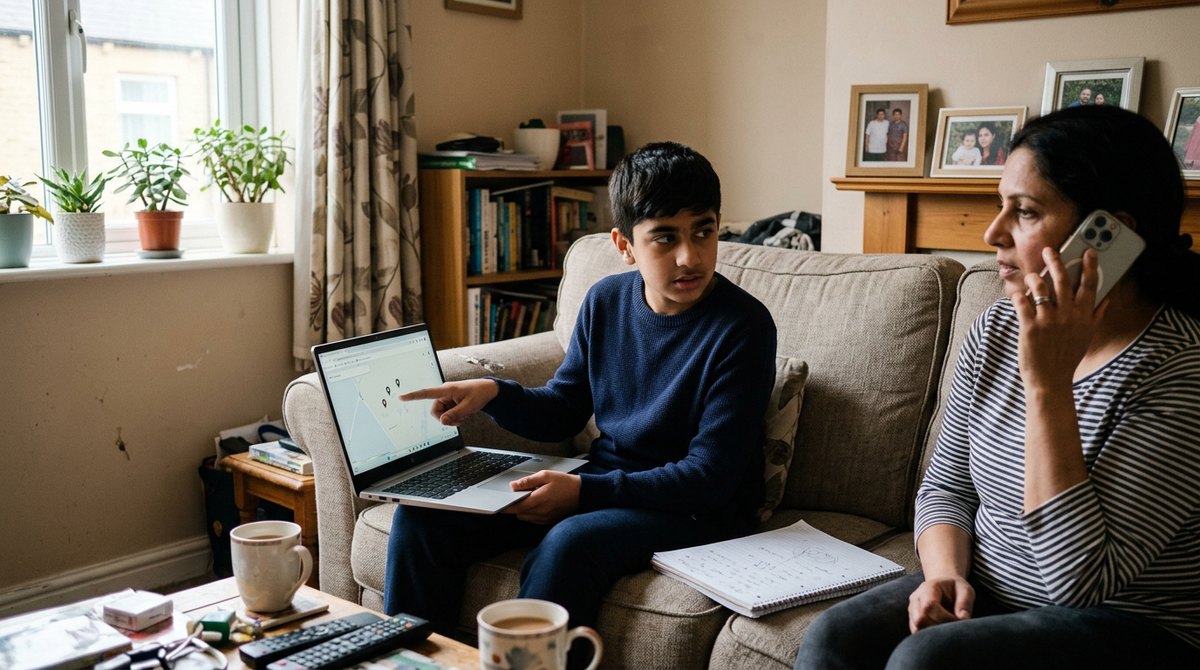
Ringing round is part of the job. Most families call two or three before they choose one.
Other places to look
AQA says a school or college that isn’t on the list may still be able to accept you. It’s worth calling the exams officer (the person who runs exam entries) at further education colleges, independent schools and tutorial colleges near you. Your council’s home education team may also know who welcomes outside students locally.
Home education groups are really useful too, as parents happily swap the names of centres that were friendly and well run. There’s also a volunteer-run HE Exams Wiki with centres sorted by region, though it’s worth double-checking anything you find there.
Who will take you?
Every centre makes its own decision. Pearson is clear that none of them has to accept private candidates and some may have good reasons for saying no.
Your best chance is a centre that already enters its own students for the same subject with the same board. AQA says that in most cases, that’s the only time you’ll be accepted. So if a nearby school sits the same Maths paper with your board each summer, it’s a good one to ask.
Four real centres compared
Here’s how four real places describe their rules on their own websites, checked on 7 November 2026. It shows just how much they differ.
| Centre | Exam boards | Practicals and speaking tests | Extra time and other support | How to apply |
|---|---|---|---|---|
| Hills Road Sixth Form College, Cambridge | AQA, Pearson, OCR, WJEC | Written papers only, unless a mark is carried forward from a resit | Yes, with evidence on the application form | Summer 2027 applications open in November and many close by Christmas |
| Connie Rothman Learning Trust, Bournemouth | AQA, Pearson, WJEC | None. Sciences only as IGCSEs | No longer offered to private candidates | Application form, then pay by 9 February 2027. First come, first served |
| London Brookes College, London | Pearson, Cambridge, AQA, OCR, WJEC | Science practicals, coursework and speaking tests | Ask the centre | Online exam portal |
| Ark Education, Ilford | All the major boards | Coursework, English speaking tests and science practicals | Arranged by its own exams officer | Online registration form |
Papers that are purely written can be sat almost anywhere. Lab work and speaking tests shrink the list quickly. Cambridge IGCSEs are getting harder to place too, as Hills Road and the Bournemouth centre both say they no longer offer Cambridge exams.
Pick a centre you can reach easily. You’ll make the trip for every paper across May and June.
Choosing what to study? Our online courses follow one exam board, one short lesson at a time. The first three lessons are free.
Find your course →Subjects that need more support
Some courses include work that has to be supervised, marked or signed off on site, known as non-exam assessment (NEA). A centre should only accept your entry if it’s willing to run that part for you, because the board can’t mark NEA you’ve done with a private tutor.
Sciences
For AQA sciences, the centre has to give you the chance to carry out every required practical, such as a titration in AQA GCSE Chemistry. Fewer centres can offer that and it usually costs more.
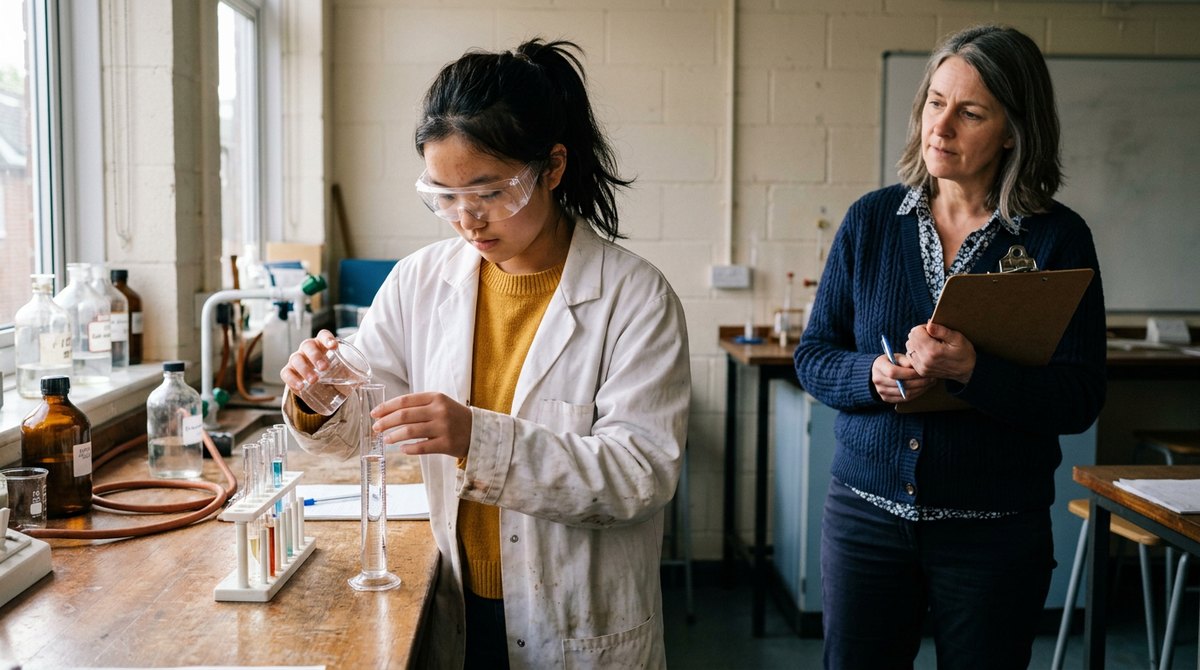
Required practicals need a lab and a member of staff to supervise, so not everywhere can run them for private candidates.
English Language, Geography and languages
The English Language spoken language endorsement must be supervised and marked on site. If you retake, you can usually carry an earlier one forward. Geography needs fieldwork too, with two days for Edexcel and two separate occasions for AQA. French, German and Spanish include a speaking test that has to be run where you sit.
The easier route
That’s why so many private candidates lean towards courses marked only by written papers. Psychology and Sociology have no extra conditions at all. Why not try the free first lessons on how memory encodes, stores and retrieves information or what sociology is and how sociologists study society?
For science, an International GCSE can make the search far easier. Edexcel International GCSE Biology tests practical skills inside its written papers, so there’s no lab session to book. Our guide to IGCSE vs GCSE walks through the other differences.
When to book your exam centre
It pays to start looking earlier than you’d think. Exam boards set an entry deadline for each series. Centres set their own before that. The popular ones fill up sooner still.
| When | What to do for June 2027 |
|---|---|
| Now (autumn 2026) | Choose your courses and exact boards, then ring round for a shortlist |
| November 2026 | Apply. Hills Road, for example, opens summer applications this month |
| By Christmas | Have every entry booked and paid for |
| 21 February 2027 | AQA and Pearson Edexcel closing date |
| 21 March 2027 | Pearson Edexcel International GCSE closing date |
| 10 May 2027 | The first papers on the exam timetable |
| 19 August 2027 | Results day |
What booking late costs
Miss the closing date and the price climbs fast. Here’s what one board charges for a single entry, depending on when it arrives.
A late entry costs twice the normal amount and a very late one two and a half times as much. Those charges get passed on to you, sometimes with an extra late charge from the centre. They aren’t refunded either, so booking early really is the easiest way to save money.
What to check before you book
Ring two or three and ask each one the same things. Jot the answers down together so you can compare them, then tick each one off as you go.
- They take private candidates for my exam board and every paper I need
- They enter their own students for the same papers
- I know the total cost of each entry, including any admin charge
- I know their own cut-off date and when payment is due
- They can run any lab work, speaking tests or fieldwork sign-off I need
- They can put in place any access arrangements I need
- I know where I’ll sit each paper and how I’ll get there
What private exam centres charge
Each centre sets its own exam fees, which cover the board’s entry fee plus the room, the invigilators and the admin. When we checked four London centres on 31 October 2026, a written-only GCSE cost between £210 and £325 for June 2027. Sciences with practicals cost more, around £455 each at one of them.
You pay the centre rather than the board, at the time you make the entry. Local schools can work out cheaper and our guide to how much GCSEs cost for home educated students breaks the prices down one by one.
Access arrangements, ID and exam day
Extra time and other access arrangements
If you need a reader, a scribe, rest breaks or more time, mention it the first time you get in touch. The exam rules say these must be set up when you make your entry, usually with evidence that can take a while to gather. Some centres can’t offer them to private candidates at all, so ask early.
Your statement of entry
Once you’re booked, the centre sends a statement of entry. It confirms your candidate number, your unique candidate identifier (UCI) and the date, session and length of every paper. Check your name and each entry carefully, then keep it safe for exam day.
Photo ID and what to bring
If the staff don’t know you, you’ll need a current passport or photo driving licence when you register. You’ll show it again at the start of every exam. No photo ID? There’s a form to be signed by someone who knows you, such as a doctor or solicitor, along with two recent passport photos.
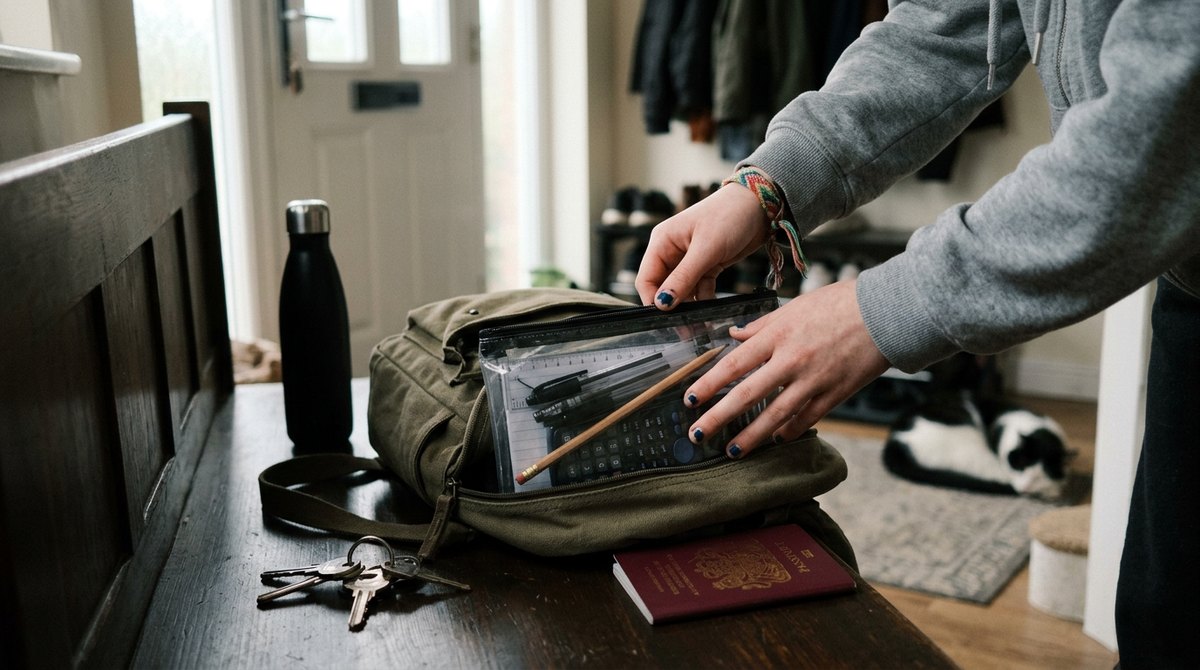
Pack the night before with your statement of entry, photo ID and a clear pencil case with spare black pens.
Most papers have a start time of 9.00am or 1.30pm and you’ll be told if yours is different. You’ll usually sit alongside the centre’s own students under exactly the same rules. The grade you earn is the same qualification as everyone else’s, so a college, university or employer will treat it in the same way.
Studying for your exams with Brainy Lemons
Finding a centre is the admin. The bigger job is learning the whole course and that’s where we can support you.
Brainy Lemons runs online courses for students who study at home, each following one exam board lesson by lesson. Every lesson ends with a quiz, the Lemonaire quiz show and the Last Stand zombie game, with flash cards and 3D games on many courses too. It all works on a phone, tablet or laptop.
Courses with written papers only are the easiest to book and popular choices include the AQA GCSE Psychology online course, the AQA GCSE Sociology online course and the IGCSE Business online course. For a science without a separate practical, try the IGCSE Biology online course.
You can try the first lessons free, from the seven life processes in Biology to business objectives in Business. For the bigger picture, read how home educated students do GCSEs. Our page for GCSE private candidates shows how the courses fit around your exams.
Private exam centre FAQs
Can I sit my GCSEs at any school as a private candidate?
Only if the school agrees, as many only take their own students. Begin with the official search, then try local centres that already run your subjects for their own classes.
Does it have to be on the JCQ list?
No. The list only includes centres that chose to be on it. AQA and OCR both say one that isn’t listed may still accept you, so a phone call is always worth it.
How far in advance should I book?
For June 2027, apply in the autumn and have everything paid for before Christmas. The main closing date is 21 February 2027, but most centres close earlier and late entries cost up to two and a half times as much.
Can private candidates take GCSE sciences?
Yes, if the centre lets you do all the required practicals. Fewer do and it usually costs more. Edexcel International GCSE sciences test practical skills in the written papers instead.
Can I sit GCSEs abroad as a private candidate?
JCQ says private candidates can only sit GCSE and A level exams in the UK. If you live overseas, International GCSEs are usually the answer, as you can often sit them at an approved international school or college.
Is a private candidate the same as an external candidate?
Yes. Both mean a student who sits exams somewhere they aren’t enrolled full time. Your results and certificates are exactly the same as everyone else’s, whichever course or university you apply to later.
Booked your exams? Now get ready for the papers
Online GCSE and IGCSE courses for students learning at home, following the exam board specification lesson by lesson.
- Short lessons written for one exam board and one specification
- A quiz, a quiz show and a zombie defence game on every lesson
- Study on any device: phone, tablet or laptop
The first 3 lessons of every course are free. No card needed.