 By the Brainy Lemons team
Yes, you can study for a GCSE at home. You learn at your own pace with a parent, an online course or a tutor, then sit the written papers at an exam centre as a private candidate. In England home educated students don’t have to take GCSEs, but many do because sixth forms and colleges ask for them.
Plenty of families go down this route. Some teenagers have been home educated for years. Others leave school part way through Year 10 and need a new plan fast.
Read on for how studying at home really works day to day and which subjects are easiest to manage. You’ll also see what a good week looks like and how to book your exams when you’re ready.
At a glance
- Where you learn: at home, online, in a library or with a private teacher
- Where you sit the exams: an exam centre that takes private candidates
- Next summer series: GCSE exams run from 10 May to 18 June 2027 (JCQ)
- Time per subject: about 130 taught hours for an IGCSE
- Coursework: many IGCSEs are exam only, which suits home study
- Cost: an entry fee plus the exam centre’s charge
Can you do GCSEs at home?
You can, because the rules in England are simple. GOV.UK says you must make sure your child gets a full-time education from the age of 5, but you don’t have to follow the national curriculum.
So GCSEs are a choice rather than a duty. Many families still go for them. The qualification is exactly the same whether you learn at school or at home. Sixth forms, apprenticeships and employers all look for them, especially a pass in English and maths.
The one thing you can’t usually do at home is sit the exam itself. GCSE exams are taken in person at a centre, under the same rules as every other student in the UK.
There’s one exception worth knowing about. Pearson runs a Remote Invigilation Service for selected Edexcel subjects. You sit the paper on a computer at home while a trained invigilator watches live online. It isn’t available in every country or for every subject, so your centre will tell you if it’s open to you.
That’s a lot of company. The same DfE release counted 126,000 children being home educated on census day in autumn 2025. Over a third of them were in Years 10 or 11, the two years when most GCSE students are working towards their exams.
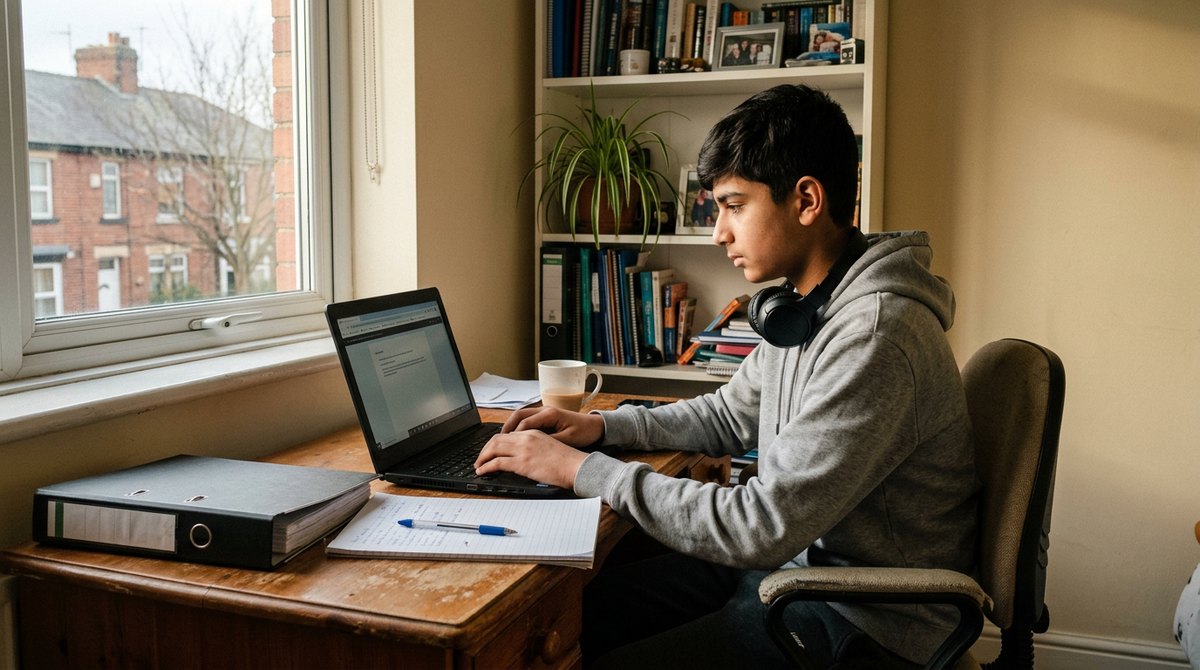
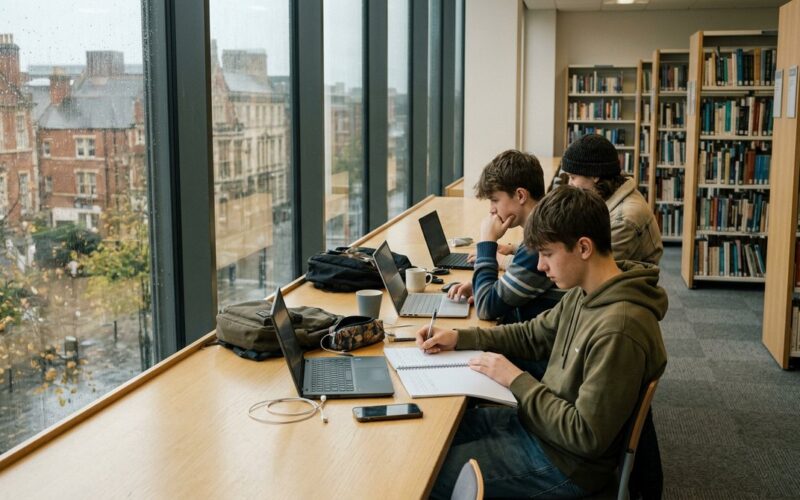
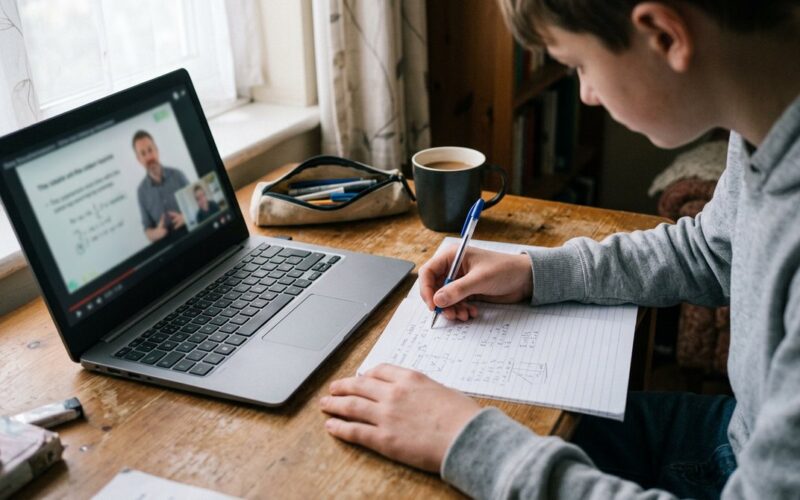
A quiet desk of your own makes it much easier to settle into each morning’s work.
How studying for a GCSE at home works
Think of it in two halves. The learning happens at home, at whatever pace suits you. The exams happen at a centre, on the same days as everyone else. That split is where all the flexibility comes from.
For the learning half there are three main ways to do it. Plenty of families mix them, so a student might use online lessons for psychology, a tutor for maths and a good textbook for English literature.
| How you learn | How it works | Good for | Watch out for |
|---|---|---|---|
| Parent-led with books | You plan each week from the syllabus, a textbook and past papers | A family with time and confidence in the subject | Takes a lot of planning, especially in subjects nobody at home has studied |
| Online course | Short units work through the syllabus in order, with quizzes to check what’s gone in | Independent learners who like a structured path | Check it’s written for your exact board |
| Tutor or part-time class | Live support from a teacher, one to one or in a small group | Subjects where you need someone to explain it face to face | The cost adds up quickly and local places can be limited |
Further education colleges are worth a look too. Lewisham College in London, for example, advertises one-year GCSE classes for home educated 14 to 16 year olds, so ask the ones near you what they offer.
Pick subjects that suit home study
Some GCSEs are much easier to take from home than others. The tricky ones include practical work, fieldwork or a speaking test that a teacher or exam centre has to supervise and sign off. If a subject has one of those, ask the board and your centre how it works for someone studying outside school before you start.
Subjects marked only by written exams are the easiest to manage. Psychology, sociology, economics and business are popular for that reason. They’re usually new subjects too, so nobody starts behind.
GCSE or International GCSE?
Many home educated students choose International GCSEs (often called IGCSEs) from Cambridge or Pearson Edexcel. Many of these are assessed by exams alone. Sixth forms and colleges in the UK generally treat it the same way as a GCSE from AQA or OCR. It’s still worth checking with the place you want to go next, so you can get the right help early. Our guide to IGCSE vs GCSE and which to choose goes through the differences.
Don’t forget English and maths
These two open the most doors after Year 11. Even if you’re planning a smaller set of subjects, it’s usually wise to include both.
Found a subject that suits you? Our online courses follow one board’s syllabus step by step. The first three lessons are free.
Find your course →Plan your week
A routine is what makes home study work. It doesn’t have to copy a school day, though. Lots of teenagers think more clearly at 10am than 8.30am. Home study lets you use that. Every child works differently, so build the week around when you focus best.
Set up a study space
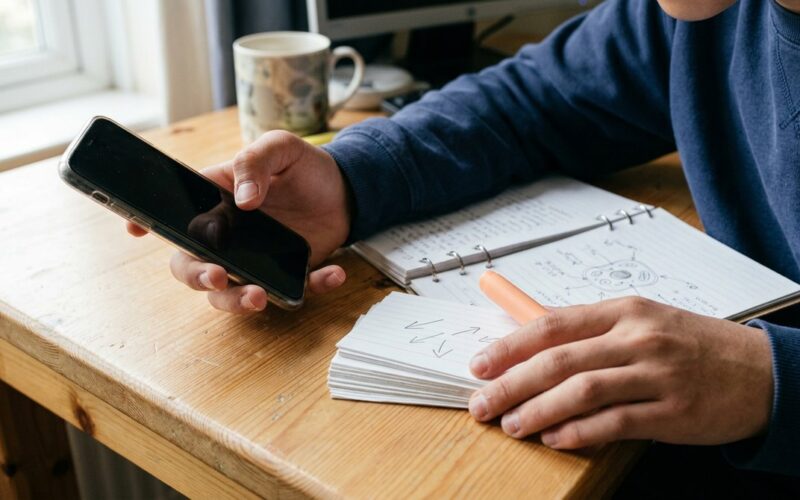
Pick one spot you use every day, with good light and your phone out of reach. A desk in your bedroom, a corner of the dining room or a table at the local library will all do the job. What matters is that sitting there means it’s time to work. Using the same place each day builds good study skills too.
How many hours does a GCSE take?
Cambridge plans each IGCSE around 130 guided learning hours. Those are hours of teaching, not homework or revision. Spread over two school years of about 38 weeks, that’s close to two hours of new learning a week for each subject, with practice and revision on top.
So five subjects might need around 10 to 12 hours a week, rising in the spring before the exams. Starting late? You’ll need to fit the same hours into fewer weeks, so a flexible but steady schedule matters even more.
A sample study plan for five subjects
| Day | Morning (about 2 hours) | Afternoon (about 1 hour) |
|---|---|---|
| Monday | Maths: a new topic and practice questions | Psychology: one new topic and its quiz |
| Tuesday | English: reading and a short piece of writing | Biology: one new topic and flash cards |
| Wednesday | Psychology and biology: one topic each | Time for a group meet-up, sport or a trip |
| Thursday | Maths: more practice, checked against the answers | Geography: one new topic and its quiz |
| Friday | A timed exam question, marked with the mark scheme | Catch up on anything you missed |
Swap in your own subjects but keep the pattern. Learn something new early in the week, practise in the middle and check yourself at the end.
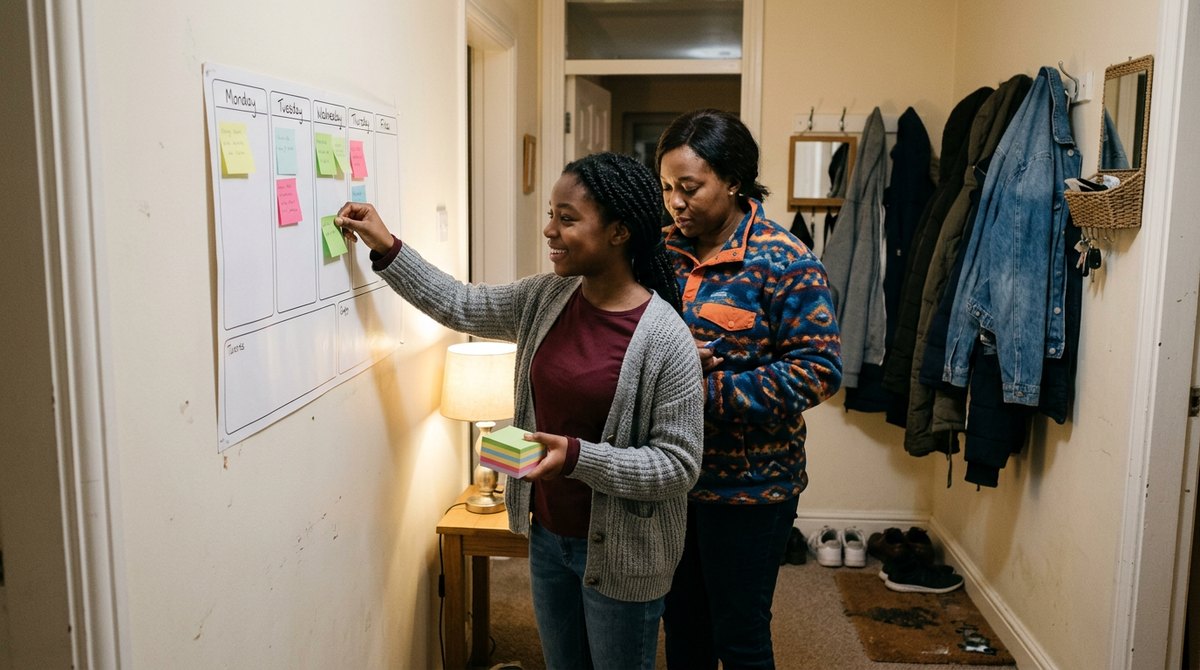
Planning the week together means everyone in the family knows what’s happening.
- I know which subjects I’m taking and why
- I know the board and syllabus code for each one
- I know whether any subject needs lab work, fieldwork or an oral test
- I have a set place to study every day
- I have a weekly timetable with time for every subject
- I’ve found the past papers and mark schemes on the board’s website
- I’ve found at least one exam centre that takes home educated students
- I know which exam series I’m aiming for
Resources you’ll need
You don’t need a room full of books. Start with these and only add more when you find a gap.
- The syllabus. Every board publishes it online and it lists everything that can come up in the exam. Tick topics off as you finish them.
- Past papers and mark schemes. These are on the board’s website too. The mark scheme shows exactly what earns marks, which builds exam skills faster than anything else.
- One textbook per subject, written for your board and syllabus. Your local library may be able to order it in.
- An online course or revision site to take the planning off your family’s plate. Our honest look at the best GCSE revision websites compares the main ones.
- A notebook and a cheap timer for timed practice. Writing answers by hand matters, because that’s how most GCSE exams are sat.
Not sure what learning online feels like? Have a go before you buy anything. You could start with an introduction to how memory works for Cambridge Psychology or scarcity, the basic economic problem for Edexcel IGCSE Economics.
Stay on track
The hardest part of studying at home isn’t the content. It’s knowing whether you’re really ready when nobody is marking your work every week.
Check your progress
Build in regular checks. A short quiz after each topic shows what stuck. A timed past paper question every week or two shows whether you can use it under pressure.
Mark it honestly with the mark scheme, then write down one thing to fix next time. That kind of feedback is what helps you pass. Timed practice also builds the exam skills you’ll need on the day.
About two months before the exams, sit a full mock paper in silence, timed to the minute. It’s the best way to find out if you can finish in time.
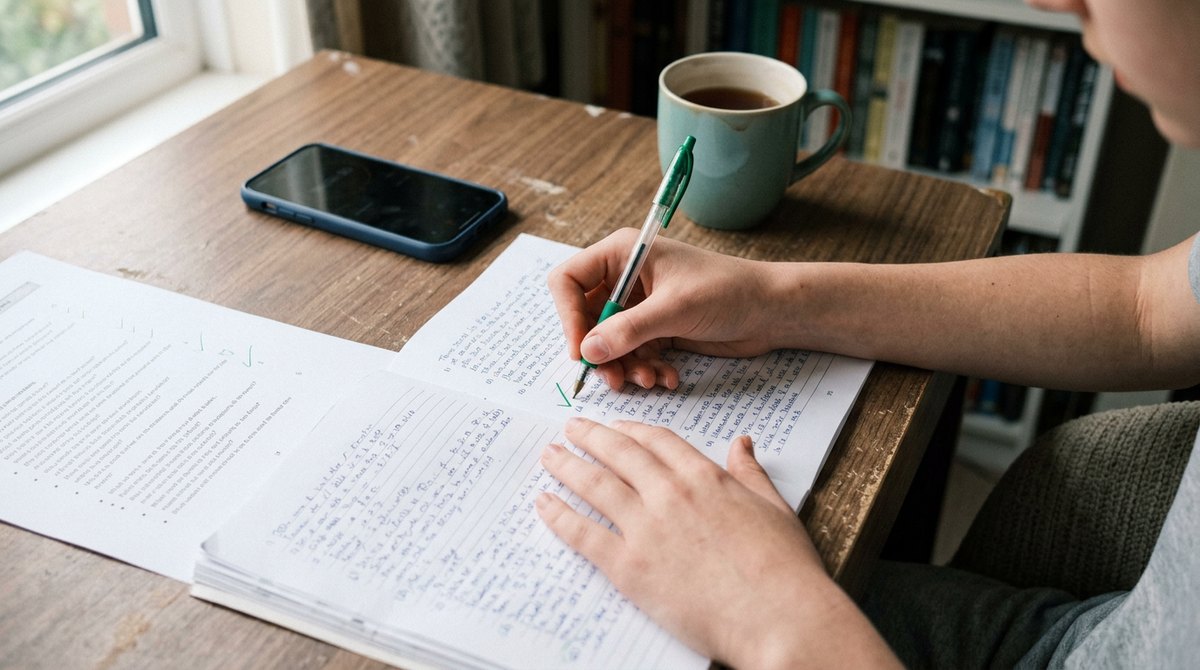
Marking your own practice answers shows you exactly where the marks are.
Keep the social side
Studying at home is a very different experience from school. A week on your own can feel flat. Lots of areas have home education groups that meet for trips, sport and science sessions. They’re a good place to find friends taking the same subjects. Having someone to revise with makes the long spring much easier.
Parents can help here too. You don’t need to know the subject to give support. Asking your child to explain what they learned today is a quick way to spot gaps.
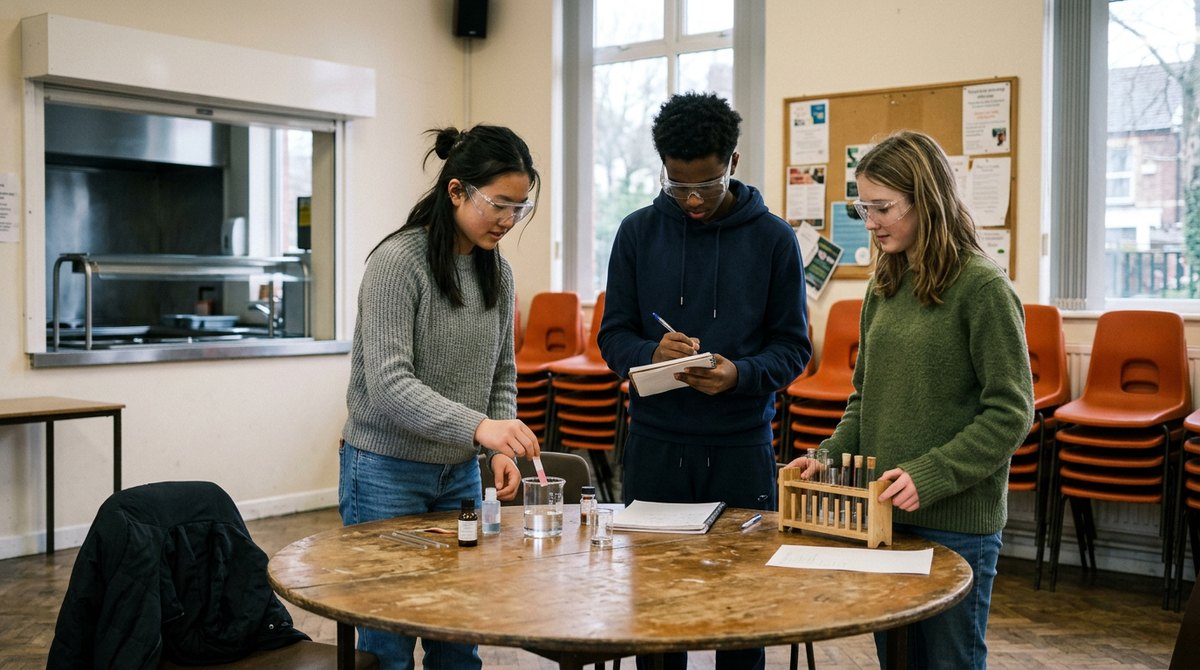
Meeting friends from a local group keeps the week balanced.
Booking your exams as a private candidate
When you study at home you’ll enter as a private candidate, which simply means a student who isn’t on a school’s roll. You find an exam centre that accepts them. The centre enters you with the board and you sit your papers there.
Book early, because JCQ’s deadline for entries for the summer 2027 series is 21 February 2027 and most centres set their own deadline well before that. The GCSE exams then run from 10 May to 18 June 2027, with results on 19 August 2027 (JCQ key dates, June 2027 series).
You’ll pay the board’s entry fee plus the centre’s own charge for each subject. Our guide to how much GCSEs cost for home educated students has real fees. For finding a centre, follow our step-by-step guide to GCSEs in home education.
Learn at home with Brainy Lemons
We built Brainy Lemons with home educated students in mind. Each one works through a single board’s syllabus topic by topic, so you always know you’re covering what the exam asks. It’s a simple way to take a GCSE at home without anyone at home having to plan every day.
- Short, structured units written for one board and one syllabus
- A quiz, a quiz show and a zombie defence game after each one to check what stuck
- A study timetable built around your exam date, with progress your family can follow
- Flash cards on some subjects and 3D games for some of the trickiest topics
- Works on a phone, tablet or laptop, so you can learn anywhere
Our subjects suit home study well, so have a look at the GCSE Psychology online course for AQA, the IGCSE Geography online course or the Edexcel IGCSE Biology online. There’s AQA GCSE Chemistry online as well, which opens with atoms, elements and compounds, plus GCSE Sociology and IGCSE Business.
You can try the first few units of any subject before you pay. Have a go at the rock cycle in Environmental Management or what domestic tourism means in Travel and Tourism. Then browse the full list of online GCSE and IGCSE courses or see how it works. We don’t teach maths or English yet, so you’ll need another resource for those two.
Common questions about home study
Can you sit GCSE exams at home?
Usually not, though all the learning can happen at home. The exams are sat in person at an exam centre. Pearson’s Remote Invigilation Service lets some students sit selected Edexcel exams at home, but it isn’t available for every subject or country.
If you’re home educated, do you need to do GCSEs?
There’s no law that says they must. In England you must make sure your child gets a full-time education, but GCSEs aren’t part of that duty. Many home educated teenagers take some anyway, since sixth forms and employers often ask for them.
How many GCSEs should a home educated student take?
There’s no set number, but many colleges and sixth forms ask for five at grade 4 (a standard pass) or above, often including English and maths. Check the entry rules for whatever you want to do next.
How long does one GCSE take to study?
Most students spread one subject over two years, with roughly two hours of new learning a week. Some take a subject in a single year by doubling that.
Is home study cheaper?
The learning can cost very little if you use past papers from the board and a library. The exams are where you’ll pay. You cover the entry fee plus whatever the centre charges for each subject.
What’s the best online course for home learning?
The best one is written for your board and syllabus code, teaches every topic and checks what you know as you go. Try the first few units before you pay to see if it suits the way you learn.
Study for your GCSEs with a clear plan
Online GCSE and IGCSE courses that follow the exam board specification, so you always know what to learn next.
- Short lessons written for one exam board and one specification
- A quiz, a quiz show and a zombie defence game on every lesson
- Study on any device: phone, tablet or laptop
The first 3 lessons of every course are free. No card needed.